
Banff in February: An Insider Guide to Winter in the Rockies
The holiday crowds are gone and the town slips into its mid-winter rhythm. Deep snow, bright days, and a version of Banff that feels lived-in. Weather, packing, driving, Ice Magic and SnowDays, and the wildlife that's still moving while the bears are denned.
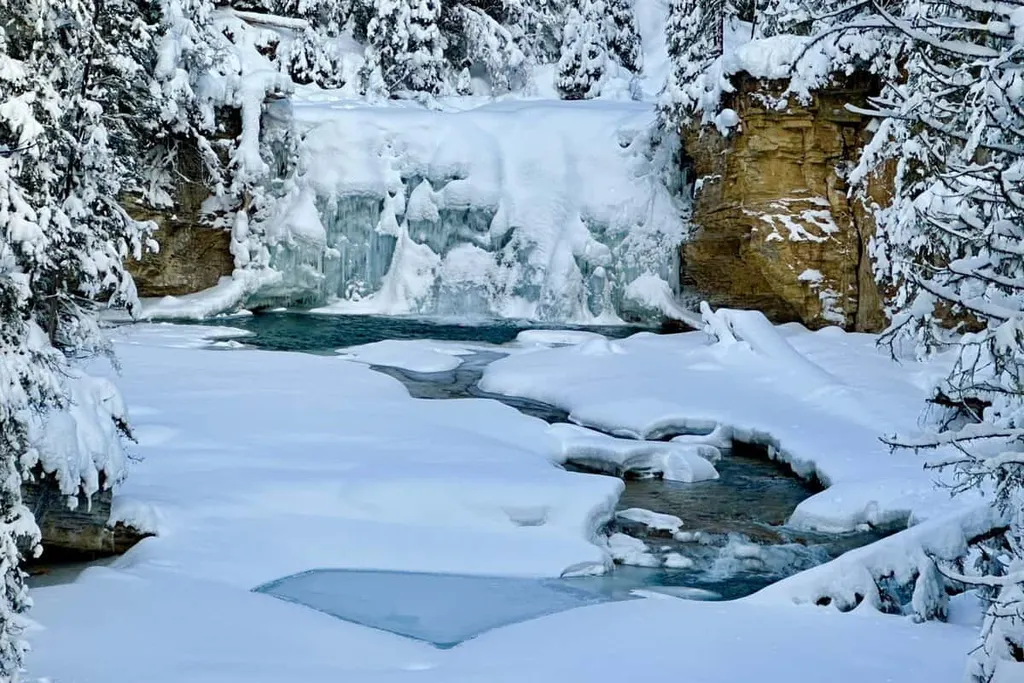
Banff In February 2026 Update: Visiting for Ice Magic (Feb 5–8)? Tickets are required and are exclusively available to guests of participating Lake Louise hotels or via guided tours; a mandatory shuttle is required for all ticket holders. For an open-access alternative, the Art of Ice Carving competition is on Bear Street from Feb 6–8. Don't miss the new Flying Canoë Volant festival in Central Park from Feb 26 – Mar 1.
Banff in February is when winter is fully settled and unapologetic about it. The holiday crowds are gone, routines are back, and the town slips into its mid-winter rhythm. What you get is deep snow, bright days, and a version of Banff that feels calm, lived-in, and local.
This is peak winter. Ski season is in full swing, snow conditions are usually excellent, and the mountains look sharp and clean under clear winter skies. Days are still short, and the cold hasn’t gone anywhere, but February often brings more sunshine and slightly longer daylight than January, which helps.
February is when the small winter details stand out. Frost clings to the trees, dry snow squeaks under your boots, and Banff empties quickly once the sun drops behind the mountains. Locals plan around daylight. Visitors learn to do the same.
Banff in February isn’t about packing every hour of the day. It’s about choosing a few winter experiences, doing them properly, and warming up somewhere comfortable afterwards.
Plan it right and February delivers reliable snow, manageable crowds, and a genuine feel for mid-winter mountain life - plus a healthy respect for warm layers and good gloves.
🚡 For Panoramic Winter Views – Banff Gondola.
⛷ For Snow & Scenery – Lake Louise Visit.
❄️ For Winter Adventurers – Johnston Canyon Ice Walk.
Weather, Daylight & What to Pack for February
Deep Winter: Colder Mornings, Brighter Days, and Reliable Snow
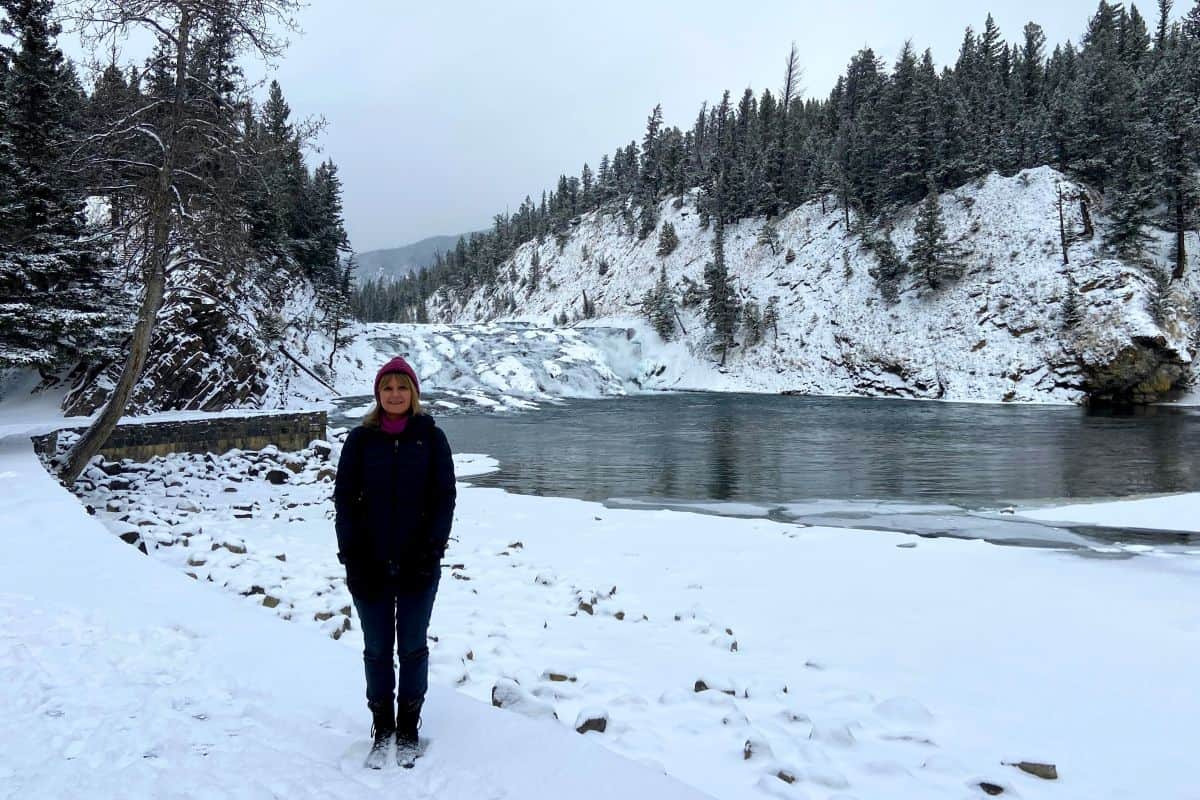
Banff in February is deep winter with confidence. The snowpack is well established, lakes are frozen solid, and the landscape looks sharp and settled. February does not soften winter, but it does make it feel more predictable. If January is about endurance, February is about rhythm.
Being adequately prepared still matters. The cold is real, and winter gear is not optional, but February often rewards that preparation with brighter skies and more usable daylight.
Temperature
Daytime highs in Banff in February usually range between -8°C and -15°C, though cold snaps can still push temperatures below -20°C. Overnight lows regularly fall into the -20°C to -25°C range, especially during clear stretches.
Wind chill remains the wildcard. Ski lifts, open viewpoints, and exposed valleys can feel far colder than the forecast suggests. If your weather app says "feels like -30°C", take it seriously. February is not the month to underdress and hope for the best.
The upside is consistency. Cold days tend to stay cold, and mild days stay manageable, which makes planning outdoor activities easier than in the shoulder seasons.
Daylight Hours
Daylight noticeably improves in Banff in February, and you feel it. Early February brings just over 9 hours of daylight, with sunrise around 8:15 a.m. and sunset close to 5:30 p.m.
By the end of the month, daylight stretches toward 10.5 hours, with earlier mornings and longer afternoons. That extra light makes a real difference for skiing, snowshoeing, and winter walks, especially if you prefer not to rush everything into a narrow midday window.
Late morning through mid-afternoon remains the warmest and most comfortable time to be outside, but February gives you more flexibility than January ever does.
Precipitation
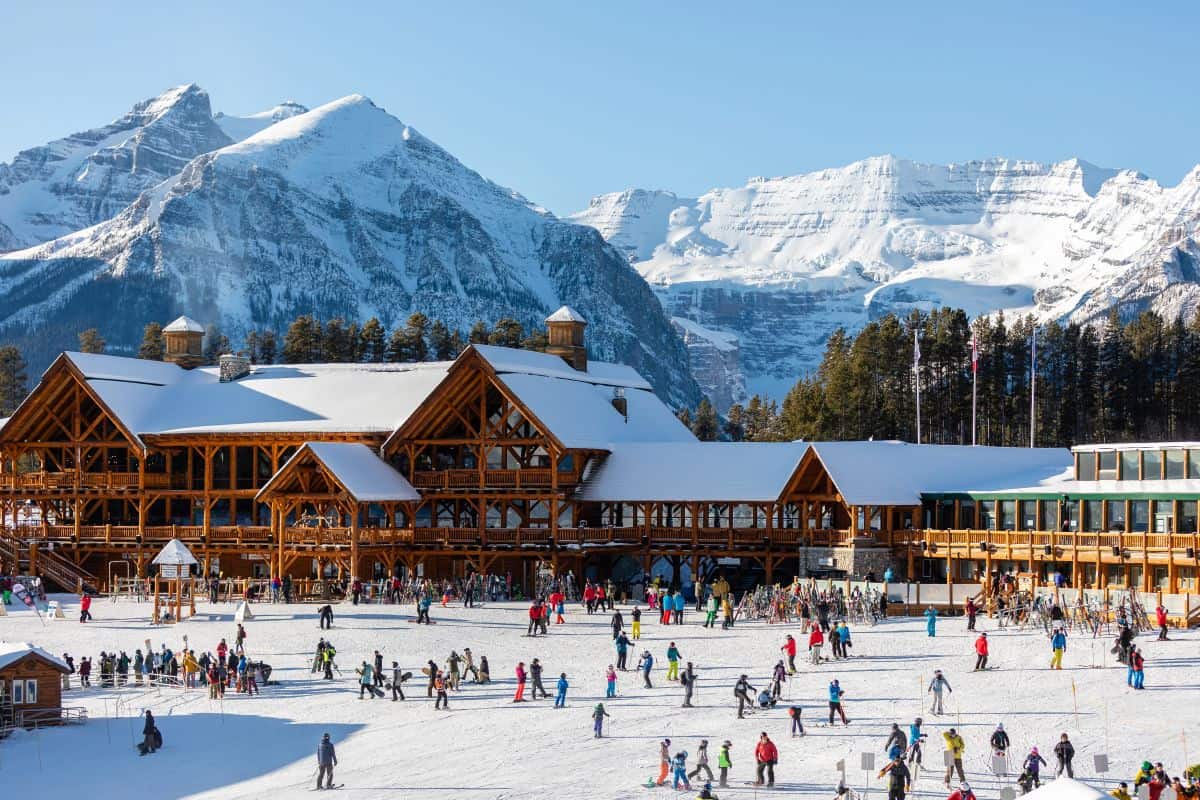
Snowfall is still common in February, particularly at higher elevations and in the surrounding mountains. Storms tend to arrive in shorter, more defined bursts, often followed by clear, cold days that lock in excellent conditions.
Roads and sidewalks in Banff are generally well-maintained, but icy patches are normal, especially in shaded areas, parking lots, and early mornings. Freeze-thaw cycles are less frequent than in spring, which helps surfaces stay more predictable.
Traction devices or ice cleats remain genuinely helpful, especially for walking around town, visiting places like Johnston Canyon, or heading out early in the day before surfaces soften.
The Essential February Packing List: Warmth Still Comes First
Packing for Banff in February is still less about style and more about staying comfortable in real winter conditions. February is a little more predictable than January, but the rules haven’t changed. Staying warm, dry, and protected from wind is the entire game plan.
If you are debating whether you really need that extra layer, the answer is still yes. February is not the month to travel light.
Daytime
Start with a proper moisture-wicking base layer, top and bottom. Add an insulating mid-layer like fleece or down, then finish with a windproof, water-resistant outer shell. Thermal leggings or lined winter pants work well for walking around town, sightseeing, or heading out on winter trails.
Avoid cotton. It holds moisture, loses heat, and becomes uncomfortable the moment you stop moving. February may bring more sunshine than January, but it is still full winter, and poor fabric choices are punished quickly.
Evenings and Mornings
Early mornings and evenings remain the coldest parts of the day in Banff in February. A good-quality parka, insulated gloves or mitts, a toque, and a scarf or neck warmer are essential.
Extra socks are always worth packing, especially if you are outside for long stretches or spending time at higher elevations. Hand warmers are also useful. You may not need them every day, but on colder mornings or late afternoons, you will be glad they are there.
Snow Gear
If you are skiing, snowboarding, snowshoeing, or doing any winter hiking, waterproof and insulated outerwear is essential. Snow pants are still non-negotiable, and a proper winter jacket matters just as much in February as it does in January.
Gaiters can be helpful on deeper trails, especially after fresh snowfall or on packed winter paths. Keeping snow out of your boots makes a noticeable difference over a long day outside.
Footwear
Insulated, waterproof winter boots with good tread are critical for Banff in February. Look for boots rated to at least -20°C, preferably colder. Compact snow and icy patches are common, even in town and on well-used sidewalks.
Traction cleats or ice grips are strongly recommended, even for casual walking. Locals use them regularly, and once you’ve slipped once, you will understand why.
Essentials
Sunglasses and sunscreen still matter in February. Sun reflecting off snow at altitude is intense, especially on clear days. Lip balm with SPF is also worth packing unless cracked lips are part of your travel plan.
An insulated water bottle helps prevent freezing, and a thermos for hot drinks can be a genuine morale boost. Hot coffee or tea outdoors in February feels like a small win, and those wins add up in mid-winter.
Accommodation in February
February is a more balanced accommodation month than January. The holiday rush is long gone, but winter demand is steady thanks to ski season and better daylight. Availability is generally good, especially if you avoid peak weekends.
Outside of Family Day weekend, February is one of the more manageable winter months for finding a place to stay in Banff. Ski season is still in full swing, so popular hotels and lodges do book up, but the pace is calmer than December and more predictable than January.
You usually have more choice, fewer last-minute compromises, and a less frantic feel across town, particularly midweek.
A Word on February Pricing
Accommodation pricing in Banff in February typically sits between January and peak holiday rates. Prices are often reasonable midweek, while weekends can be noticeably busier due to ski traffic and winter events.
Family Day weekend (mid-February) is the main exception. Expect higher prices and reduced availability from Friday through Monday during that period. Outside of that long weekend, February can offer solid value for a mid-winter stay.
Canmore often continues to provide better overall value in February, with more space, easier parking, and slightly less pressure on availability. For travellers who are comfortable with a short drive, it remains a practical and flexible base for visiting Banff in February.
Where to Stay in Banff in February
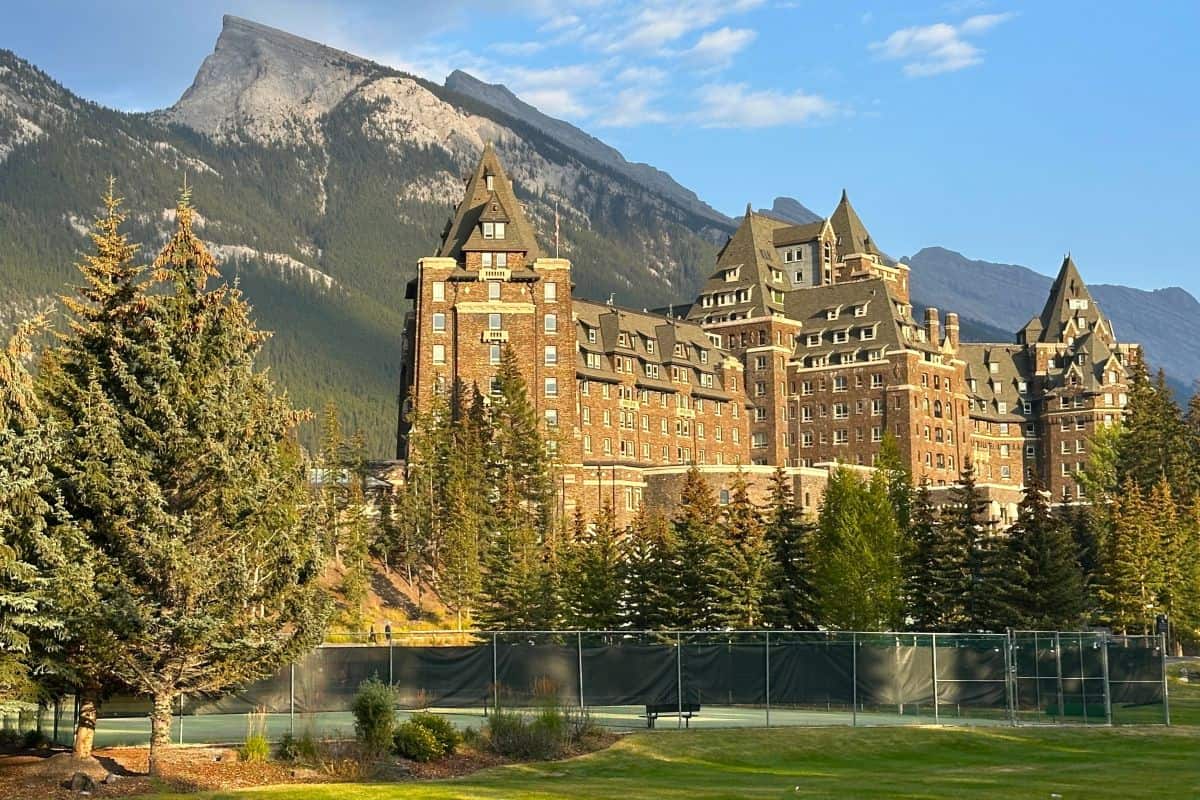
Fairmont Banff Springs
Price range: $$$$$
Location: Banff Townsite
Pool / Spa: Indoor and outdoor pools; hot tub; full-service spa
Parking: On-site parking (paid)
Pet-friendly: Yes
Best for: Luxury stays; special occasions; spa breaks; families
You don’t need to stay at the Fairmont Banff Springs to enjoy Banff, but if you do, it’s a pretty nice treat. It’s got good food, quiet corners to warm up in, and it's close to loads of winter stuff. Even if you just pop in for a hot drink, it’s worth a look.
Baker Creek By Basecamp
Price range: $$$-$$$$
Location: Banff National Park
Pool / Spa: Sauna
Parking: On-site parking (free)
Pet-friendly: Yes (dogs; fee applies)
Best for: Quiet cabin-style stay; couples; relaxed getaway between Banff and Lake Louise
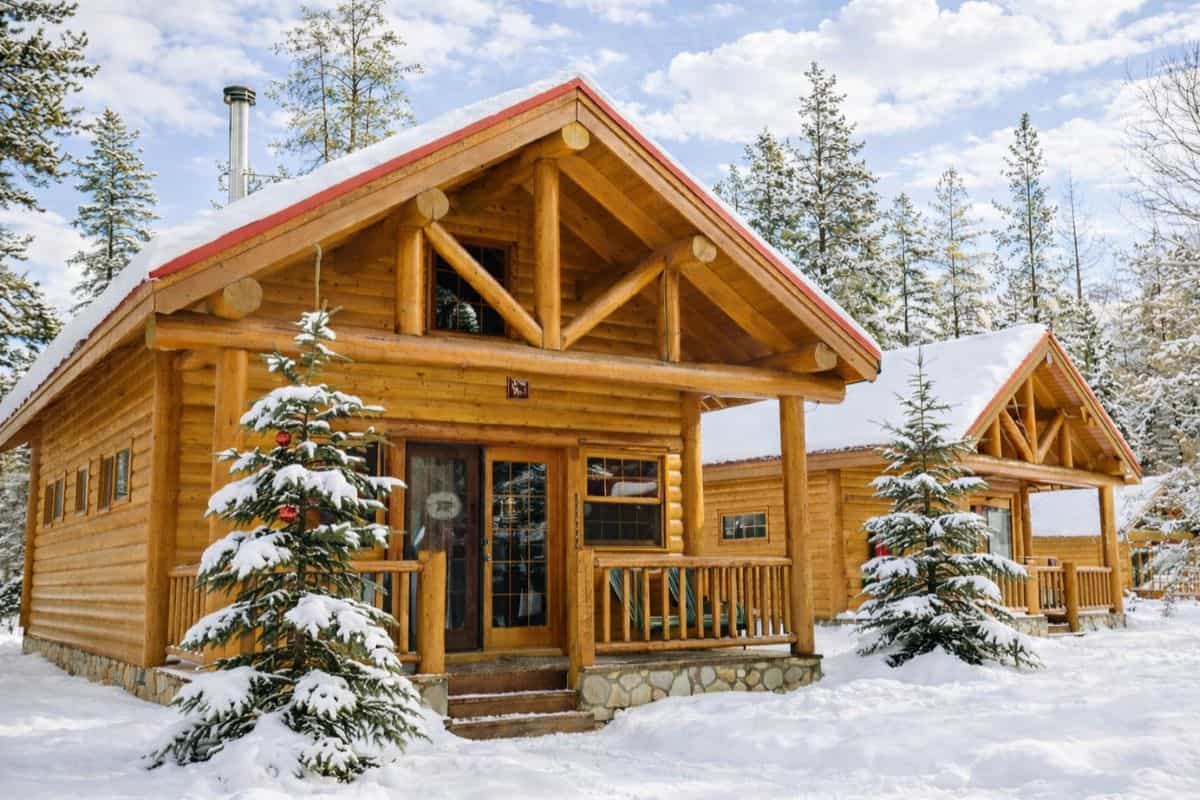
Baker Creek Cabins are a great pick if you’re after more of a quiet, tucked-away winter stay. They’re just off the Bow Valley Parkway, about 20 minutes from Lake Louise, so you’ll need a car - but the setting is worth it. Think log cabins, wood stoves, and snowy forests all around. It’s peaceful, proper, cosy, and feels like a real break from everything without being too far from the action.
Moose Hotel & Suites
Price range: $$$$
Location: Banff Townsite
Pool / Spa: Indoor pool; rooftop hot pools; spa
Parking: On-site parking (free)
Pet-friendly: Yes
Best for: Banff Avenue location; couples; modern rooms and suites
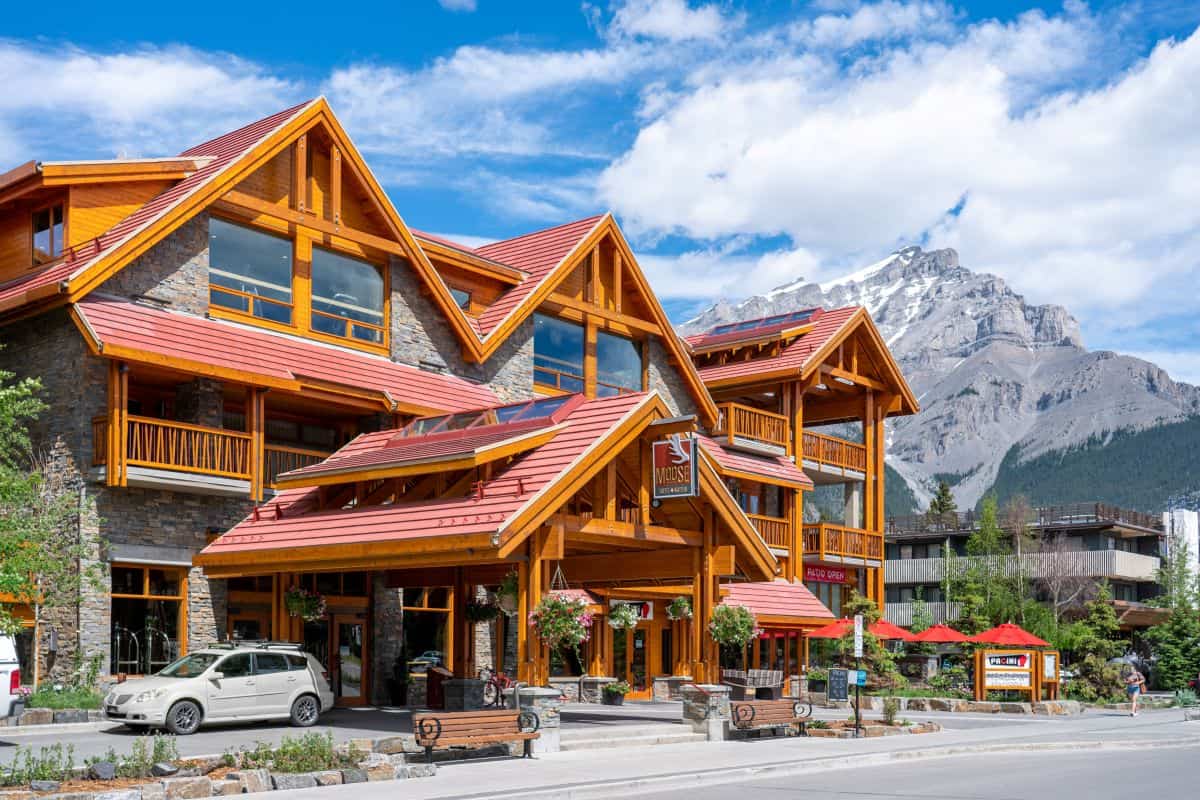
The Moose Hotel & Suites is another good option if you want something central and cosy without going too fancy. It's right on Banff Avenue, so you can walk pretty much everywhere - even in the snow. The rooms have a warm, cabin-style feel, and the rooftop hot pools are spot-on after a cold day outside. It's easy, comfortable, and has just enough mountain charm without overdoing it.
The Reality of Banff in February: Calm Mornings, Confident Winter
Banff in February feels settled. The holiday rush is long gone, routines are established, and the town moves at a steady mid-winter pace. It’s quieter than December and often feels more relaxed than January, but it’s still very much active, especially anywhere skiing or snow conditions are good.
Trails are less crowded, restaurant bookings are easier to manage, and accommodation availability is generally better than during peak holiday periods. At the same time, February brings deep winter conditions, cold mornings, and realities that shape how much you can comfortably fit into a day.
Fewer Visitors, But Still Busy Where It Counts
February does not mean empty. Ski resorts remain busy throughout the month, particularly on weekends, powder days, and around Family Day weekend. Popular viewpoints and winter attractions continue to see steady traffic, just without the compressed holiday chaos of December.
The advantage is space. Planning feels easier, queues are shorter, and you are less likely to feel rushed or boxed into specific time slots for activities or meals.
Winter Travel Considerations
Snow and ice are part of daily life in Banff in February. Winter tyres remain legally required on certain highways, and real winter driving experience matters more than confidence alone.
Road conditions can change quickly, especially overnight or during snowstorms. Always check road reports before heading out, allow extra time, and assume travel will take longer than it does in warmer months. February rewards patience and flexibility, not tight schedules.
The Shuttle Advantage: Let Someone Else Drive
February is a good month to let someone else handle the winter roads. Parking at Lake Louise can still fill up, even in winter, and ski resort parking lots get busy quickly on good snow days.
Many Banff accommodations offer shuttle services to ski areas. These remove the stress of winter driving and the added challenge of finding parking in cold conditions. Always check schedules in advance, as frequency can vary depending on demand and weather.
Roam Public Transit: Reliable All Winter
Roam Transit operates year-round and remains a reliable option in February. Heated buses, consistent routes, and real-time tracking make it far more comfortable than short car trips that involve scraping ice and waiting for engines to warm up.
Route 8X, the Lake Louise Express, runs through the winter and is one of the easiest ways to reach Lake Louise Village without dealing with winter parking. It fits well with February’s slower, more deliberate pace.
The Golden Rule for February: Start Early, Finish Smart
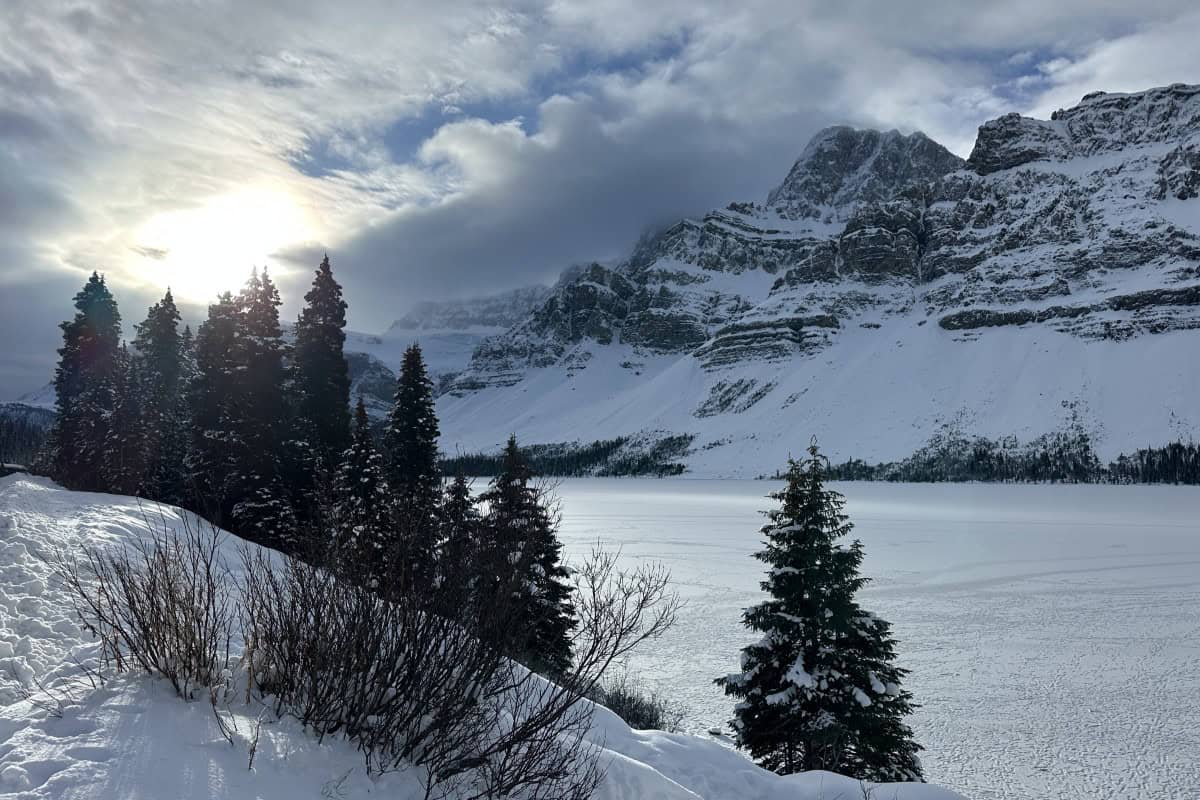
February days are longer than January, but they are still winter-short. Starting early gives you the best light and the mildest temperatures of the day.
Plan outdoor activities for late morning through mid-afternoon and aim to wrap things up before dusk. Once the sun drops behind the mountains, temperatures fall quickly, often right when energy levels do too.
Flexibility still matters in Banff in February. Weather shifts, temporary road closures, and changing conditions are normal. Build in buffer time, have a backup plan, and resist the urge to treat a tight itinerary as a challenge to beat.
Moraine Lake Reminder
Moraine Lake remains inaccessible in February. The road is closed to vehicles and buried under snow until late spring. There is no winter access for sightseeing, and any photos you see taken in February are either historic or mislabelled.
Best February Activities (and How to Do Them Right)
Lake Louise in Winter
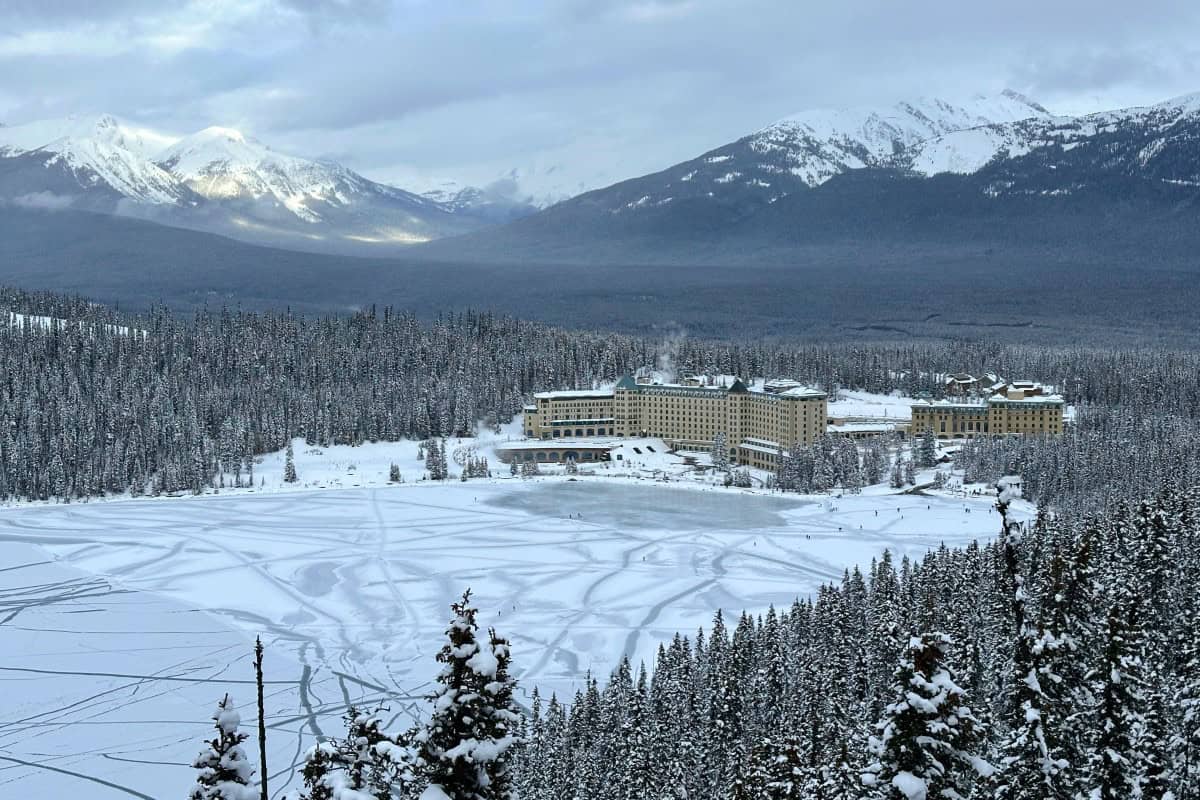
Lake Louise in February is fully frozen, fully snow-covered, and reliably spectacular. The lake surface is solid, winter activities are well established, and crowds are generally lighter than during the holiday period, except on peak weekends.
You can skate directly on the lake, rent skates at the Fairmont Chateau Lake Louise, or take a sleigh ride across the ice with Victoria Glacier dominating the view. Even a simple walk along the lakeshore feels worthwhile in February, especially on bright, clear days when the light reflects off the snow.
Surrounding trails like the Lake Louise Lakeshore and Fairview Lookout are well-packed and popular for winter hiking and snowshoeing. Traction is essential, and earlier starts help keep things quieter, particularly outside the Family Day weekend.
Banff Upper Hot Springs: The Best Cold-Weather Reward
February is peak hot springs season in Banff. When the air is cold, the contrast of soaking in hot mineral water actually makes sense, rather than feeling like a novelty.
The Banff Upper Hot Springs stay open year-round, and February is when they feel earned. After skiing, snowshoeing, or a long winter walk, a soak here is one of the simplest ways to warm up properly. Expect steamy water, snowy surroundings, and a steady flow of people, especially in the late afternoon and early evening.
Go earlier in the day or later at night if you want a quieter experience. The temperature stays consistent, but the atmosphere changes altogether once the sun drops and the mountains darken. It is one of those rare winter activities where standing still is not only allowed; it is encouraged.
Lake Minnewanka in Winter
Lake Minnewanka remains a good winter stop in February, even without the boat cruise. The lake is typically frozen or partially frozen, and the open setting gives it a wide, exposed winter feel.
Trails like Stewart Canyon are well-suited to winter hiking and snowshoeing, especially midweek when things are quieter. Wildlife sightings are possible year-round, so keep your distance and stay alert.
Microspikes are strongly recommended, as icy sections are common. Roam Transit Route 6 to Lake Minnewanka does not operate in winter, so you will need your own vehicle or a tour.
Banff Gondola (Sulphur Mountain): Winter Views at the Summit
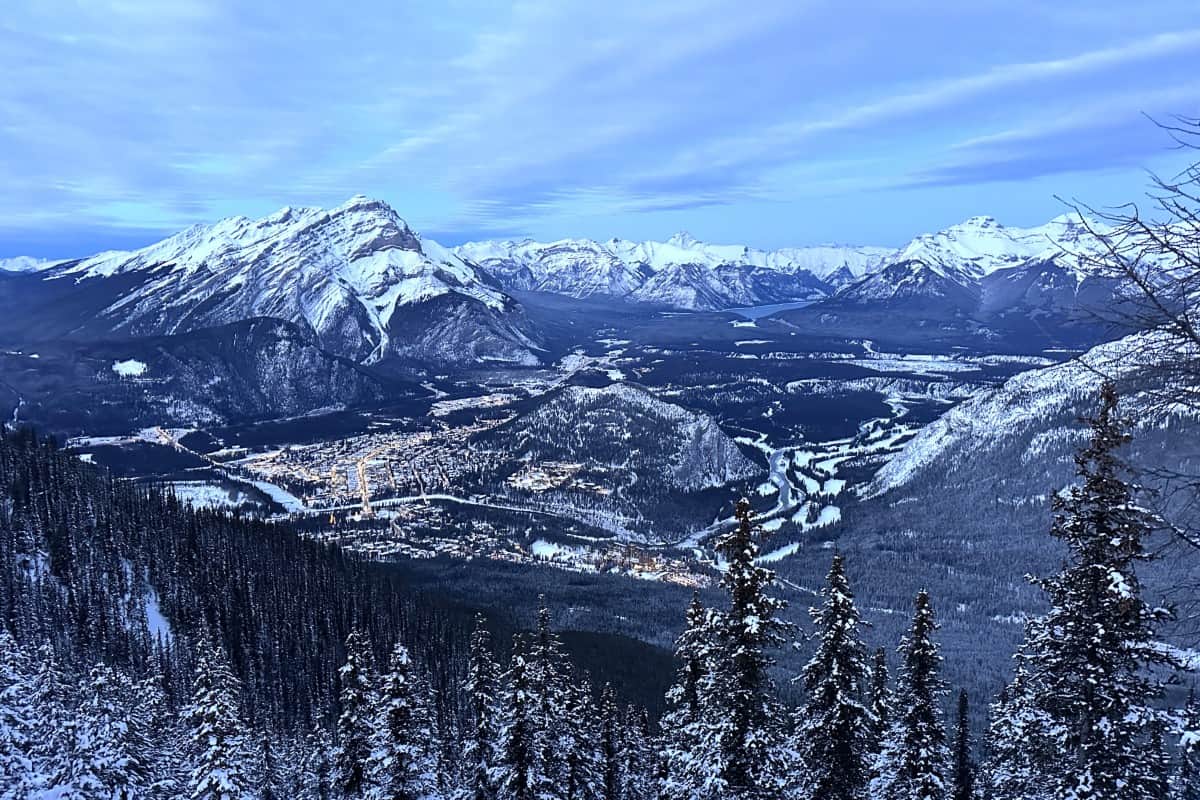
The Banff Gondola operates year-round, and February offers classic winter views of snow-covered peaks and the Bow Valley below. The summit facilities are a welcome warm-up, and Sky Bistro remains a popular place to linger once you have thawed out.
February sunsets are often excellent, especially on clear days when the longer daylight allows for more flexible timing. Weekends can still be busy, particularly during Family Day weekend, so advance booking is recommended.
Snowshoeing and Winter Hiking
February is prime time for snowshoeing and winter hiking in Banff. Snow coverage is consistent, trails are well established, and conditions are generally more predictable than earlier in the season.
Popular routes include Johnson Lake, Tunnel Mountain, and the Lake Louise shoreline. Snowshoe rentals are widely available in Banff and Lake Louise. Guided tours remain a good option for anyone new to winter travel or looking to explore without worrying about navigation and conditions.
Johnston Canyon Ice Walk
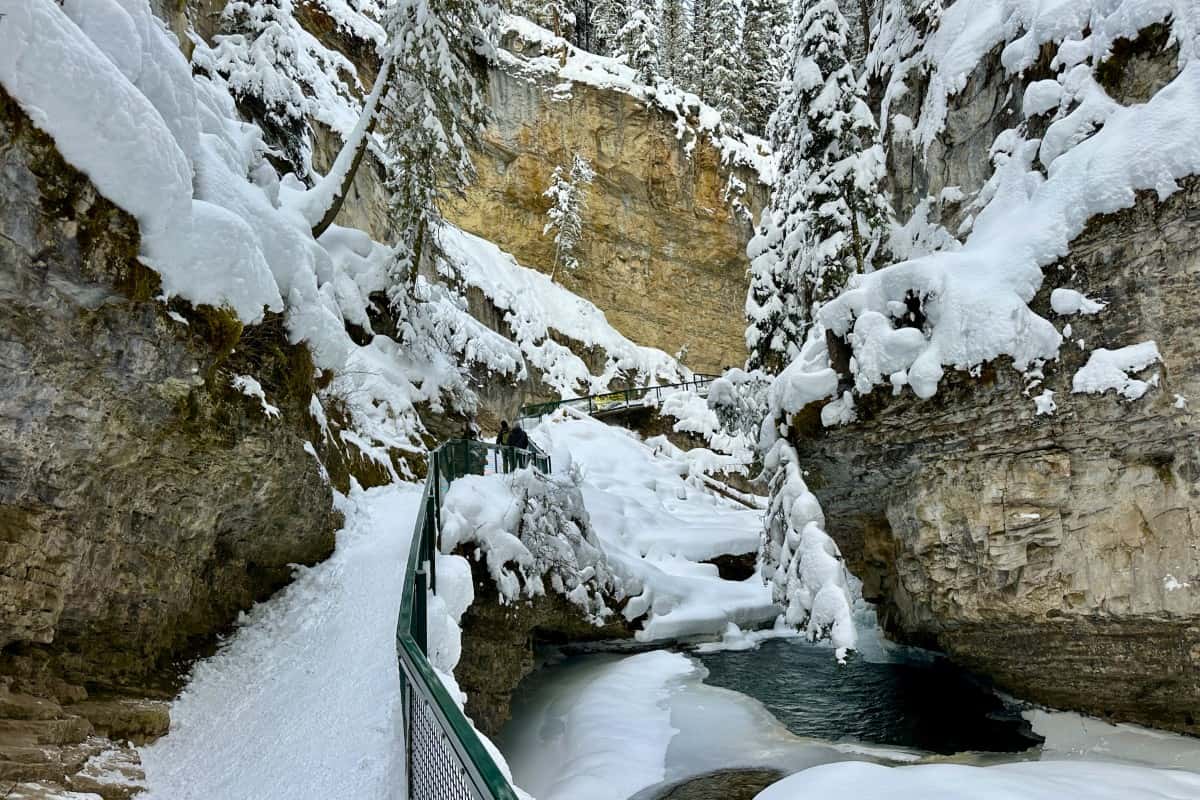
February is peak icewalk season at Johnston Canyon. The waterfalls are fully frozen into dramatic ice formations, often at their most impressive of the winter.
The trail is accessible but busy, especially late morning through early afternoon. Early starts or later-day visits are your best option for fewer people. Ice cleats or microspikes are essential. Guided ice walk tours include gear, transportation, and usually hot drinks, which feel particularly welcome in February.
Northern Lights: Possible, But Never a Promise
February is one of the better months for aurora viewing around Banff, but it needs to be framed honestly. The northern lights are possible, not predictable, and never guaranteed.
Clear skies, intense solar activity, and very dark conditions all need to line up. Cold, cloud-free February nights give you better odds than many other months, but town lights limit visibility. Your best chance is away from Banff Avenue, with a clear view north and minimal light pollution.
If you see the northern lights, it will feel like a bonus rather than something you planned around. That is the right mindset. Do not build an itinerary around them, but if conditions line up while you are already out enjoying a cold, quiet winter night, February gives you a fighting chance.
Downhill Skiing and Snowboarding
By February, all three Banff ski resorts are fully open and operating at full capacity. Sunshine Village, Lake Louise Ski Resort, and Mt. Norquay offer a wide range of terrain, from beginner-friendly runs to long alpine descents.
Snow conditions are often excellent, especially after fresh snowfall. Weekends and powder days are busy, while midweek skiing in February can be some of the best of the season with fewer crowds and stable conditions.
Skating
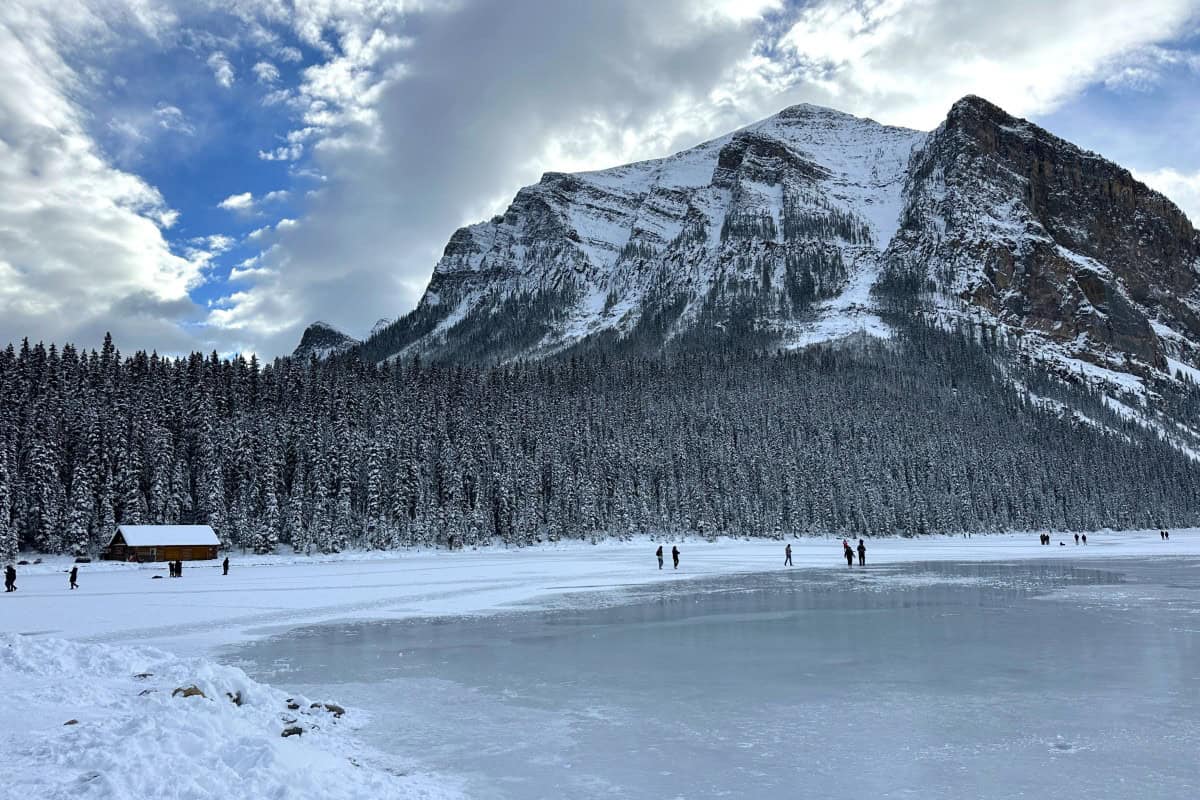
Skating options in February are well established. Lake Louise remains the headline experience, but outdoor rinks at the Banff High School field and Fenlands Recreation Centre are also popular.
Ice conditions depend on the weather, but February usually delivers consistent surfaces. Skating outdoors on a cold, clear evening is one of those experiences that sounds less appealing than it actually is.
For a special day trip, the Whiteway in Invermere is still well worth the drive if conditions are good.
Sleigh Rides
Sleigh rides continue through February around Lake Louise and in select areas near Banff. Without the holiday rush, bookings are generally easier to secure, and the experience feels more relaxed.
It is an easy, low-effort winter activity that still delivers strong scenery, making it a good option for families or anyone wanting to be outdoors without too much physical effort.
Cross-Country Skiing
February is an excellent month for cross-country skiing in Banff. Groomed trails around the Banff Golf Course, Lake Louise, and Cascade Valley offer a wide range of options, from flat beginner loops to longer scenic routes.
Rentals are available in town and at some trailheads, making it easy to try without much advance planning.
Snow Tubing at Mt. Norquay
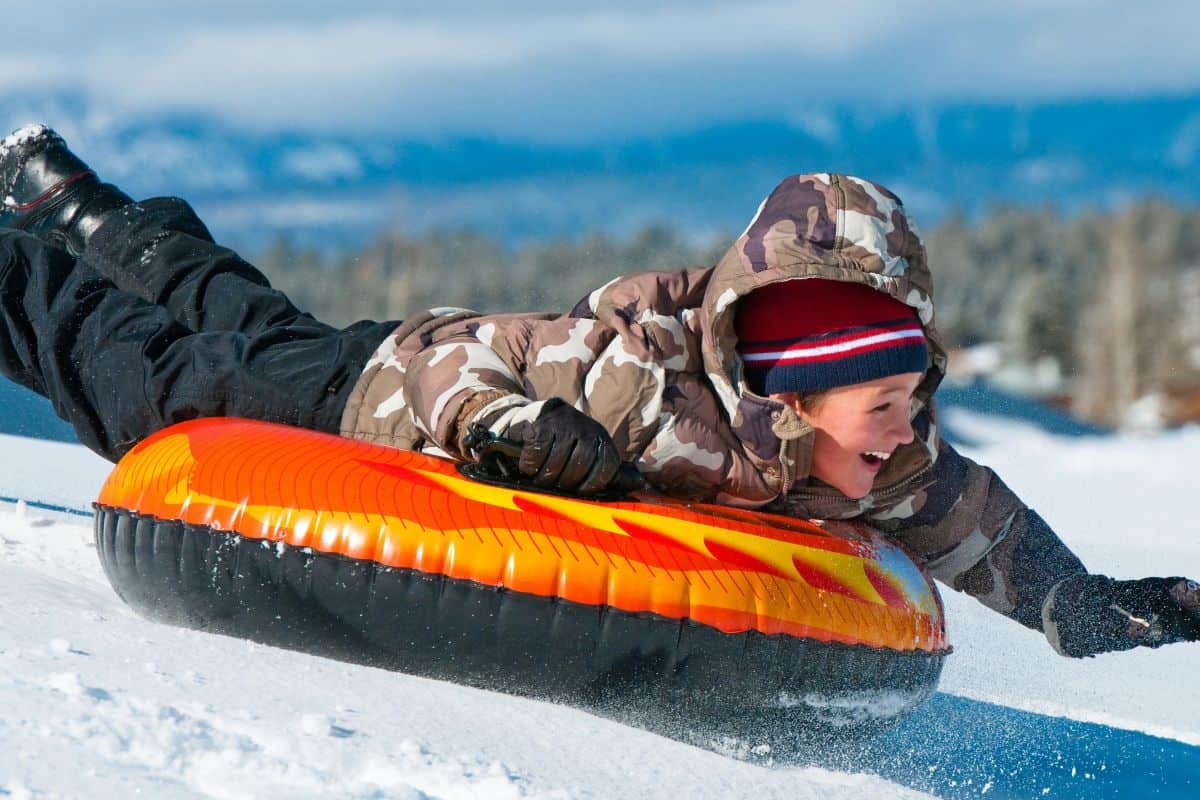
Mt. Norquay’s snow tube park operates through February and remains one of the easiest ways to enjoy downhill winter fun without committing to skis or a lift pass.
It is fast, fun, and surprisingly addictive, with excellent views over Banff. A good option for mixed groups where not everyone wants to ski.
Abraham Lake Ice Bubbles
Abraham Lake sits just outside Banff National Park, but it remains a popular February side trip. By this point in winter, the methane ice bubbles are often well-formed and stacked beneath the ice.
Conditions can still be extremely cold and windy. Dress appropriately, bring a tripod if you want photos, and always check ice conditions before heading out. February is not the month to guess.
Wildlife and Nature: Quiet, Subtle, and Still Active
February is still a quiet month for wildlife viewing in Banff, but by this point in winter, patterns are well established. Deep snow and cold temperatures continue to limit movement, and animals focus on conserving energy and sticking close to reliable food sources.
What February offers is subtlety rather than spectacle. Fewer dramatic roadside scenes, fewer crowds stopping suddenly for photos, and more opportunities to notice tracks, behaviour, and signs of life if you slow down and pay attention.
Wildlife tends to stay lower in the valleys during winter, which keeps sightings around town, along parkways, and near open meadows more likely than in summer. As always, keep your distance, give animals space, and never approach or feed wildlife.
Elk in February: Present and Predictable, Until They’re Not
Elk remain present year-round in the Bow Valley, and February is no exception. The rut is long over, and behaviour is generally calmer, but that does not mean risk-free.
Small groups are often seen in open areas, including the Banff Springs golf course, Vermilion Lakes, and forest edges near town. Early mornings and late afternoons are still the most common times to spot them, particularly on quieter days.
They may appear relaxed, but winter is a demanding season. Give elk plenty of space and avoid surrounding them for photos. February is not the time to test how close is acceptable.
Bears Are Still Denned, But Winter Tracks Are Everywhere
In February, both grizzly and black bears remain fully denned and inactive. Bear sightings are not a factor at this time of year.
What you will see instead are tracks. Wolves, cougars, lynx if you are very lucky, coyotes, and foxes remain active throughout winter and are well adapted to snow and cold. Actual sightings are uncommon, but fresh tracks crossing trails, roads, or frozen lakes are frequent.
In February, seeing tracks without seeing the animal is normal, and often the entire experience.
Bighorn Sheep and Mountain Goats: Reliable Winter Sightings
Bighorn sheep are among the most reliable wildlife sightings in February. They often move to lower elevations where snow cover is thinner, and food is easier to access.
You are most likely to spot them along the Bow Valley Parkway, Highway 1A, and near Lake Minnewanka. Mountain goats are less common, but can occasionally be seen on steep, rocky terrain nearby.
If you encounter sheep near the road, stay in your vehicle and keep moving when traffic allows. They are impressive animals, not an excuse to stop in the cold and create a roadside standoff.
Moose and Deer: Quiet and Hard to Spot
Moose are present in Banff National Park year-round, but February sightings are uncommon. They tend to remain in forested wetlands and sheltered areas, such as around Vermilion Lakes or farther north along the Icefields Parkway.
White-tailed and mule deer are easier to spot and often move through the Banff townsite or feed in open areas near roads and trails. Like all winter wildlife, they conserve energy, so slow movement and long pauses are normal.
Winter Birds and Small Mammals
While most migratory birds are long gone, February still offers steady birdlife. Chickadees, woodpeckers, ravens, and grey jays remain active and easy to spot once you stop scanning only for large animals.
With patience and a bit of luck, you may also see snowshoe hares, red squirrels, or ermine darting across the snow. In February, wildlife does not disappear - it simply asks you to pay closer attention.
Scenic Drives and Day Trips
February is when Banff’s scenic drives start to feel more achievable, but no less demanding. Snow coverage is consistent, road conditions are often more stable than in January, and longer daylight makes full-day outings more realistic.
That said, February can be deceptive. Clear skies and dry roads in town do not mean forgiving conditions once you leave the valley. Scenic winter driving here still requires planning, winter confidence, and a willingness to turn around if conditions change.
Icefields Parkway
February is one of the best winter months to drive the Icefields Parkway if conditions are good. Snow-covered peaks, frozen lakes, and brighter winter light combine to make the scenery especially striking, and traffic is usually lighter than at any other time of year.
Stops like Bow Lake are often accessible, and the Peyto Lake viewpoint is more likely to be reachable than in January, though this still depends on snow clearing and wind conditions. Parking areas may be partially ploughed, and facilities remain closed for the season.
The key difference in February is daylight. You have more usable hours to drive, stop, and return without rushing, which makes the experience feel less pressured. Even so, this is still a full winter drive from start to finish.
Important February Notes for the Icefields Parkway
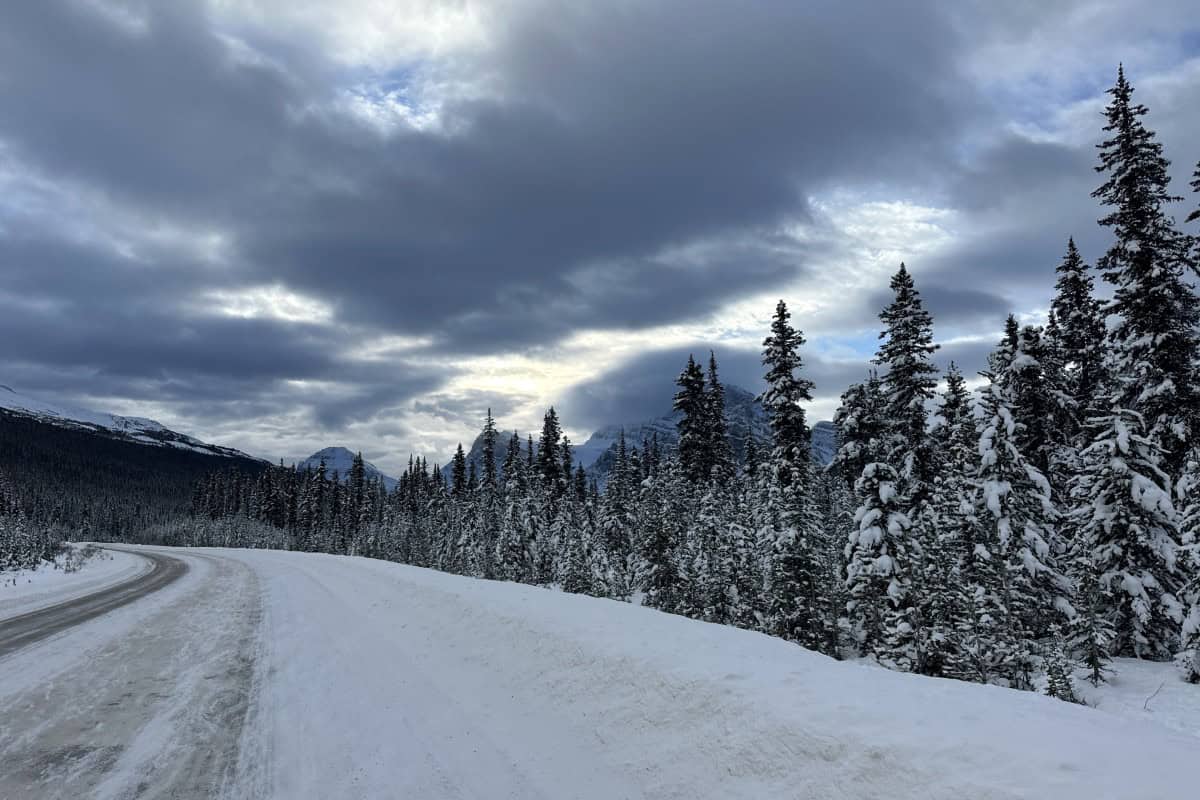
No services
There is no fuel, food, lodging, or reliable cell service along the 230 km stretch between Lake Louise and Jasper from October through May. February does not change this.
No road salt
The parkway is ploughed and sanded, but not salted. Compact snow and ice remain common, particularly in shaded sections and higher elevations.
Maintenance windows still matter.
Road maintenance generally occurs during daylight hours only, roughly 7:00 a.m. to 3:30 p.m. Conditions can deteriorate quickly after storms, and closures for avalanche control still happen.
Winter preparedness is not optional.
Proper winter tyres are essential, not just recommended. Carry an emergency kit, warm layers, food, water, and a fully charged phone. February offers better visibility than January, but mistakes still come with consequences.
Viewpoint access improves, but is never guaranteed
Some viewpoints are more accessible than earlier in winter, but parking and walking access can still involve deep snow or icy surfaces. Expect variability, not certainty.
Daylight helps, but does not remove limits.
February’s longer days reduce pressure, but winter darkness still arrives quickly once the sun drops behind the peaks. Plan conservatively and turn back earlier than feels necessary.
Yoho and Kootenay National Parks
February is a strong month for short day trips into neighbouring parks, mainly when road conditions are settled.
In Yoho National Park, Emerald Lake feels especially calm in February. The frozen lake, snow-covered forest, and fewer visitors create a quieter experience than summer, and winter trails are usually well packed for walking or snowshoeing.
In Kootenay National Park, Marble Canyon remains a reliable winter stop. The short walk through icy canyon walls is manageable even on colder days, but traction is essential, and surfaces are often slick.
February makes these trips more comfortable than January, but flexibility still matters. Always check conditions before leaving Banff, and be prepared to change plans if weather or road reports shift.
February Events and Festivals in Banff
February is a strong month for winter events in Banff. Snow conditions are reliable, the holiday period is behind us, and the town settles into a rhythm that suits outdoor art, evening experiences, and winter festivals.
Events in February are built for cold weather and shorter days. They focus on ice, snow, light, and storytelling rather than packed schedules or all-day crowds. Some run briefly, others stretch across much of winter, but all are well-established parts of Banff’s February calendar.
This section outlines the winter events and festivals that take place in Banff during February, with exact dates and scheduling details provided separately.
2026 February Event Calendar (Full Event Details Below)
- SnowDays Festival: January 16 – February 8, 2026
- Bear Street Hub: January 16 – February 8, 2026 (Daily)
- SnowDays Play Zone: January 16 – February 8, 2026 (Central Park)
- Ice Magic (Lake Louise): February 5 – February 8, 2026 (Note: Exclusive access for hotel guests and residents)
- Art of Ice (Live Carving): February 6 – February 8, 2026 (Bear Street, Banff)
- Family Day Long Weekend: February 14 – February 16, 2026 (Peak crowds)
- Banff Flying Canoë Volant: February 26 – March 1, 2026
- Nightrise at the Gondola: Nightly throughout February (Runs until March 29)
- Banff Winter Carnival: All month, Thursday through Monday (Cave and Basin)
Ice Magic at Lake Louise
Ice Magic is one of those events that looks impressive in photos and still manages to deliver in person. Large blocks of ice are transformed into detailed sculptures on the frozen shoreline of Lake Louise, with Victoria Glacier looming quietly behind the scene.
It is a controlled, ticketed experience, and that works in its favour. The atmosphere feels calm rather than chaotic, and the setting does most of the heavy lifting. Evening visits add another layer, with lighting changing the mood entirely. It is cold, often very cold, but that is part of the point.
SnowDays Festival
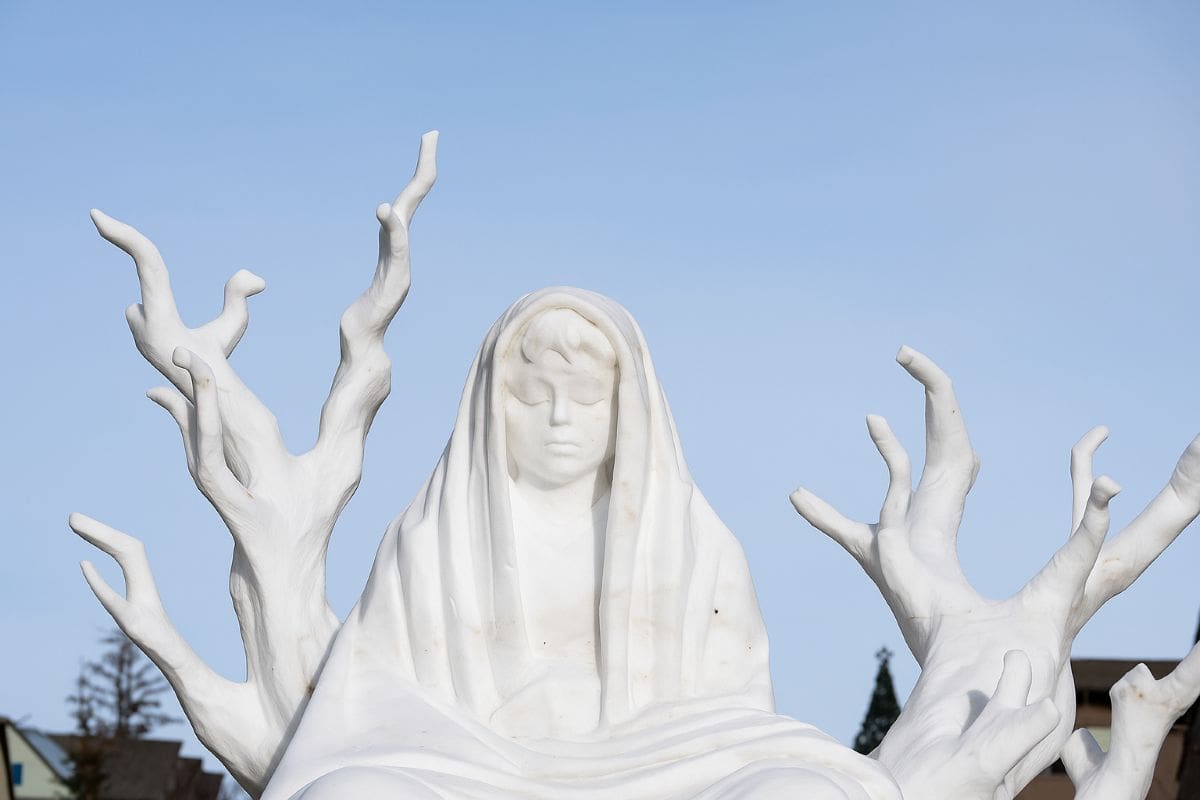
SnowDays brings winter art and activity into Banff and Lake Louise, leaning into ice, snow, and classic winter spectacle rather than trying to dress winter up as something else.
By February, the festival feels less like a launch and more like a backdrop. Some elements may still be visible around town, especially sculptural displays, while others come and go quickly. When it is active, SnowDays adds texture to the town without overwhelming it.
Bear Street Hub
The Bear Street Hub is where SnowDays concentrates most of its energy. Live music, street performers, and ice carving demonstrations take over a section of downtown Banff and give the area a livelier feel than usual for winter.
It is busy without being overwhelming and easy to dip into for a short time rather than committing an entire afternoon. When the festival ends, the hub disappears just as quickly, and Banff goes back to its quieter winter pace.
Snow Sculptures in Downtown Banff
Snow sculptures appear around downtown Banff as part of winter festival programming and are one of the easiest things to enjoy without planning.
They are spread out, easy to stumble across, and often best appreciated after dark when fewer people are around. Their lifespan depends entirely on weather, which makes them feel temporary in the best way. If they are there during your visit, they are worth a wander. If not, nothing feels missing.
SnowDays Play Zone
The SnowDays Play Zone turns Central Park into a short-lived winter playground. Activities change from year to year but usually focus on simple, hands-on winter fun rather than anything extreme.
It is very much a drop-in experience. If it is operating while you are in town, it is an easy stop, especially for families. If it is not, Central Park remains exactly what February often delivers best: quiet, snowy, and unhurried.
SnowNights
SnowNights shifts winter festival energy into the evening. Events range from relaxed après-style gatherings to guided nighttime experiences that make use of darkness rather than fighting it.
These are not late-night parties or endurance events. They are designed to fit February evenings, when you want something interesting without committing to standing outside for hours. Booking ahead is usually required, and availability varies.
Banff Flying Canoe Festival
The Banff Flying Canoe Festival is one of the more thoughtful winter events on the calendar. Held along the Bow River and through Central Park, it brings the Flying Canoe legend to life with lanterns, storytelling, music, and gentle light installations.
Indigenous programming and local artists are central to the experience, and the tone is reflective rather than loud. It works well as an evening walk rather than a destination event and suits February’s quieter, colder nights perfectly.
Nightrise at the Banff Gondola
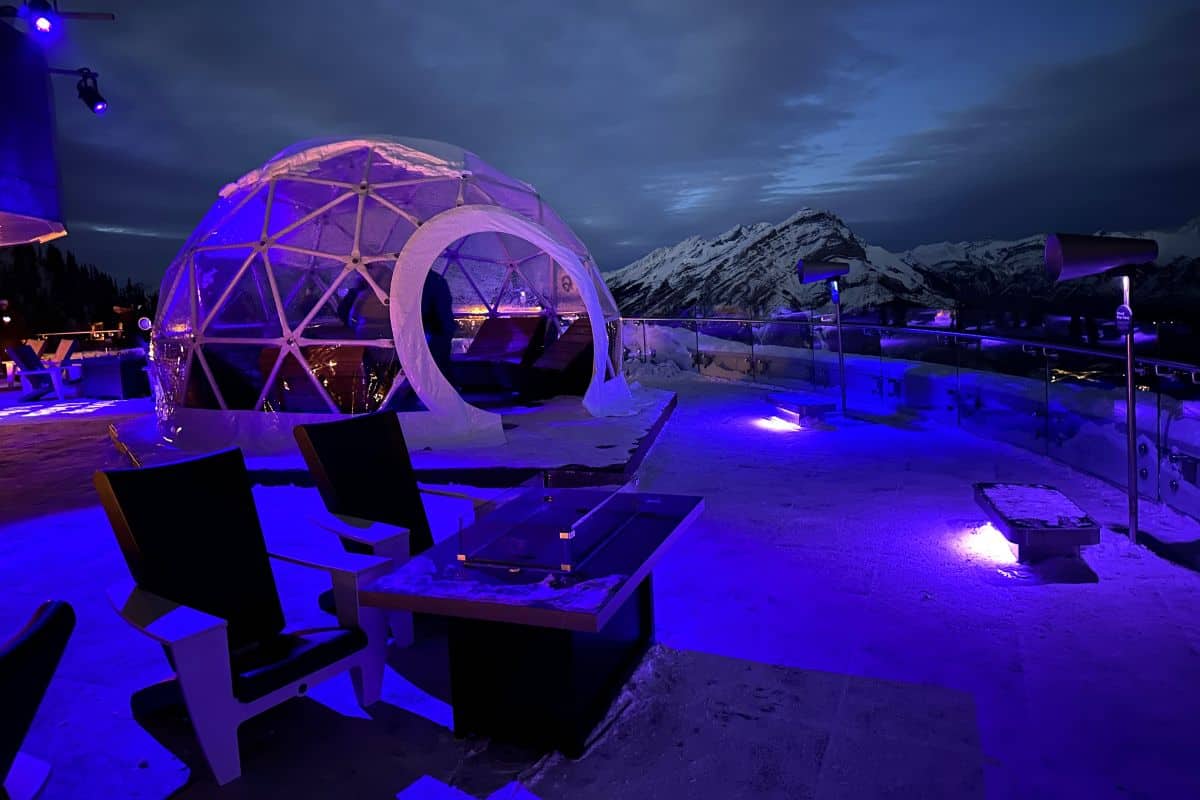
Nightrise turns a familiar daytime attraction into something completely different. After dark, Sulphur Mountain becomes a layered experience built around light, sound, and storytelling rather than views alone.
It is structured, ticketed, and polished, which makes it one of the more reliable evening options during winter. If you have already done the gondola during the day on a previous trip, this feels like a genuinely different experience rather than a repeat.
Banff Winter Carnival
The Banff Winter Carnival takes place at the Cave and Basin National Historic Site and leans into Banff’s early winter history rather than spectacle.
Expect simple winter games, historic displays, and short indoor components that take the edge off cold days. It is relaxed, low-pressure, and easy to pair with other plans rather than building a day around it.
Local Tips to Travel Smarter in February
February rewards travellers who understand winter rather than fight it. Snow conditions are reliable, daylight improves, and the town runs smoothly - as long as you plan with winter in mind. Do that, and February is one of the easiest and most enjoyable months to visit Banff.
Book the Right Things Early (Weekends Matter)
February is generally easier than December and early January, but it is not wide open. Ski lessons, gondola tickets, and guided winter tours can still book up, especially on weekends and during busier periods.
Accommodation is usually straightforward to secure midweek, but popular hotels and lodges still fill quickly on peak dates. If there is something specific you want to do, book it. February is relaxed, but it is not last-minute friendly across the board.
Use the Extra Daylight Properly
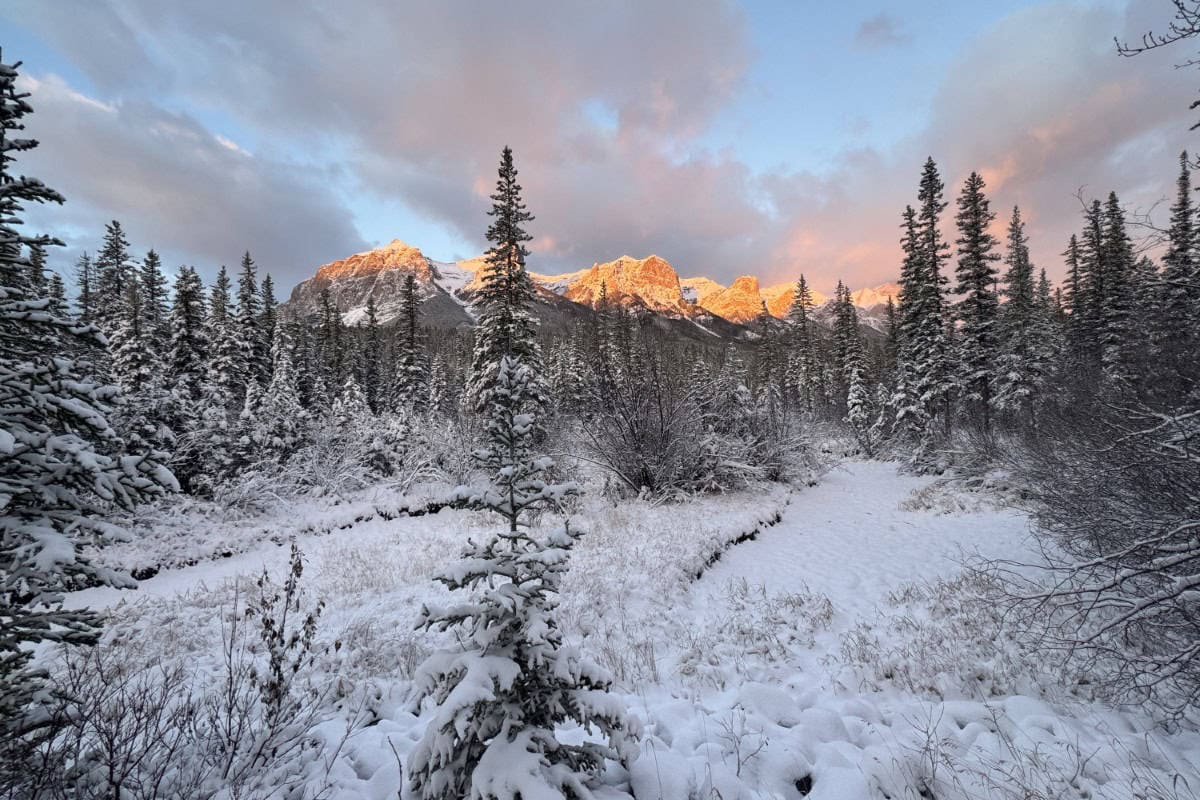
February days are noticeably longer than January, and that changes how you can plan your time. You have more flexibility for morning starts and late-afternoon activities, but winter still sets limits.
Outdoor plans work best from mid-morning through late afternoon. Once the sun drops behind the mountains, temperatures fall quickly. A headlamp is still useful for winter walks, especially if plans run longer than expected.
Drive Confidently or Choose Not to Drive
Road conditions in February are often more settled than in January, but snow and ice remain part of daily life. Proper winter tyres are essential, and an emergency kit should always be in the vehicle.
If winter driving makes you uneasy, February is an excellent month to rely on shuttles and Roam Transit. Services are reliable, roads are busy enough to feel safe, and letting someone else handle winter conditions makes the day far more relaxed.
Dress for Cold, Not Just the Forecast
February can be slightly warmer than January, but cold snaps are still common. Temperatures well below -15°C are normal, and wind chill can make exposed areas feel much colder.
Layer properly. Thermal base layers, a warm mid-layer, a good parka, insulated boots, gloves or mitts, a toque, and some form of face protection all matter. Hand warmers are still practical, especially for long days outside or evening events.
Stay Flexible With Day Trips
February often brings clear skies and stable weather, which makes longer outings tempting. That does not mean conditions cannot change.
Snowfall, avalanche control, and temporary road closures still happen. Build buffer time into plans, check forecasts and road reports, and be prepared to turn around. February rewards good judgment more than ambition.
Wildlife Awareness Still Applies
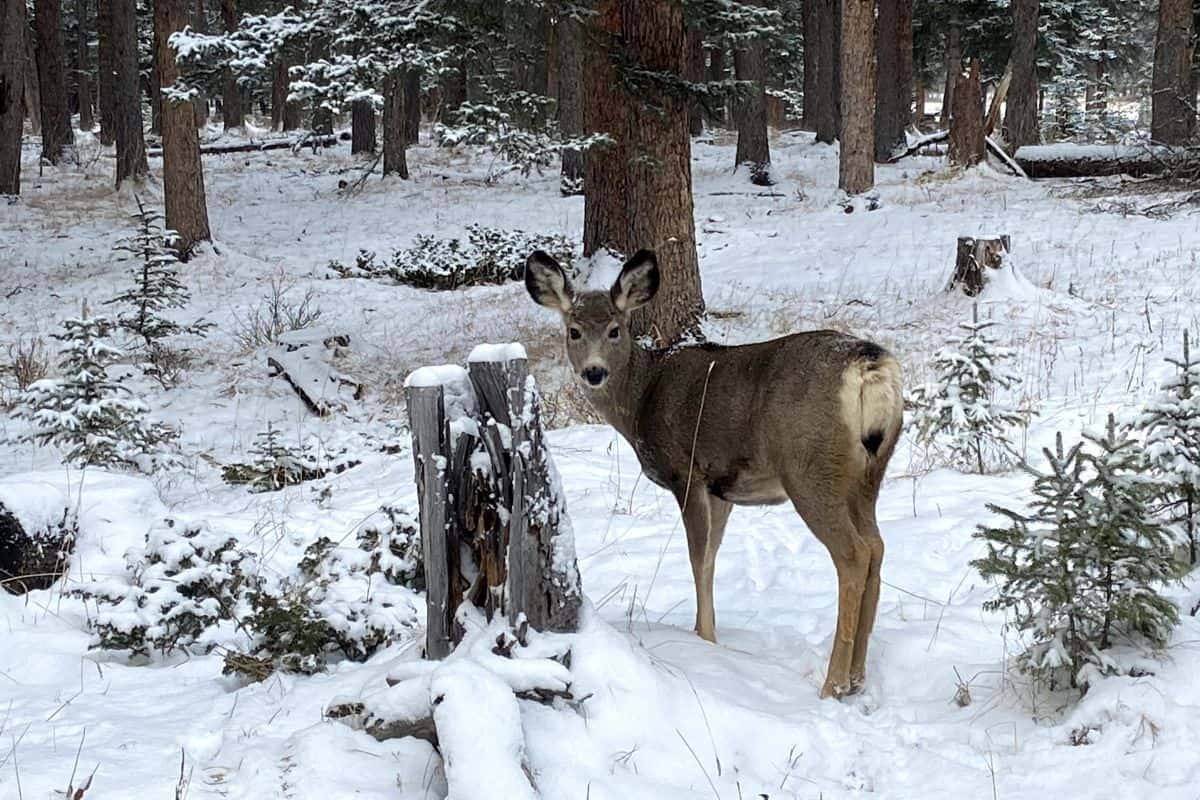
Bears remain fully hibernating in February, but elk, deer, coyotes, wolves, and bighorn sheep are active throughout the Bow Valley.
Wildlife is often easier to spot near town, along parkways, and in open areas where snow is thinner. Give animals plenty of space, stay alert while walking or driving, and never feed wildlife. Winter is a demanding season for them.
Be Avalanche Aware
If you are venturing into backcountry terrain for skiing, snowshoeing, or splitboarding, avalanche awareness is essential in February. Snowpacks are deeper, layers are well established, and risk remains real.
Check the avalanche forecast, carry proper safety gear, and know how to use it. For many visitors, resorts, groomed trails, and guided experiences remain the safest and most enjoyable options.
Hydration and Sun Still Matter
Cold weather makes it easy to forget basic things. Dehydration is common in winter, especially when you are active. Carry water, ideally in an insulated bottle to prevent freezing.
Sun protection is also important. Snow reflects light strongly, and clear February days can be surprisingly bright. Sunglasses and sunscreen are not optional extras.
Know What Is and Isn’t Open
February is a strong month for winter access, but some places remain closed or limited. Moraine Lake is still inaccessible, while Johnston Canyon, Lake Louise, the Banff Gondola, and winter trails are in excellent condition.
Always check seasonal access before heading out. February is reliable, but it is still winter.
Leave No Trace Still Applies
Snow does not erase impact. Stay on marked trails, pack out all garbage, and avoid cutting across snow-covered vegetation.
February often feels quiet and pristine, which makes it even more important to tread lightly. Winter landscapes recover slowly, even when they are hidden under snow.
Why February Is One of the Best Times to Visit Banff
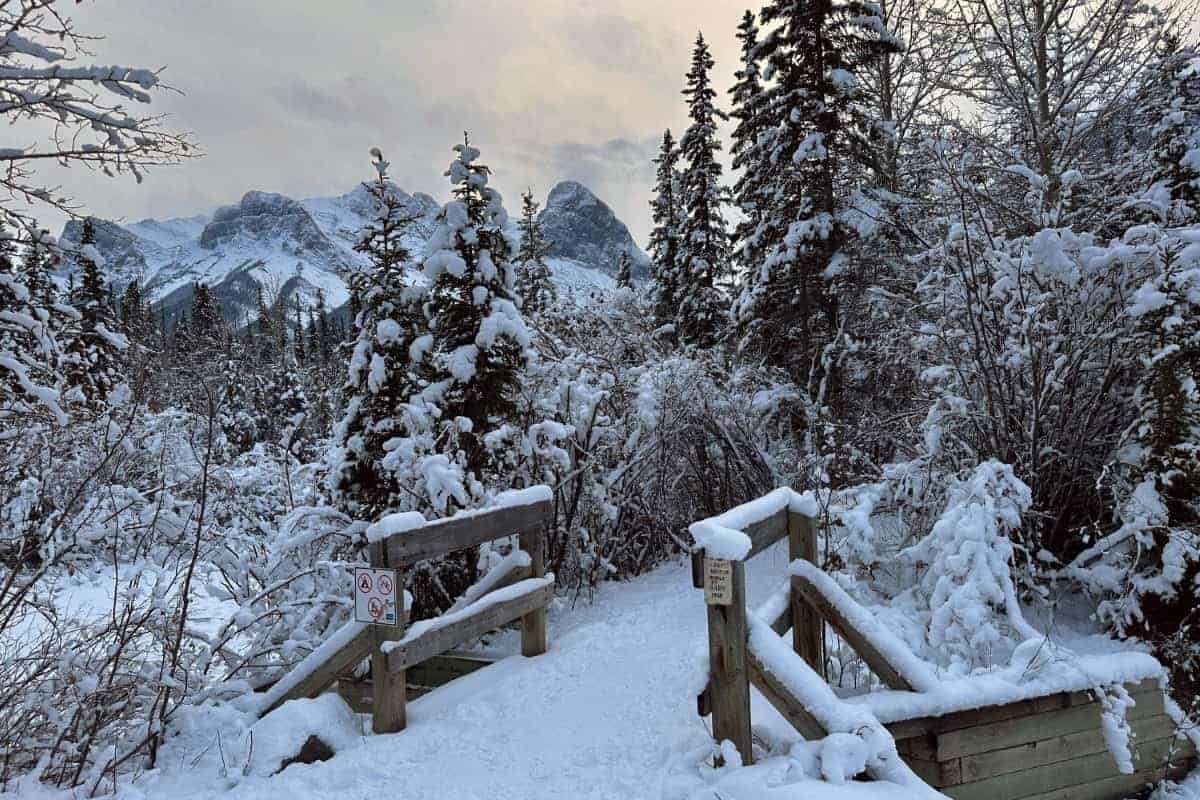
Banff in February is winter in its most settled form. The holiday rush is long gone, snow conditions are reliable, and the town runs at a steady, confident pace. Everything works the way it’s meant to, without the noise and pressure of peak season.
This is the month for skiing when conditions are consistent, winter walks that feel unrushed, and clear days where the mountains look sharp rather than soft. Evenings are still cold and quiet, but there’s more daylight to work with, and a better balance between doing things and knowing when to stop.
Plan sensibly, dress for real winter, and give yourself room to adapt, and February delivers a version of Banff that feels calm, capable, and properly lived in. It’s not trying to impress. It doesn’t need to.
FAQs: Banff In February
Is February a good time to visit Banff?
Yes. February offers reliable winter conditions, fewer crowds than the holiday season, and longer daylight than January. It’s a good month for skiing, winter walks, and scenic drives, as long as you’re prepared for cold weather.
How cold is Banff in February?
February is still cold. Daytime temperatures often sit between -8°C and -15°C, with colder mornings and evenings. Cold snaps below -20°C can happen, especially during clear periods. Wind chill can make it feel much colder in exposed areas.
Is February in Banff busy?
February is quieter than December and generally calmer than January, but it is not empty. Ski hills and popular attractions are busiest on weekends and during Family Day weekend. Midweek visits are usually much quieter.
Can you visit Lake Louise and Johnston Canyon in February?
Yes. Lake Louise and Johnston Canyon are both excellent in February. Lake Louise is fully frozen and used for skating and winter walks, while Johnston Canyon’s frozen waterfalls are at their most dramatic. Ice cleats or microspikes are strongly recommended for both.
Is February a good month for driving in Banff National Park?
It can be, if you’re comfortable with winter driving. Roads are well-maintained, but snow and ice are normal. Proper winter tyres are essential, and conditions can change quickly outside town. If you’re unsure, shuttles and Roam Transit are reliable alternatives.


