Why You Need to Hike Johnston Canyon
Catwalks follow a limestone gorge to the Lower and Upper Falls, with a longer walk to the Ink Pots. The main canyon trail is closed for construction through December 11, 2026. Roam Route 9 is also suspended, with no confirmed restart date.

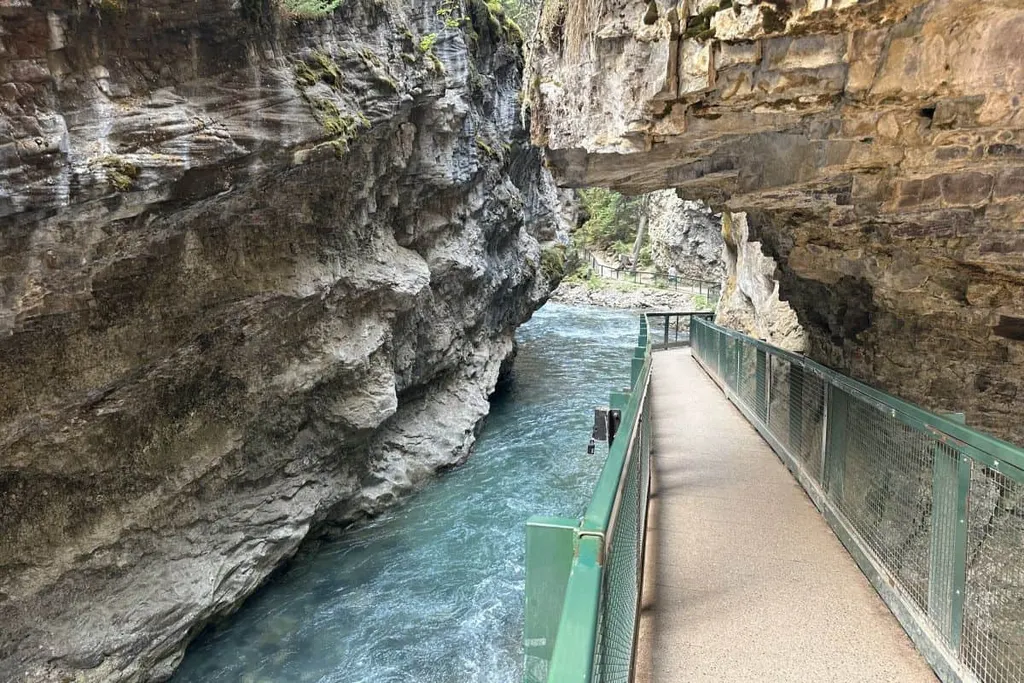
Johnston Canyon takes you into a narrow limestone gorge, with steel catwalks following the creek to two waterfalls. You hear the water long before you reach the viewing platforms.
About 30 minutes west of Banff on the Bow Valley Parkway, it offers a short walk to the Lower Falls, a longer climb to the Upper Falls, or a half-day outing beyond the canyon to the Ink Pots.
Current closure, November 2026: Johnston Canyon Trail from the main trailhead to the Lower and Upper Falls, plus P1 parking and washrooms, is closed for construction from October 13 to December 11, 2026. Upper Falls and the Ink Pots remain accessible by the separate Moose Meadows route. The standard canyon walk described below is unavailable during this closure. Parks Canada closure notice
Getting to Johnston Canyon
Driving: Summer parking fills early. Arriving around 8 am gives you a better chance of a space and a quieter walk through the narrow sections.
Roam Transit: Route 9 normally connects Banff with Johnston Canyon; the listed adult single fare is C$5. As of November 10, 2026, it is suspended for construction. Roam's notice gives October 13 to approximately November 30, but does not confirm a restart date. Parks Canada's separate trail and day-use closure runs through December 11, so the bus estimate should not be read as a canyon reopening date.
Cycling: The Bow Valley Parkway is a scenic approach by bike or e-bike. Seasonal restrictions affect access along the parkway; overnight wildlife closures apply to cyclists as well as vehicles.
How Johnston Canyon Got Its Name
The canyon is named after prospector Billy Johnston, who explored it in the 1880s. Local accounts link him with the short-lived mining settlement of Silver City.
His name remained long after the mining rush had passed.
The Canyon's Human History
Johnston Canyon lies within the traditional territory of the Îyârhe Nakoda people. Its human history reaches far beyond the arrival of prospectors and tourists.
The creation of national parks brought displacement and restrictions on Indigenous access, hunting and harvesting. Today, Parks Canada recognises Indigenous connections to these lands as part of the park's history.
Choosing Your Route
Johnston Canyon's shorter waterfall walks follow paved but uneven ground, with narrow catwalks and some steep sections. Parks Canada does not recommend strollers. The Ink Pots route continues onto a rougher forest trail.
Lower Falls (about 1.1 km one way)
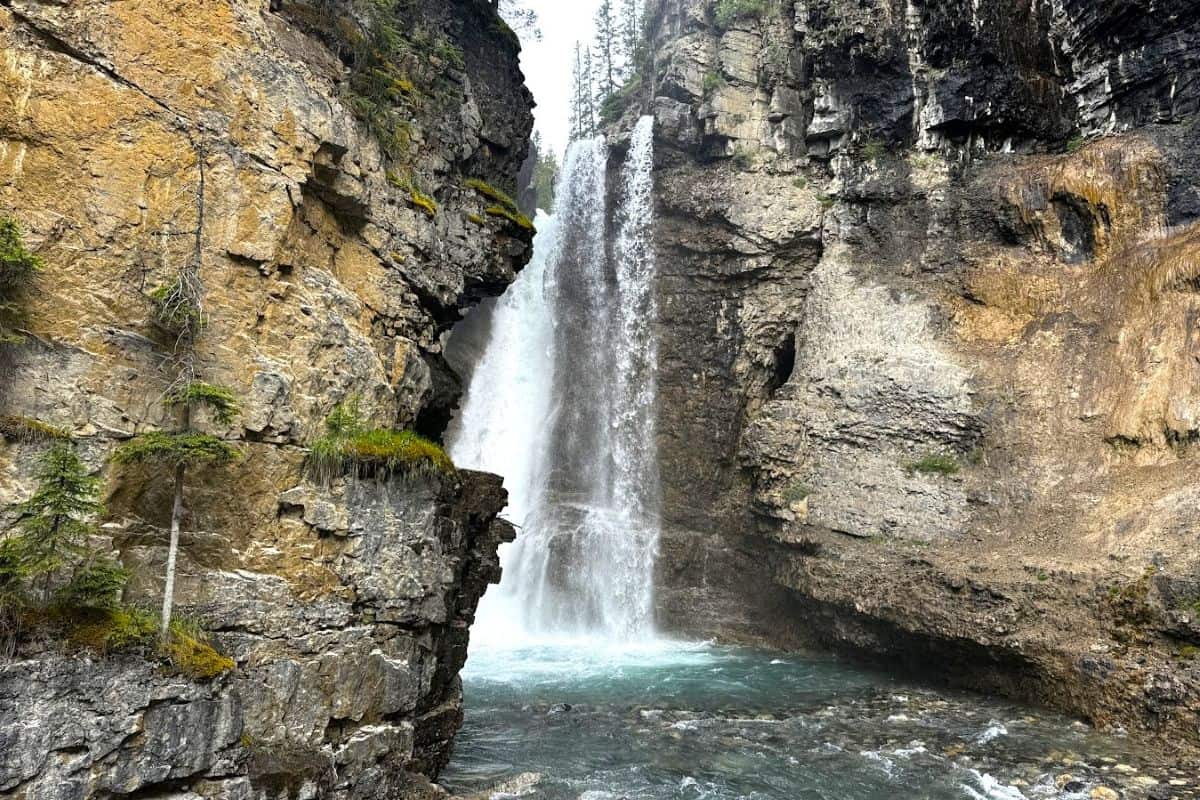
The path follows the creek onto catwalks fixed to the canyon walls. At the Lower Falls, a short rock tunnel leads to a close-up view of the water; this narrow entrance often has a queue.
Upper Falls (about 2.4 km one way)
Continuing uphill brings you to the 30-metre Upper Falls. The lower platform looks into the gorge, while a further 265 metres of trail reaches the viewpoint above the falls. It is a longer walk, with more climbing than the Lower Falls route.
Ink Pots (about 5.5 km one way)
Beyond the Upper Falls, the trail leaves the canyon and rolls through forest before opening into a meadow. The blue-green Ink Pots bubble up from underground springs. This extension changes a short waterfall visit into a longer walk over roots and rocks; there are no toilets at the pools.
Walking the Catwalks
The steel catwalks follow the limestone walls above Johnston Creek. They bring you close to the water and give the walk its character, though the narrow sections make passing other visitors slow.
Earlier walkways were wooden. The present steel structures let you follow parts of the gorge that would otherwise be inaccessible on foot.
That close view into the gorge is the heart of the Johnston Canyon experience.
Johnston Canyon Through the Seasons
Summer
Summer brings strong waterfall flow and the busiest trails. The canyon stays shaded even on warm days. American Dippers sometimes work their way along the creek, diving beneath the surface to feed.
Winter
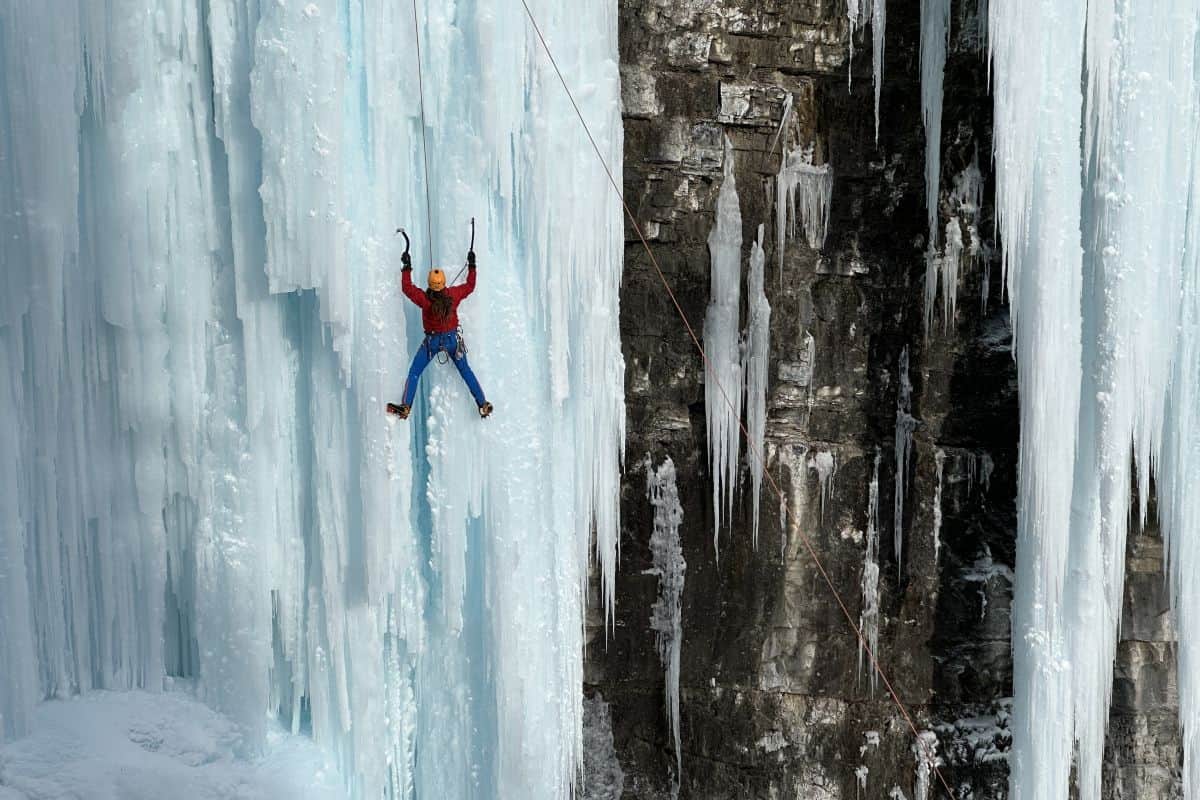
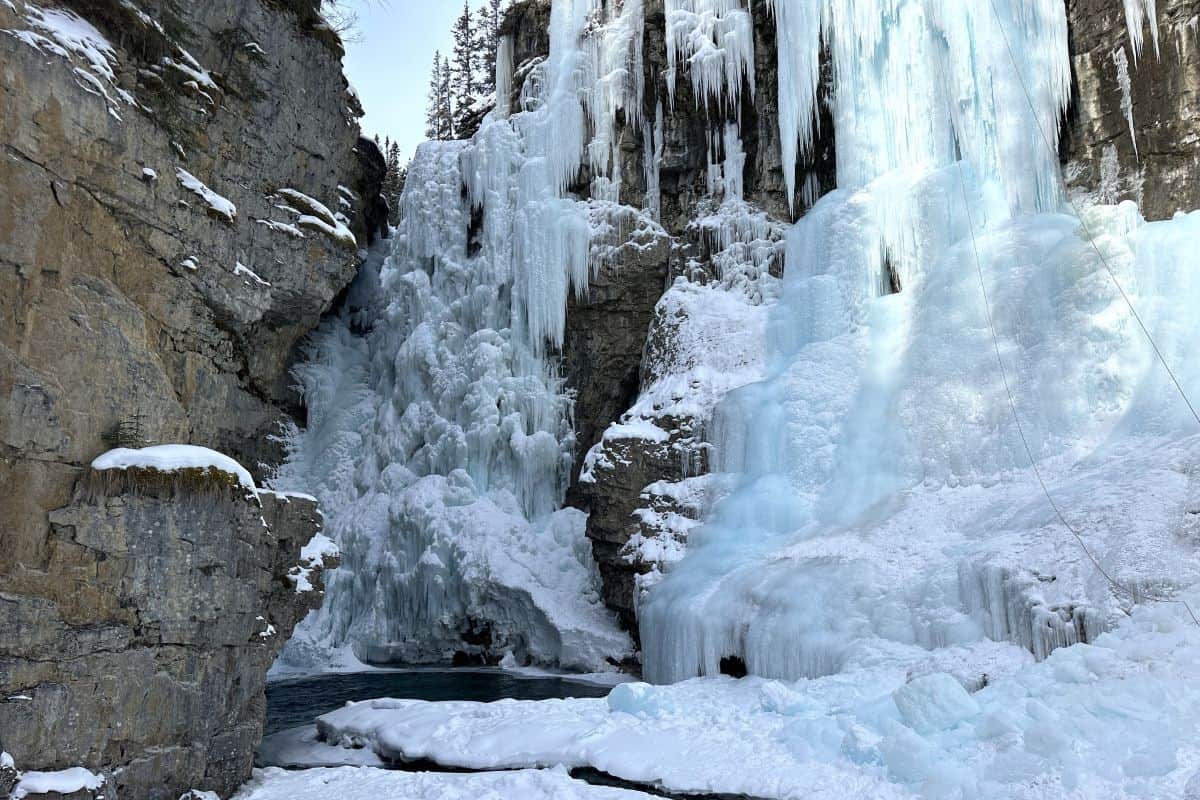
In winter, ice builds around the falls and along the canyon walls. A guided ice walk is one way to visit, or you can walk independently with ice cleats. The shaded trail is often very icy, and traction matters even on the short Lower Falls route.
Spring & Fall
The shoulder seasons bring spring meltwater and autumn colour, often with fewer visitors. Snow and ice can linger or arrive early in the shaded canyon, so footwear with grip and ice cleats may still be needed.
Wildlife Along the Trail
Johnston Canyon is in grizzly country, despite its busy trails. Wildlife you may see includes:
- Elk, deer or bears along the Parkway
- Squirrels and chipmunks along the forest edge
- Black Swifts nesting near the Upper Falls; the cliff habitat is protected and off-trail access is restricted
Our guides cover bear safety and cougar safety for walks around Banff.
Food Near the Trailhead
Food outlets at the trailhead are seasonal, so bring what you need for the walk, especially if you're continuing to the Ink Pots.
Johnston Canyon Lodge & Bungalows has several options during its operating season:
- Market Café: coffee, pastries and sandwiches
- The Shack: ice cream near the trailhead
- Black Swift Bistro: sit-down meals and a creekside patio
Protecting the Canyon
Stay on the designated trail and behind barriers. The off-trail restrictions protect nesting Black Swifts and fragile canyon habitat, as well as keeping visitors away from wet limestone and steep drops.
Recreational drone use is prohibited in the national park. Keep food away from wildlife and carry litter back out.
A Few Practical Details
- The shaded canyon can feel cool even in summer; a light extra layer is useful.
- Wear footwear with grip on wet paths and bring ice cleats when conditions are icy.
- Carry water and food for the longer Ink Pots walk.
Looking for accessibility information? Our guide describes access at attractions around Banff and Lake Louise: Accessible Banff.
Which Walk Would I Choose?
The Lower Falls give you the catwalks and the close-up waterfall view on a short visit. Continue to the Upper Falls if you have the time and energy for more climbing. The Ink Pots are a different outing, with the canyon followed by forest and open meadow.
Johnston Canyon is popular because the walk itself is interesting, not just the view at the end. Leaving room for slow progress through the narrow sections makes it more enjoyable.
(If you’re planning more waterfall adventures, check out our guide to Takakkaw Falls just across the border in Yoho National Park.)