Takakkaw Falls, Yoho: A Short Walk to a Very Big Waterfall
A short walk, a towering waterfall and a good reason to linger in Yoho. Plan your Takakkaw Falls visit, from the seasonal road to nearby stops and camping.

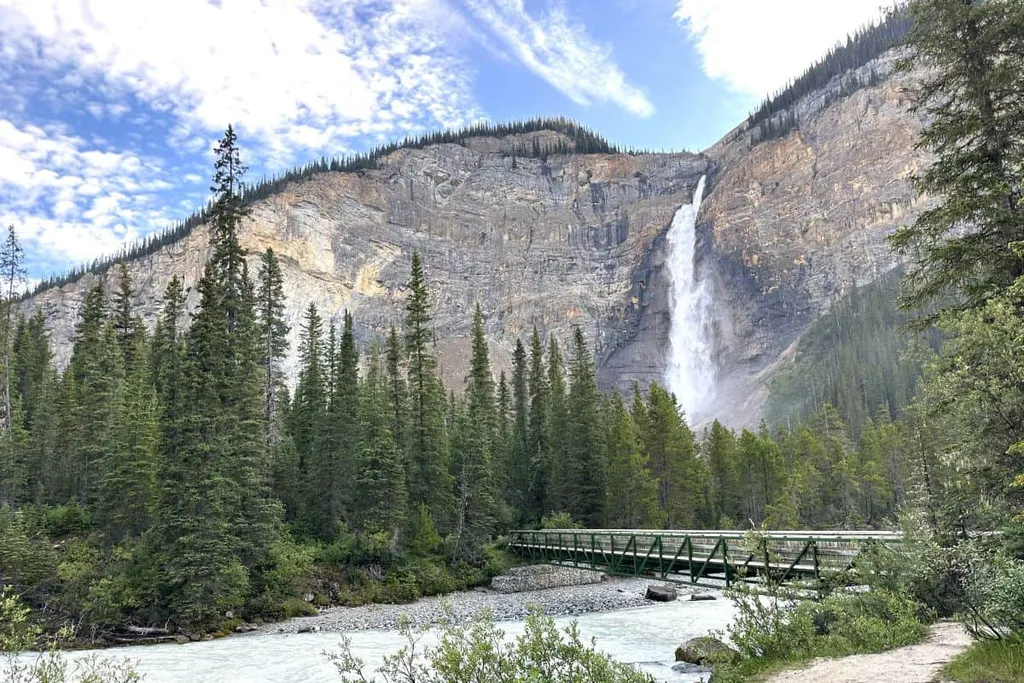
Takakkaw Falls is the sort of place that makes a short walk take an unexpectedly long time. First there's the view from the bridge: white water pouring down a vast cliff, conifers beneath it and the Yoho River rushing past your feet. Then there's the temptation to get a little closer. Then another photograph.
As you approach, the roar grows and the spray drifts across the path. A waterproof jacket can suddenly feel like a very good idea on an otherwise sunny afternoon. It's a wonderfully generous outing: a short, mostly flat walk, with a glacier-fed waterfall doing all the hard work.
You'll find it in Yoho National Park, just across the Continental Divide from Lake Louise. Add lunch in Field and a wander beside Emerald Lake, and you have a summer day with plenty to linger over.
Takakkaw Falls is a seasonal stop while Yoho Valley Road is open. The Radventures tour is for ages 12 and over; the Wapta Falls option requires moderate fitness. These tours aren't wheelchair accessible.
🍃 For a small group and picnic lunch - Emerald Lake, Takakkaw Falls and Marble Canyon
🌊 For a day with two waterfalls - Emerald Lake, Natural Bridge, Wapta and Takakkaw Falls
🏔️ For a Calgary departure - Yoho and Kootenay Sightseeing Tour
A waterfall with a glacier behind it
Tourism Golden gives Takakkaw's total height as 373 metres. That's the overall waterfall, rather than just its main vertical plunge. Meltwater from the Daly Glacier feeds the flow, which is particularly powerful during the early summer melt.
The name comes from Cree and is commonly translated as 'it is magnificent'. The scale of the cliff makes that feel entirely reasonable.
Step back and the waterfall becomes part of a much bigger scene, with the cliff stretching across the valley above the forest. Move closer and it's all motion, noise and cool air. Both views deserve some time. There's no need to make getting wet the objective, although the wind may have its own plans.
When to visit Takakkaw Falls
July is a good choice for strong flow. September suits a later-season visit; June and October trips depend more on the road opening and closing dates.
Yoho Valley Road normally opens from mid-June to mid-October, weather permitting. For trips near either end of the season, use the current road report. The winter closure involves avalanche terrain, so the closed road isn't a casual walking route.
In July and August, arrive early or later in the day: parking here and at Emerald Lake fills quickly. A sunny afternoon or evening can bring rainbows in the spray.
Getting there and driving Yoho Valley Road
From Banff or Lake Louise, take Highway 1 west into Yoho National Park. Turn onto Yoho Valley Road before reaching Field and follow it to the parking area at the end. The road branches off about 5 km east of Field; the falls' trailhead is about 17 km from the village.
Allow roughly 40 minutes from Lake Louise or 1½ hours from Banff in normal summer conditions, plus time for traffic and stops.
Yoho Valley Road has tight switchbacks. Vehicles longer than 7 m must reverse to negotiate them, and trailers are prohibited. Parks Canada describes access as suitable for cars and small RVs
Download your route before leaving town, as mobile coverage is patchy. There is no public bus within Yoho; the guided tours above provide an alternative to driving.
The walk to the falls
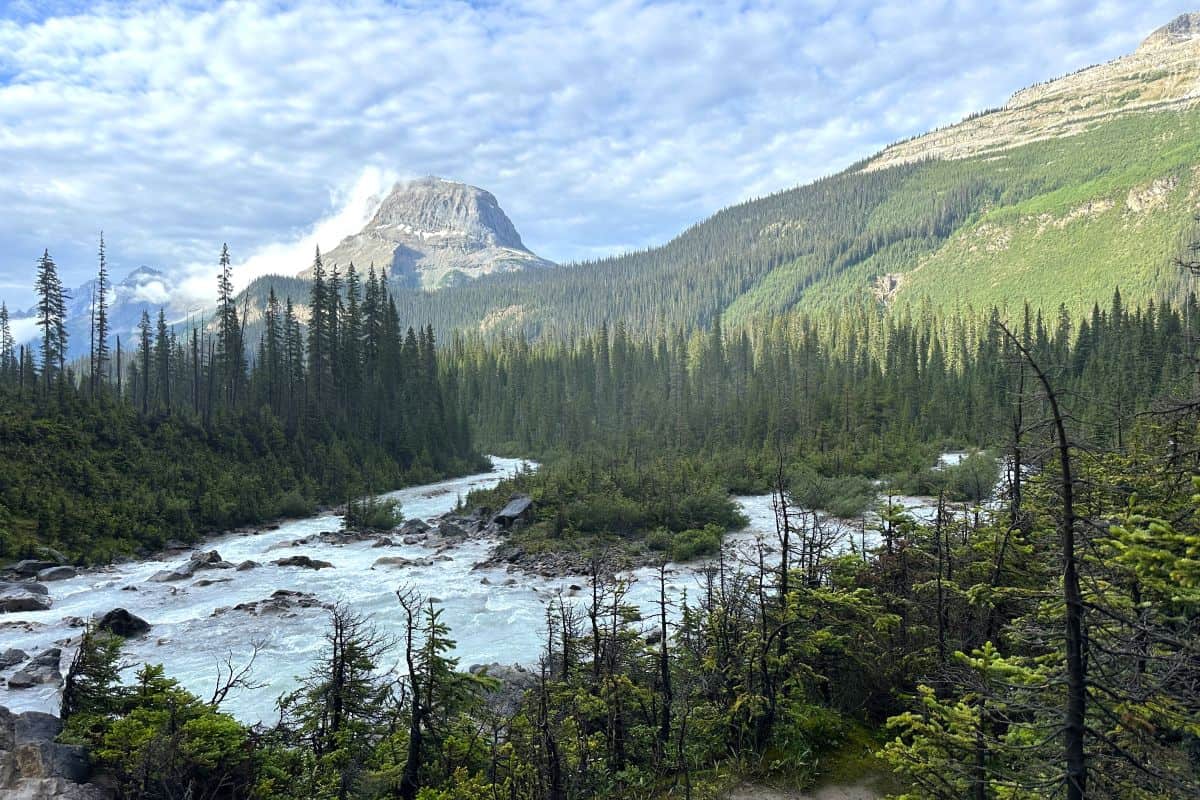
The walk is 0.9 km each way, with minimal elevation change and an estimated 30-minute return walking time. I'd allow 45 minutes to an hour for photographs and time beside the falls.
The footbridge is a lovely place to pause. Below it, the pale Yoho River runs around rocks and wooded banks; above the trees, the waterfall draws your eye back up the cliff. Even before you reach the base, there's a whole valley to look at.
The paved approach suits strollers and wheelchair users. Stay on the path rather than climbing onto the rocks at the base. Our accessible Rockies guide has more ideas for manageable walks.
Bring a waterproof layer, water and a cloth for your camera lens. Carry bear spray and know how to use it, particularly for longer valley walks; our bear safety guide covers the essentials.
Park passes, dogs and facilities
There's no separate waterfall ticket. Standard daily park entry is C$12.25 per adult, C$10.75 per senior and C$24.50 for up to seven people arriving together in one vehicle. Ages 17 and under enter free. These are November 2026 rates, outside free-entry periods.
An unexpired Banff daily pass or valid Discovery Pass covers Yoho too. Our park-pass guide explains the options; Parks Canada's fee schedule lists current charges.
Dogs must stay on a leash no longer than 3 m. Toilets and picnic tables are available. Bring your refreshments, use bear-proof bins or take rubbish away, and leave recreational drones packed away.
Make a day of Yoho
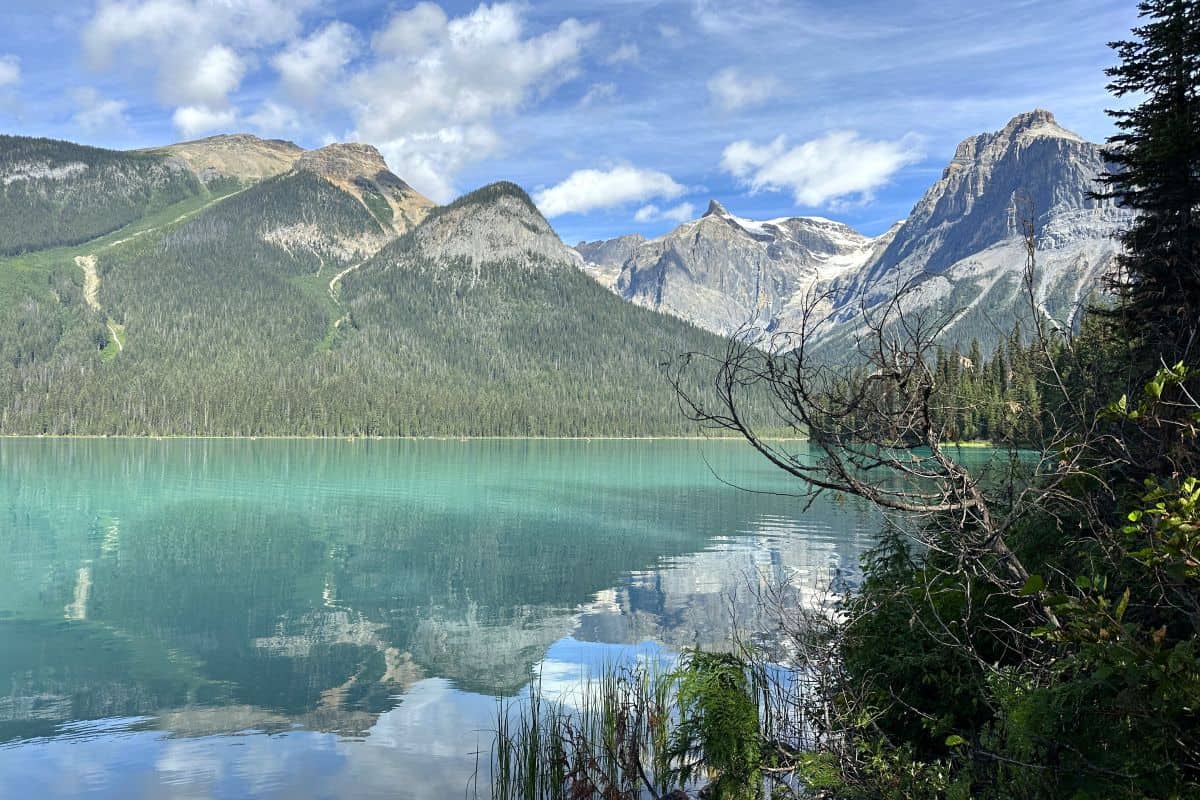
I'd build a day around the falls, lunch in Field and an afternoon at Natural Bridge and Emerald Lake. The stops give you quite different things to enjoy: the noise and spray here, the river squeezing through rock at Natural Bridge, then mountain reflections on the lake. Start with your preferred major stop while parking is easier, and give lunch a place in the plan too.
Emerald Lake and Natural Bridge
Return down Yoho Valley Road to Highway 1, head west past Field and take Emerald Lake Road. Natural Bridge is along the way, with viewpoints over the Kicking Horse River where it has worn through the rock. Continue to Emerald Lake for a lakeside wander.
At Emerald Lake, you can settle into a shoreline walk with forested slopes and rocky peaks reflected across the water. The full 5.2 km circuit takes around two hours, with muddy and rooty stretches on the eastern side. A shorter out-and-back leaves more time to sit and enjoy the view.
The Spiral Tunnels
There are two different viewpoints. The Lower Spiral Tunnels viewpoint is on Highway 1, 7.4 km east of Field. The Upper Spiral Tunnel viewpoint is 2.3 km up Yoho Valley Road, so it fits naturally into the drive to or from the falls.
Trains don't run to a visitor timetable. The story behind the Spiral Tunnels explains how they gain height inside the mountains, even if no train arrives during your stop.
If you'd rather keep walking
For more walking, choose between the valley's waterfalls and a full alpine day. Using Parks Canada's current trail distances:
- Laughing Falls: about 9 km return along the valley, the shorter choice for a waterfall hike.
- Twin Falls: about 16.8 km return via Laughing Falls. Choose this if walking is the main event of your day.
- Iceline via Celeste Lake: a difficult 17.4 km loop, around seven hours, with 970 m of total ascent. This is a full alpine hike, with snow and avalanche hazards possible into early summer.
Staying near Takakkaw Falls
Takakkaw Falls Campground
Camping here lets you stay in the valley after the day visitors have gone, with the falls still providing the soundtrack. There are 35 tent-only sites, about 300 m from the parking area. Wheelbarrows help with the move from car to campsite, so the last part of the journey comes with a rather different set of wheels.
Parks Canada lists drinking water, pit toilets, food lockers and shelters. Sites accommodate one tent up to four-person size, with a maximum of four people. The current base camping fee is C$22 per night, with reservation and other applicable charges additional.
All sites were reservable during the main 2026 season. The campground's 2027 opening and reservation dates aren't published yet. Use the food lockers for food and scented items; there is no mobile coverage or Wi-Fi.
Field, Lake Louise or Banff
Field is the closest village base, with guesthouses and small-scale accommodation. It suits a stay focused on Yoho.
Lake Louise accommodation puts you between Yoho and the Lake Louise area. Banff hotels offer a wider choice of places to eat and spend the evening, with a longer drive back. Choose based on the rest of your trip rather than moving hotels for this one stop.
Give the waterfall a little time
Leave time for one more look from the bridge before you go. From there, you can take in the river, the trees and the full sweep of the cliff again. The photographs will bring back the view; the roar and the cool spray are good reasons to stay a little longer.
FAQs: visiting Takakkaw Falls
How long should I allow at Takakkaw Falls?
Allow around 45 minutes to an hour for the short walk, photographs and time at the falls. Add longer if you're bringing a picnic.
Can I drive to Takakkaw Falls?
Yes, when Yoho Valley Road is open. Follow it to the parking area and continue on foot. Trailers are prohibited, and vehicles over 7 m must reverse at the tight switchbacks.
Is Takakkaw Falls wheelchair accessible?
The main approach is a flat, paved path, and Parks Canada identifies accessible facilities at the site. The rocks near the base are outside that accessible route.
Can I visit Takakkaw Falls in winter?
The access road closes seasonally, normally from mid-October to mid-June. The route passes through avalanche terrain and isn't a casual winter walking alternative.
Do I need a separate Yoho pass if I have a Banff pass?
No. An unexpired Banff daily pass covers Yoho as well, and a valid Parks Canada Discovery Pass also covers admission. Camping costs extra.