
Bow Lake Banff: Turquoise Waters, Glacier Falls & Scenic Trails
A scenic stop on the Icefields Parkway, Bow Lake offers turquoise water, glacier views and access to the Bow Glacier Falls trail. Here’s what to see, where to park and when to visit.

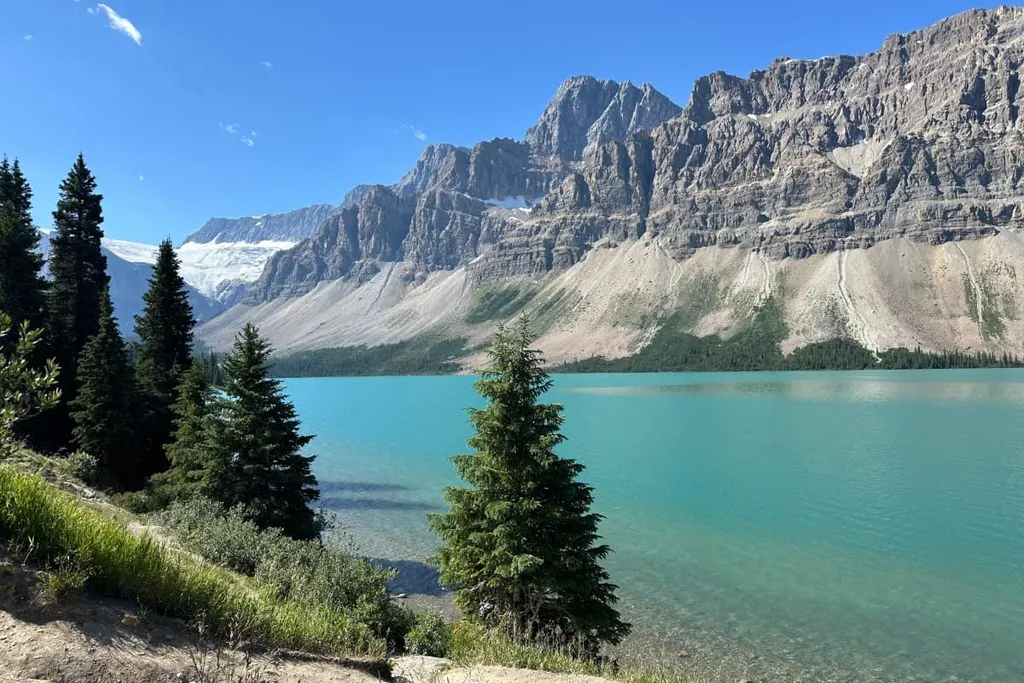
If you’re planning a road trip through the Canadian Rockies, Bow Lake Banff deserves a firm spot on your itinerary. Located around 35 kilometres north of Lake Louise on the Icefields Parkway (Highway 93), this stunning glacier-fed lake is one of the most accessible and visually impressive stops in Banff National Park.
Whether you’re visiting in the middle of summer or during a quiet winter snowfall, Bow Lake offers a wide variety of activities, incredible scenery, and a chance to experience the Rockies with fewer crowds than some of the park’s more famous spots.
What Makes Bow Lake So Special?
For starters, it's ridiculously accessible. Bow Lake sits right off the highway, with no strenuous hiking required.
The turquoise colour of Bow Lake is instantly striking, and yes, it really looks like that in person. The vivid colour is caused by glacial flour: fine rock particles created as the Bow Glacier grinds against bedrock. These particles stay suspended in the meltwater, scattering sunlight and giving the lake its unique hue.
On a calm day, the surrounding mountains, Crowfoot Mountain, Bow Peak, and Mount Thompson, reflect perfectly on the lake’s surface. It's one of the best places in Banff for landscape photography, and with such easy access right off the highway, you don’t need to hike for hours to enjoy it.
🚌 For a 5-Star Rated Full-Day Trip - Icefields Parkway Experience. Relax and enjoy the views on a guided drive with guaranteed stops at Bow Lake, Peyto Lake, and Athabasca Glacier. Includes surprise photo stops and expert local insight.
❄️ For Winter Adventurers - Abraham Lake, Peyto & Bow Lake Tour (With Ice Bubbles). In winter, the above tour takes in frozen lakes, snowy peaks, and Abraham Lake’s famous ice bubbles. Includes hot drinks, crampons, and pickup from Calgary, Banff, or Canmore.
🏞 For the Full-Day Bucket List - Columbia Icefield, Peyto Lake & Bow Lake Tour. Hit all the Rocky Mountain highlights in one day, with optional Ice Explorer access to the glacier. Great for first-timers or time-crunched travellers.
When Is the Best Time to Visit?
The best months to visit Bow Lake are July through early October, when the lake is fully thawed and at its most vibrant. The glacial melt during this period adds more sediment to the water, intensifying the turquoise tones.
In summer, Bow Lake can get busy during peak hours (10 a.m. to 4 p.m.), so arriving early in the morning or later in the evening offers a quieter experience and better lighting for photography.
Fall offers quieter trails and crisp air, although snow can arrive as early as September.
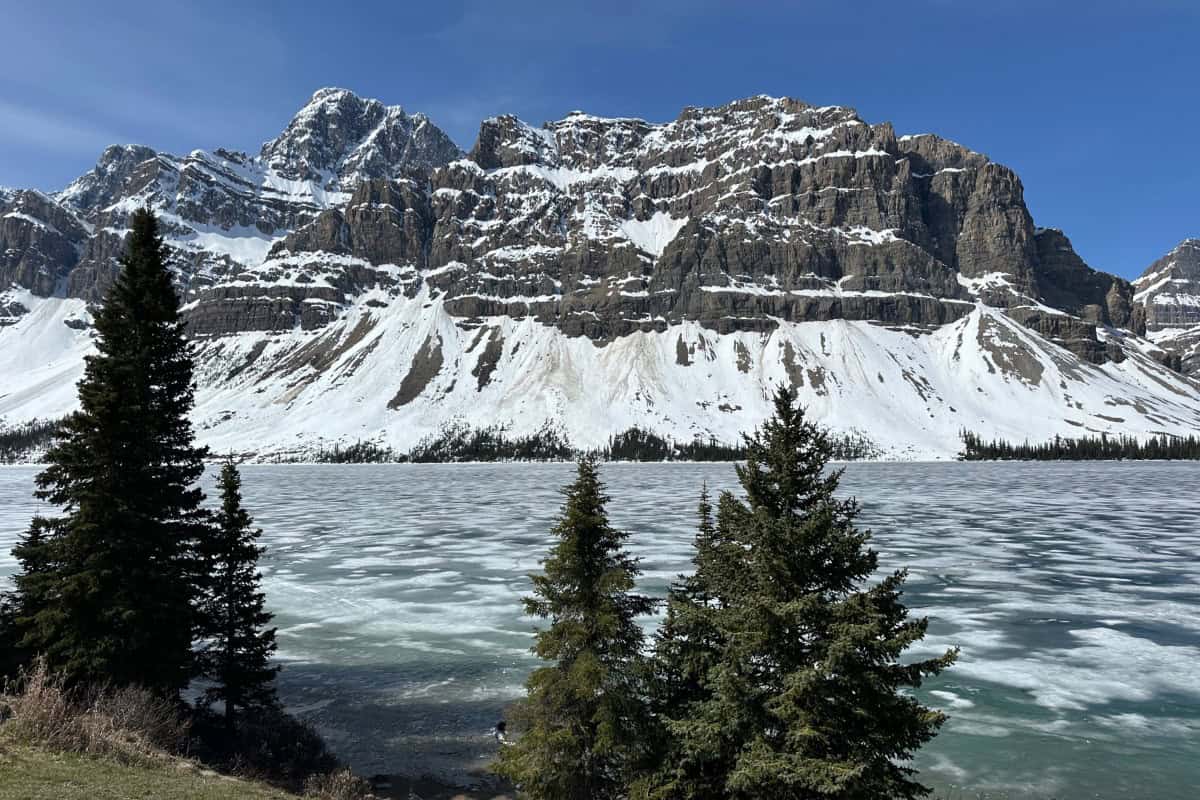
In winter, the lake freezes and the vibrant colour disappears under a blanket of snow, but the scenery remains dramatic. It becomes a destination for snowshoeing, backcountry skiing, and peaceful winter walks.
Things to Do at Bow Lake
Bow Lake is more than just a photo stop. There’s plenty to explore on foot, by paddle, or with a rod and reel. Whether you're looking for a short scenic stroll or a half-day hike, this area offers a variety of options.
Hike to Bow Glacier Falls
The Bow Glacier Falls Trail is the standout hike at Bow Lake, a 9-km return trip that takes approximately 3 to 4 hours. It starts near The Lodge at Bow Lake and offers a great balance of scenery, accessibility, and reward.
The trail begins with an easy walk along the north shore of Bow Lake, where you’ll enjoy views of Crowfoot Mountain and turquoise water that’s often mirror-still in the morning. It then enters a dramatic rocky gorge, with rushing meltwater and rugged canyon walls. A short staircase leads up to a wide glacial outwash plain, a stark and beautiful landscape shaped by ice over thousands of years.
The trail ends at Bow Glacier Falls, a powerful cascade fed directly by the Wapta Icefield above. It’s a dramatic spot to rest and take in the scale of the surrounding mountains.
This hike is best from mid-July to early October, and while the trail is rated easy to moderate, good shoes and layers are recommended. It’s ideal for anyone wanting a half-day hike with mountains, glaciers, and the roar of falling water included.
Walk the Lakeshore Trail
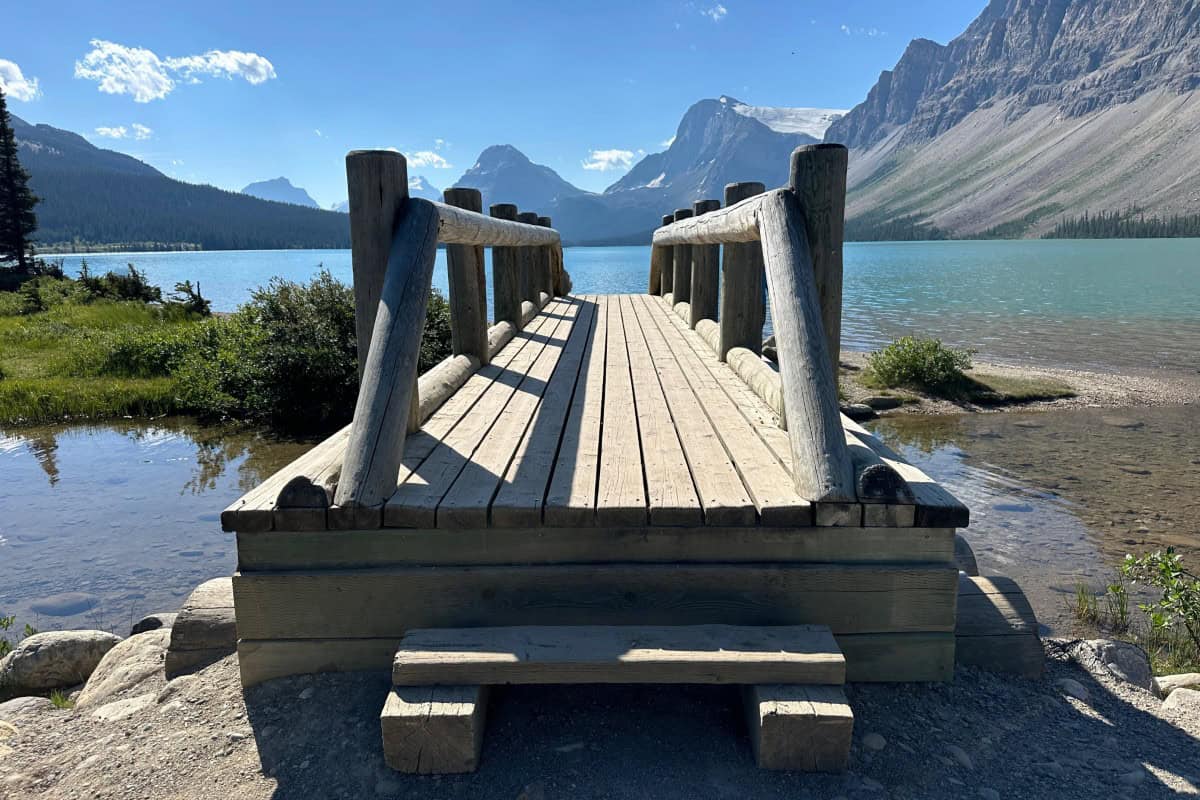
For an easier option, the Lakeshore Trail is around a 3.5 km out-and-back trail that hugs the shoreline. It offers excellent views of the lake and surrounding mountains, making it a great choice for families or anyone looking to take in the scenery without committing to a longer hike.
Note: This trail is not suitable for strollers due to uneven ground and exposed roots.
Nearby Viewpoints and Trails
Crowfoot Glacier Viewpoint
A scenic viewpoint of the Crowfoot Glacier, once known for its distinctive three-pronged “toe” shape. Although part of the glacier has receded in recent years, the view is still striking, especially with Crowfoot Mountain looming above. It is an easy, quick stop that rewards you with a classic Rocky Mountain panorama without much effort.
Bow Summit & Peyto Lake Viewpoint
This 1.4 km return trail leads to one of the most photographed landscapes in Canada: Peyto Lake, famous for its wolf-head shape and brilliant turquoise colour. The trail is paved and gently sloped, making it accessible for most visitors, and public washrooms are available at the trailhead. The viewpoint sits above the lake and offers a spectacular angle, especially at sunrise or in mid-summer when the water is at peak colour.
Helen Lake Trail
For hikers seeking a more rewarding challenge, the Helen Lake Trail is a 12 km round-trip hike with approximately 450 metres of elevation gain. The trail begins in a subalpine forest and opens into wide meadows bursting with wildflowers in July and August, along with sweeping views of Dolomite Peak. For those with extra energy, continuing past Helen Lake to Dolomite Pass provides even more dramatic scenery and far fewer people.
Paddle on the Lake
Bow Lake allows non-motorised watercraft, including canoes, kayaks, and paddleboards. On a clear day, paddling across the still water offers an unforgettable experience.
However, there are no rental facilities at the lake, so you’ll need to bring your own gear. Also, the water is very, very cold - even in summer - so paddleboarding is best reserved for warm, calm weather conditions.
Before launching, visitors are required to complete a self-certification permit for watercraft use. These are available online and help prevent the spread of invasive aquatic species.
Go Fishing
Bow Lake Banff offers a peaceful spot for angling with incredible scenery.
To fish here, you’ll need a Banff National Park fishing permit; provincial licences don’t apply. Barbless hooks and artificial lures are required, and live bait is prohibited. Popular fishing areas include the area around The Lodge, the lake outflow, and the quieter eastern shoreline.
Fishing is typically best early in the day or late afternoon, when fish are more active. The cold, glacier-fed water means fish often stay in deeper sections during warmer months, so a light rod and slow trolling from a canoe or kayak can improve your chances.
Winter at Bow Lake
In winter, Bow Lake becomes one of the more serene and magical spots in the park. The water freezes, the colour fades beneath snow and ice, and the lake becomes a stage for snowshoeing and backcountry exploration.
Snowshoeing Across the Lake
You can snowshoe directly across the lake. However, note that Parks Canada does NOT monitor ice conditions and recommends 15 cm thickness for walking alone and 20 cm for groups. Check safety guidelines carefully before venturing out or, better still, go with a certified guide.
Backcountry Skiing and Splitboarding
More experienced adventurers come to Bow Lake for backcountry skiing and splitboarding, with terrain that is well-suited for guided trips. Avalanche conditions can be dangerous, so always travel with proper gear and knowledge, or hire a certified guide.
Where to Stay Near Bow Lake
The Lodge at Bow Lake is the closest and most convenient place to stay, located right on the lake’s edge. Rooms fill quickly, so book early. If it’s full or closed for the season, your best options are in Lake Louise (25 mins) or Banff (1 hour), which offer a wider range of accommodations.
Practical Information for Your Visit
- Getting There: Bow Lake is approximately 35 km north of Lake Louise, located directly off the Icefields Parkway (Hwy 93).
- Parking: There’s a main lot and overflow area. Both can fill quickly during peak hours in summer.
- Restrooms: Available at the main parking area and near The Lodge at Bow Lake.
- Accessibility: Paved paths and accessible viewpoints make this one of the most inclusive spots in Banff.
- Park Pass: A valid Parks Canada pass is required.
- Safety: Stay bear aware on the trails - read our bear safety tips here - and be avalanche-aware during winter adventures.
- Drones: These are prohibited.
- Cell Service: Expect little to no service along this section of the Parkway - download maps and information you need in advance.
Final Thoughts: Is Bow Lake Worth the Stop?
Absolutely. Whether you’ve got 30 minutes or half a day, Bow Lake delivers incredible scenery with minimal effort. From glacier-fed waterfalls and peaceful trails to world-class photo ops and quiet winter adventures, it’s one of the most rewarding stops on the Icefields Parkway.
If you’re staying in Banff, Canmore, or Lake Louise, make time for this place. It may not have the fame of Lake Louise or Moraine Lake, but it has all the beauty - and a little more breathing room.


