
Peyto Lake: The Viewpoint, the Walk and When to Visit
A short forest walk opens onto Peyto Lake's blue water and long mountain valley. Plan the viewpoint, parking, Bow Summit hike and a winter visit.

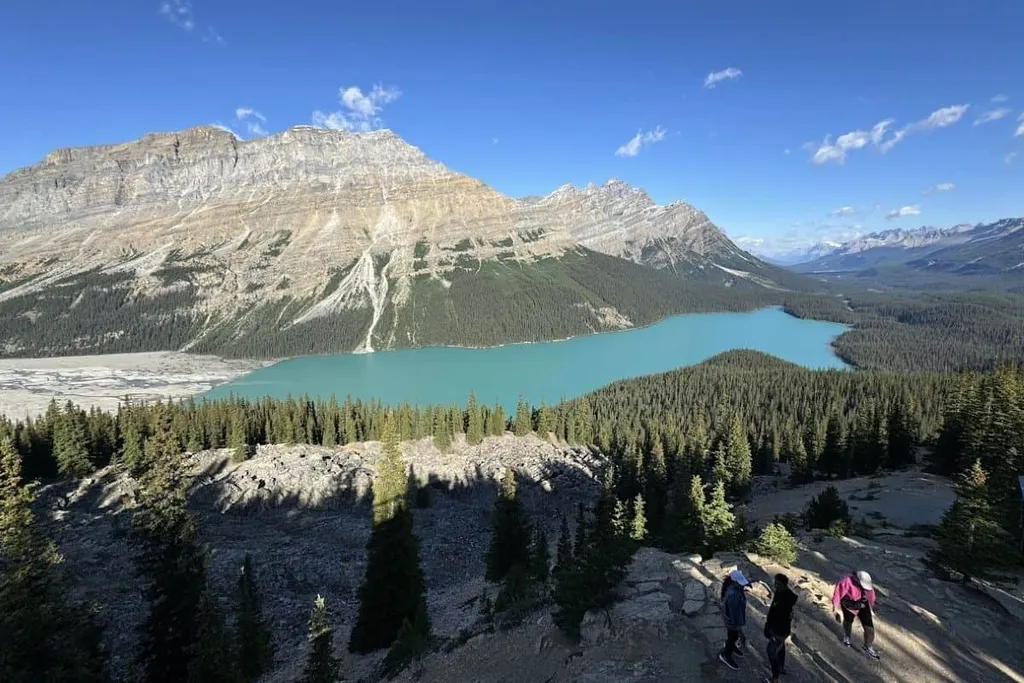
At Peyto Lake, the forest keeps the view to itself until you reach the lookout. Then the ground drops away, the lake stretches down the valley, and that blue water suddenly occupies most of your attention. The uphill walk is quickly forgiven.
This is one of the easiest ways to get a high mountain view on the Icefields Parkway: a short walk above a glacier-fed lake, with forest running along its shores and bare rock rising beyond. The Bow Summit hike offers a longer outing if you want to spend more of the day on foot.
The viewpoint is popular, and you may be sharing the railing. There is still plenty to look at while somebody finishes their family photograph.
🏔️ For summer lakes and glacier views - Columbia Icefield, Peyto Lake and Bow Lake Tour
❄️ For snowy viewpoints and frozen bubbles - Icefields Parkway and Abraham Lake Ice Bubbles Tour
🚐 For your own group and a flexible itinerary - Private Banff and Icefields Parkway Winter Tour
Peyto Lake at a glance
Location: Banff National Park, about 40 km north of the Lake Louise highway junction on Highway 93N.
Main viewpoint walk: 600 m each way, with 30 m of elevation gain. Parks Canada estimates 30 minutes return.
Time to allow: 45 minutes to an hour for the walk, the view and photographs.
Getting there and finding a parking space
From Banff or Canmore, follow the Trans-Canada Highway towards Lake Louise, then take Highway 93N onto the Icefields Parkway. The signed Peyto Lake and Bow Summit turnoff comes after Bow Lake when you're driving north. From Jasper, approach from the opposite direction along the same highway.
As a planning estimate in good conditions, allow roughly 40 minutes from Lake Louise village or 1 hour 15 minutes from Banff, before stops. The Parkway gives you plenty of reasons to take longer.
Use the lower visitor parking lot for the standard walk. The upper lot isn't an overflow option when the main one fills: it serves accessible vehicles and buses.
For a summer visit, I'd aim for early morning or later in the afternoon. An arrival before 8 am gives you a better chance of a quieter stop. Banff & Lake Louise Tourism's parking guidance confirms that Peyto's spaces can fill early.
You can drive to Peyto Lake's parking area without a shuttle booking. Parking is free; national park admission is separate and applies outside announced free-admission periods. If you're also visiting Moraine Lake, arrange its transport separately.
Visiting without a car
Roam's Lake Louise service doesn't continue to Peyto Lake. Vancouver Journey's Peyto Lake and Icefields Parkway day tour is one option, with designated pick-up points in Calgary, Canmore and Banff. Allow 9 to 12 hours; national park admission is included.
The itinerary changes with the season. Summer departures include Bow Lake and the Columbia Icefield, with glacier activities costing extra. The December to March route includes Lake Louise and a weather-dependent Abraham Lake stop. Meals are extra, and the operator lists the tour as unsuitable for people with mobility impairments. Check the itinerary for your date before booking.
If you're combining several lakes, plan Lake Louise transport separately. Its buses and the Moraine Lake shuttles serve a different area.
The walk to the Peyto Lake viewpoint
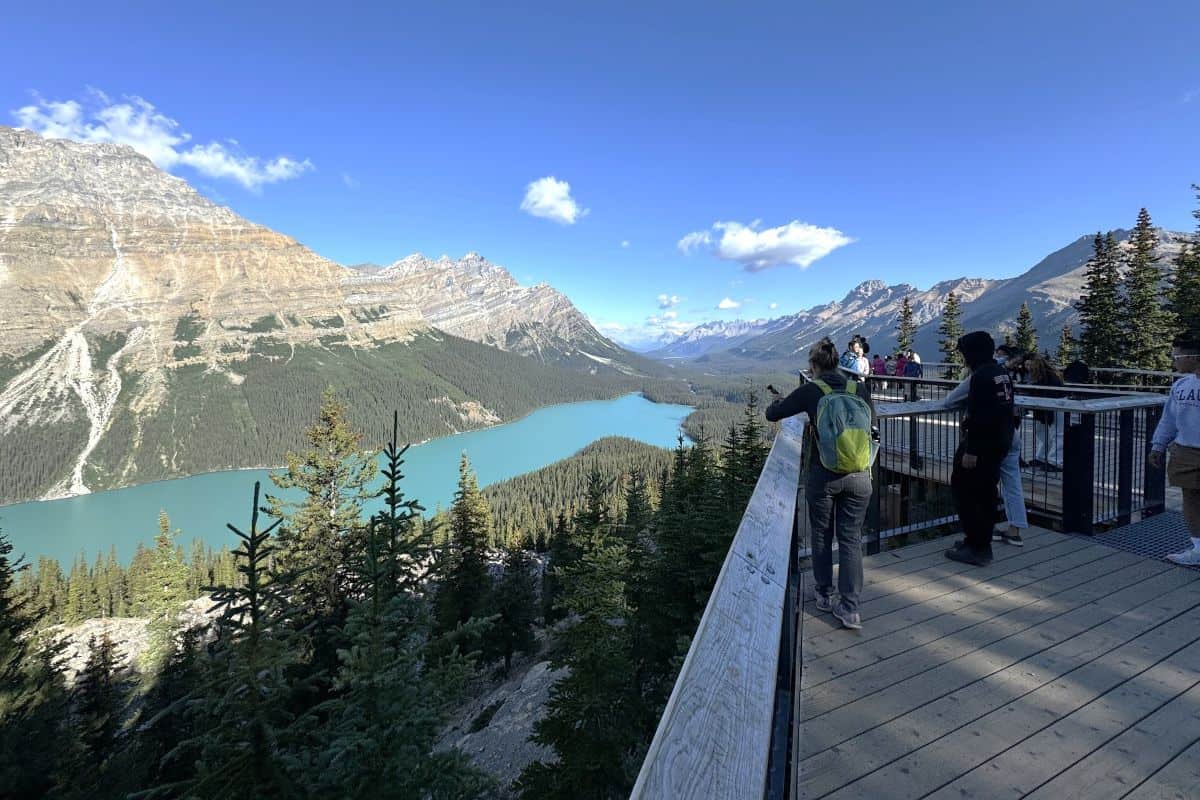
The paved path climbs steadily through subalpine forest to the viewing platform. For a family stop, this is a manageable walk with a very good reason to keep going.
The reward is the view from above. You can follow the lake's outline into the valley and decide whether its familiar shape looks more like a wolf or a fox. No agreement is required before returning to the car.
A separate 300 m barrier-free path from the upper lot provides a shorter approach in snow-free conditions. Parks Canada's hiking guide describes both the viewpoint walk and the longer Bow Summit route.
Stay on the designated paths and viewing areas. The little tracks through the vegetation aren't extra official viewpoints, and the alpine plants recover slowly from being trampled.
Why is Peyto Lake so blue?
The colour comes from fine rock particles carried into the lake by glacial meltwater. Moving ice grinds rock into a powder often called rock flour; suspended in the water, it scatters sunlight and helps produce those blue-green tones.
The same process contributes to the colour at Moraine Lake. Light, cloud cover and the amount of sediment change how the water looks, so two visits needn't produce the same shade.
For a trip built around turquoise lakes, I'd choose July or August. Peyto usually thaws during June, but the date varies, and an early-June visit can still mean ice. September offers another good opportunity before winter takes over. Our Banff weather guide helps put the lake visit into the rest of your trip.
A longer walk: Bow Summit Viewpoint
If you want more walking after the main platform, the Bow Summit Viewpoint Trail continues beyond the Peyto lookout and follows an old fire road. Parks Canada lists it as 3 km each way, with 310 m of elevation gain and about 2.5 hours for the return trip.
Treat this as the day's hike rather than a few extra minutes after the photograph. It's a good choice when you'd like to spend more of your Parkway day on foot; the short lookout walk is enough if you're fitting Peyto between other stops.
Visiting Peyto Lake in winter
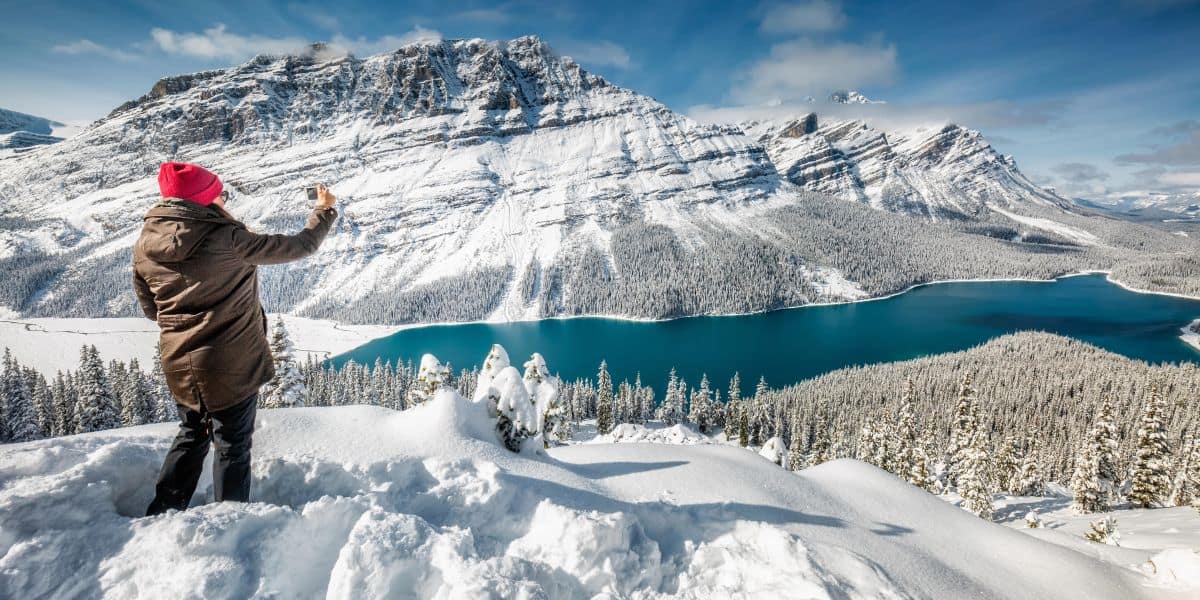
Winter changes the reason to come. The turquoise disappears beneath ice and snow, leaving the outline of the lake, dark trees and mountain slopes. On a clear day, the long view down the valley is still the attraction.
Parks Canada includes Peyto in its winter snowshoeing routes. The approach uses the unploughed upper road or the official trail from the north end of the parking lot. Allow extra time: packed snow may call for traction cleats, while fresh, deep snow favours snowshoes.
Stay on the designated winter route. Summer hiking extensions and tracks left by other people aren't assurances of safe winter travel.
The drive needs planning too. Snow tyres marked with a snowflake or M+S symbol, or chains, are mandatory on the Parkway from 1 November to 31 March, and whenever the road is snow- or ice-covered. Alberta 511 provides live road conditions and closures; storms and avalanche control can interrupt access.
What to bring
There are toilets at the day-use area, but bring your own water and food. Download your map before leaving Lake Louise or Jasper, as there's no dependable mobile coverage at Peyto.
Wear shoes with grip and carry a warm layer and waterproof jacket, even for the short summer walk. Add sun protection and bear spray for walking in the park. In winter, take insulated boots, gloves, a hat and extra warm clothing for the drive as well as the trail.
Making a day of it
I'd pair Peyto with nearby Bow Lake. The two stops give you different perspectives: Peyto from above, then Bow Lake with the mountains rising directly across the water. Our Bow Lake video gives you a look at the neighbouring stop.
The Lodge at Bow Lake is a nearby seasonal place to stay. Lake Louise is a convenient base for an early start; Banff and Canmore offer more town time alongside your mountain days.
For camping, Mosquito Creek and Waterfowl Lakes operate first come, first served. Silverhorn Creek is reservation-only. All three are seasonal, unserviced campgrounds; Parks Canada's camping page lists their operating dates and booking arrangements.
Watch the walk before you go
Our Peyto Lake viewpoint video follows the walk in July, giving you a feel for the approach and the view at the end.
Give Peyto enough room in your itinerary to linger at the lookout. Beyond the blue water, the valley draws your eye towards the distant mountains. It's a good place to let the next stop wait.
Peyto Lake FAQs
How long do you need at Peyto Lake?
Allow 45 minutes to an hour for a summer viewpoint visit. Set aside about 2.5 hours for the longer Bow Summit hike.
Can you drive to Peyto Lake?
Yes. You can drive to the visitor parking lot, then walk to the viewpoint. There is no road down to the lakeshore.
Is Peyto Lake wheelchair accessible?
Yes, in snow-free conditions via the shorter barrier-free approach from the upper parking lot. Winter snow substantially changes access.
Can you walk down to the lake?
There is a separate lakeshore trail, but Parks Canada describes it as steep and rough, for experienced hikers. The paved viewpoint path stays above the lake.
Is Peyto Lake blue all year?
No. The turquoise water is a summer attraction; ice and snow cover it in winter.


