
Banff Flying Canoe Festival: Lanterns, Legends, And Winter Nights
The legend of La Chasse-galerie reshaped for the Bow Valley, staged as a lantern walk through Central Park after dark. Storytelling, Métis fiddle music, and Indigenous programming developed with Stoney Nakoda artists and Knowledge Keepers. Free, and no canoes actually fly.

If you have ever looked around Banff on a cold February evening and thought, "This town could use more glowing lanterns and ancient legends right now," good news. The Banff Flying Canoe Festival is about to make that very specific wish come true.
Debuting from February 26 to March 1, 2026, the Banff Flying Canoe Festival brings one of Canada’s most intriguing winter legends into Central Park. This is not a race, a competition, or an excuse to sell you branded mittens.
It is a nighttime winter festival built around storytelling, light, music, and the idea that winter does not always have to be something you rush through on your way to a heated patio.
What Is the Banff Flying Canoe Festival
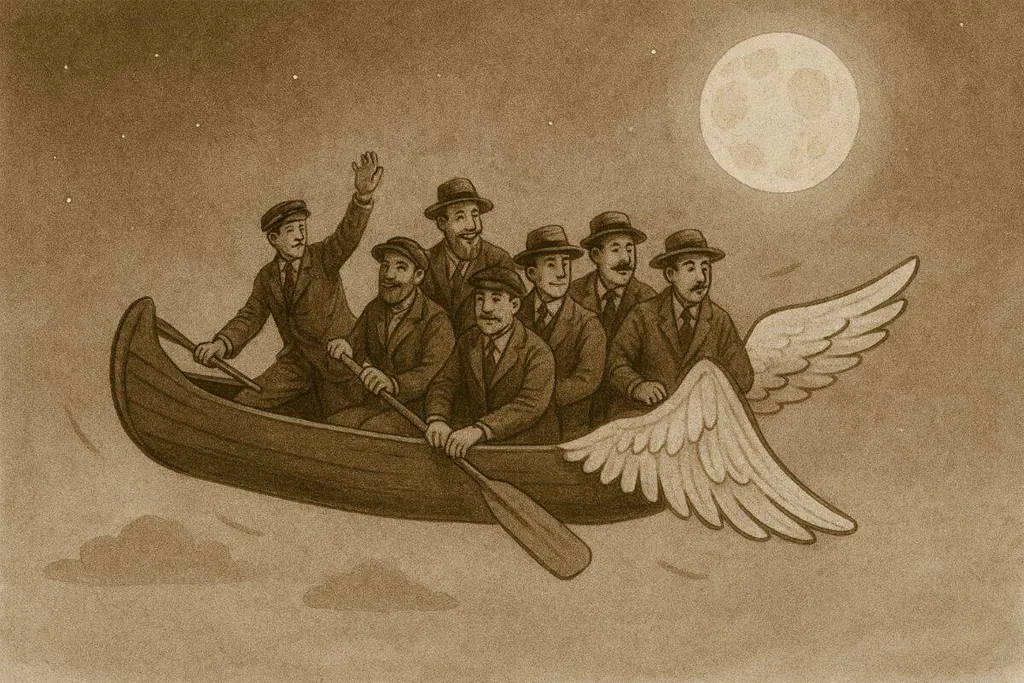
At the heart of the Banff Flying Canoe Festival is the legend of the Flying Canoe, also known as La Chasse-galerie. It is a classic Canadian story involving voyageurs, winter isolation, and a canoe that absolutely ignores the usual laws of physics.
The original tale follows a group of voyageurs who make a dangerous bargain to fly their canoe through the night sky so they can get home to celebrate. There are strict rules, serious consequences, and the strong sense that this was not a great idea to begin with. In other words, a very Canadian winter story.
In Banff, the legend is reshaped to fit the Bow Valley. The focus shifts away from devilish punishment and toward winter travel, survival, and the deep connection between land, sky, and people.
It keeps the magic, loses the fire-and-brimstone energy, and feels far more suited to a lantern-lit park than a cautionary sermon.
Where the Festival Takes Place
Central Park After Dark
The Banff Flying Canoe Festival takes over Central Park at the south end of Banff Avenue, right next to the Bow River. This choice is practical and smart. It keeps the event walkable, avoids closing major roads, and makes it easy to pair the festival with dinner, dessert, or a tactical hot chocolate.
Once the sun goes down, the park becomes a network of softly lit paths. Lanterns glow, light reflects off snowbanks, and the river quietly reminds you that winter is very much still in charge. The whole setup encourages wandering rather than rushing, which is refreshing in a town that often runs on packed itineraries.
What You Can Expect to Experience
The Lantern Walk
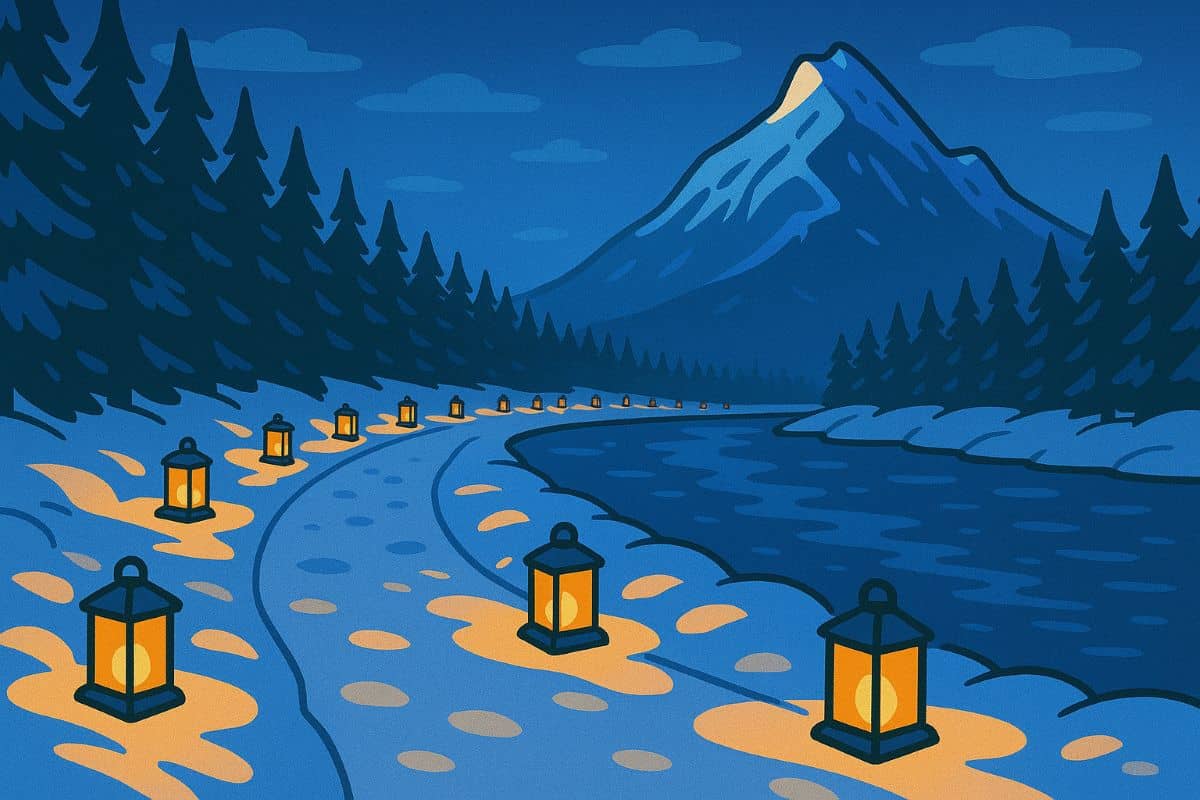
The lantern walk is the visual anchor of the Banff Flying Canoe Festival. Rather than bright floodlights, the paths are lined with artistic lanterns and installations created by local artists. Expect shapes inspired by wildlife, winter travel, and Bow Valley landscapes, all glowing gently against the snow.
It is the kind of walk where people slow down without realising it. Phones come out, conversations drop a notch, and suddenly, standing outside in winter feels intentional rather than accidental.
The Flying Canoe Story
Throughout the evening, performers bring the Flying Canoe legend to life through short storytelling presentations. Think voyageur-style costumes, bilingual narration, and storytelling that relies more on atmosphere than theatrics.
No actual canoes take flight. This is important to clarify early. In Banff, the flying is symbolic, created through movement, light, and imagination rather than ramps or wires. It works surprisingly well, especially when your fingers are already numb.
Music, Dance, and Winter Noise
Music plays a big role, particularly fiddle-driven tunes rooted in Métis traditions. In similar festivals, this often turns into informal dancing, sometimes described as a winter kitchen party.
Expect people shuffling their feet in bulky boots, warming fires nearby, and the kind of joy that only appears when everyone agrees to ignore the cold for a few minutes.
Indigenous Programming and Storytelling
A Space for Stoney Nakoda Voices
A central pillar of the Banff Flying Canoe Festival is its Indigenous programming, developed in collaboration with Stoney Nakoda artists and Knowledge Keepers. This is a dedicated space, not a side feature.
Stories shared here focus on the Bow Valley, known as Minhrpa, and the surrounding mountains, stars, and winter travel routes.
The tone is welcoming and educational, encouraging visitors to listen, ask respectful questions, and understand the land beneath their boots. It adds depth to the festival and grounds the experience firmly in place.
Why the Festival Happens in Late February
Because Winter Is Still Here
Late February in Banff can feel long. SnowDays has wrapped up, spring feels theoretical, and winter has settled in for the duration. The Banff Flying Canoe Festival is designed to bring warmth and energy into that quieter stretch, without pretending winter is about to leave.
By focusing on nighttime experiences, the festival gives people a reason to stay out after dark and, ideally, stay overnight. It fills the gap between major winter events with something that feels calm, cultural, and genuinely enjoyable.
Planning Your Visit
Getting There
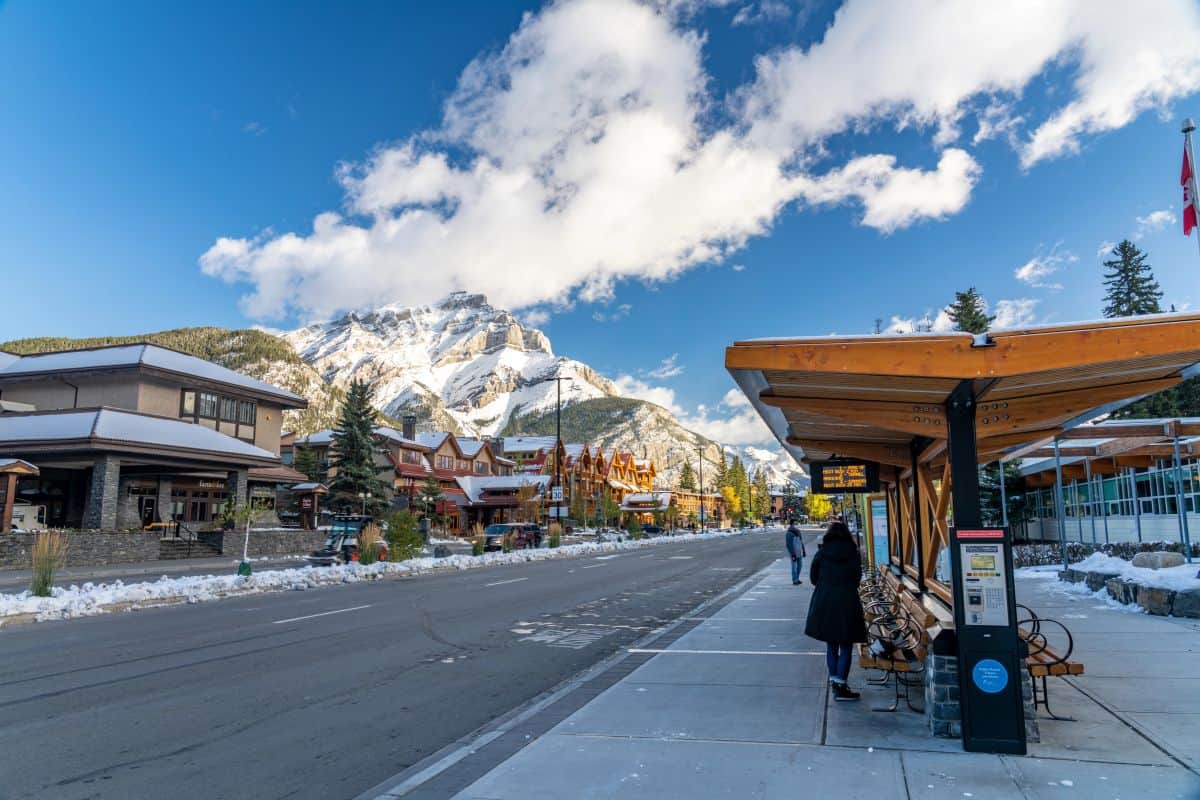
Parking near Central Park is limited and best avoided. The easiest option is to park at the Banff Train Station lot and walk down Banff Avenue. Roam Transit also stops close by, and many hotels offer shuttles into town.
What to Wear
This is standing-still-in-winter weather. Dress like it.
A solid base layer, an insulated mid-layer, and a long parka make a huge difference. Proper winter boots are essential, and ice cleats are strongly recommended near the river. Mitts beat gloves every time, and a neck warmer will earn its keep the moment the wind picks up.
Staying Safe
Paths are intentionally dim for atmosphere, so take your time and watch for ice. Wildlife is common near the Bow River even in winter. Give animals space, no matter how photogenic they appear. If someone in your group starts shivering hard, head for the heated washrooms in Central Park or duck into a nearby cafe.
A Winter Festival That Knows What It Is
The Banff Flying Canoe Festival is not loud, frantic, or overstuffed. It is calm, thoughtful, and quietly confident, which feels like the right energy for Banff in late winter.
It does not try to distract you from the season. Instead, it invites you to step into it, lantern by lantern, story by story, and maybe stay outside a little longer than you planned.
FAQs: Banff Flying Canoe Festival
What is the Banff Flying Canoe Festival?
The Banff Flying Canoe Festival is a winter cultural festival held in Central Park that brings the Flying Canoe legend to life through lantern walks, storytelling, music, and Indigenous programming. It focuses on atmosphere, history, and winter storytelling rather than competitions or sports.
When does the Banff Flying Canoe Festival take place?
The Banff Flying Canoe Festival is scheduled to debut from February 26 to March 1, 2026. Events take place in the evening and are designed as nighttime experiences.
Is the Banff Flying Canoe Festival suitable for families?
Yes. The festival is designed to be welcoming and accessible, with flat pathways, stroller-friendly routes in Central Park, and storytelling that is engaging for all ages. Parents should still plan carefully for cold weather conditions.
Do real canoes fly at the Banff Flying Canoe Festival?
No. The flying canoe is a legend and is represented symbolically through storytelling, performance, and light installations. There are no actual flying canoes or stunt performances.
What should I wear to the Banff Flying Canoe Festival?
Dress for standing outside in winter. Warm base layers, insulated boots, a long winter parka, mitts, and a neck warmer are strongly recommended. Ice cleats are useful due to icy pathways near the Bow River.


