
Banff in July: Peak Season Done Properly
The valley is warm, the alpine is finally clear of snow, and the days run long enough to start a hike after breakfast and still be out for dinner. Everyone else pictured it too. Weather, packing, Moraine Lake shuttles, what to book early, and how to work around the crowds rather than through them.
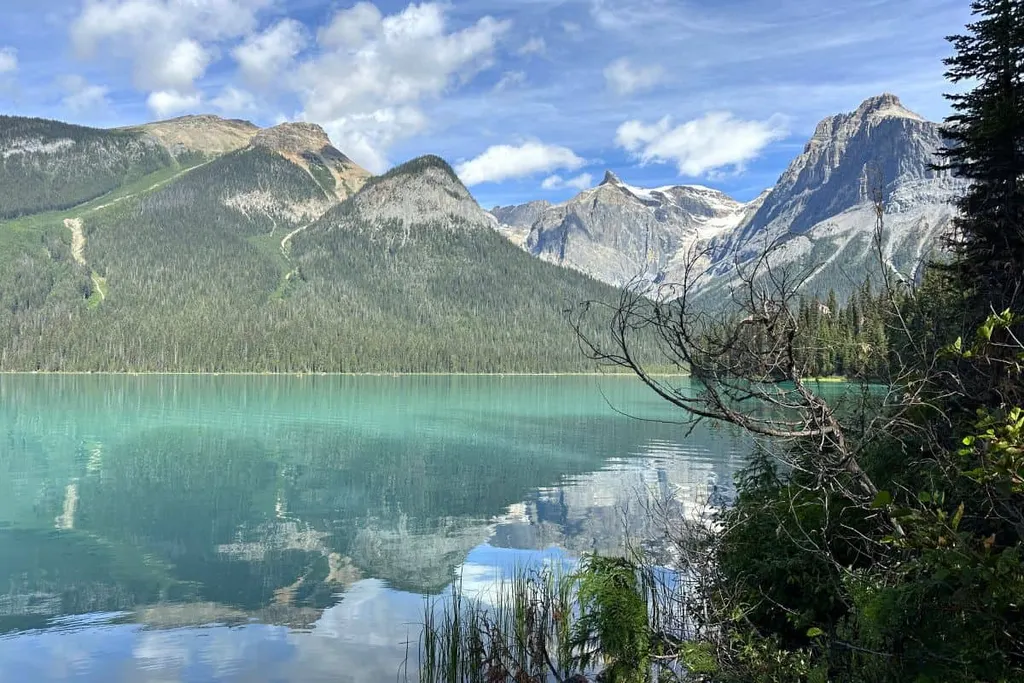
Banff in July is at full volume. The valley is warm, the alpine is finally clear of snow, and the days run long enough to start a hike after breakfast and still be out for dinner. This is the month most people picture when they imagine the Rockies. Turquoise lakes, wildflower meadows, and trails open all the way to the passes.
The catch is that everyone else pictured it too. July is peak season, and it behaves like one. Full car parks, busy trailheads, and afternoon thunderstorms are all part of the deal. None of that is a reason to stay away. It just means a little planning goes a long way, and it pays to see what is on around the Bow Valley before you arrive.
🚣 For Adventure – Whitewater Rafting.
🏔️ For Iconic Views – Moraine Lake & Lake Louise.
🥾 For Hikers – Sunshine Meadows.
Weather, Daylight and What to Pack for July
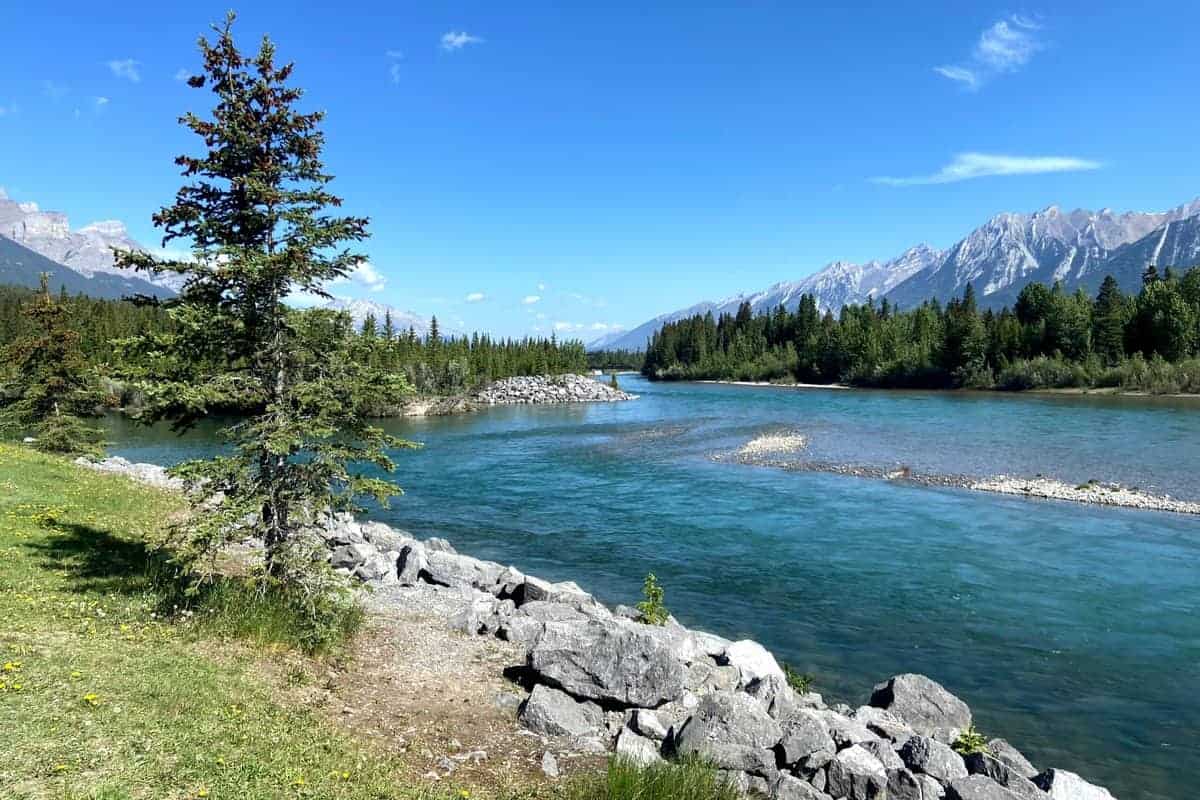
What to Expect: Conditions and Temperatures in July
July is the warmest, driest-feeling month of the year in the valley, though "driest-feeling" is doing some work in that sentence. It is also one of the wettest months for actual rainfall, most of it arriving as short, sharp afternoon storms. Mornings are usually the clearest part of the day. Build your plans around that, and the weather rarely gets in the way.
The mountains keep their own counsel. A warm afternoon on Banff Avenue can be ten degrees cooler and considerably windier on an exposed ridge. Anyone heading above the treeline should pack for a different season than the one happening in town. The lower you stay, the more reliable July feels.
Temperature
Daytime highs in the valley usually sit around 22C, with the occasional run into the high twenties during a heatwave. Overnight lows drop to 7C or 9C, and clear nights at the start of the month can feel colder than that. The numbers themselves are pleasant. The thing to remember is the swing between midday and altitude, which catches plenty of people out on the higher trails.
Daylight Hours
July has some of the longest days of the year. Early in the month, the sun is up by around 5.30 am and does not set until close to 9.50 pm. By the end of July, you lose roughly half an hour at each end, but you are still working with more than fifteen hours of usable light. The practical upside is obvious. The downside is that long evenings make it easy to push a hike later than is sensible, and afternoon storms do not care how much daylight is left.
Precipitation
Rain is the headline. July sees more of it than any winter month, almost all in the form of afternoon and evening thunderstorms that build over the peaks. They tend to pass quickly. Roads stay clear and easy, and there is no ice or mud to worry about, just the occasional soaking if you are caught on an exposed trail. Carry a packable waterproof, and you will barely notice them.
The Essential July Packing List
Daytime
Light layers do the heavy lifting in July. A t-shirt and shorts work for most valley walks and town days, but pack a long-sleeve layer and a light insulated jacket for anything higher up. Breathable fabrics beat cotton once you start moving. Leave the heavy gear at home.
Evenings and Mornings
Evenings cool off fast once the sun drops behind the mountains. A fleece or light down layer is worth having for patio dinners and early starts. Mornings can carry a real chill, particularly near the rivers and lakes. The middle of the day rarely needs more than a single layer, which is exactly why people forget the others.
Activity Gear
A small daypack with a rain shell, a warm layer, and more water than you think you need covers most July outings. Trekking poles help on the longer alpine trails as the snow lingers on higher passes into early July. If you plan to paddle, swim, or raft, bring quick-dry clothes and something to change into afterwards.
Footwear
Proper trail shoes or hiking boots with decent grip are worth it in July. Trails are dry and dusty lower down, but can still be muddy or snow-patched on the higher routes. Sandals are fine for town and lakeshores. They are not fine for the Plain of Six Glaciers, however confident you are feeling.
Essentials
Sun protection is not optional at altitude, even on cloudy days. Pack a high-factor sunscreen, a hat, and sunglasses, and reapply more often than you would at sea level. A reusable water bottle, lip balm, and a basic first aid kit round out the list. Bear spray belongs here, too, if you intend to hike, and you should know how to use it before you set off, rather than reading the label mid-encounter.
Accommodation in July
A Word on July Pricing
July is peak pricing across the board. Rooms are at their most expensive, and they're hardest to find; the gap between booking early and booking late is measured in hundreds of dollars. Canada Day weekend and the stretch around the Calgary Stampede are the tightest of all. Book as far ahead as you can, and treat any midweek availability as a small win.
Where to Stay in Banff in July
Banff townsite puts you closest to the restaurants, the gondola, and the Roam bus routes, which matters more in a busy month. Canmore sits twenty minutes east, usually a little cheaper, and makes a sensible base if you have a car and do not mind the short drive. If you are weighing up the two, they suit quite different trips. The Lake Louise area suits anyone focused on the lakes and the Icefields Parkway.
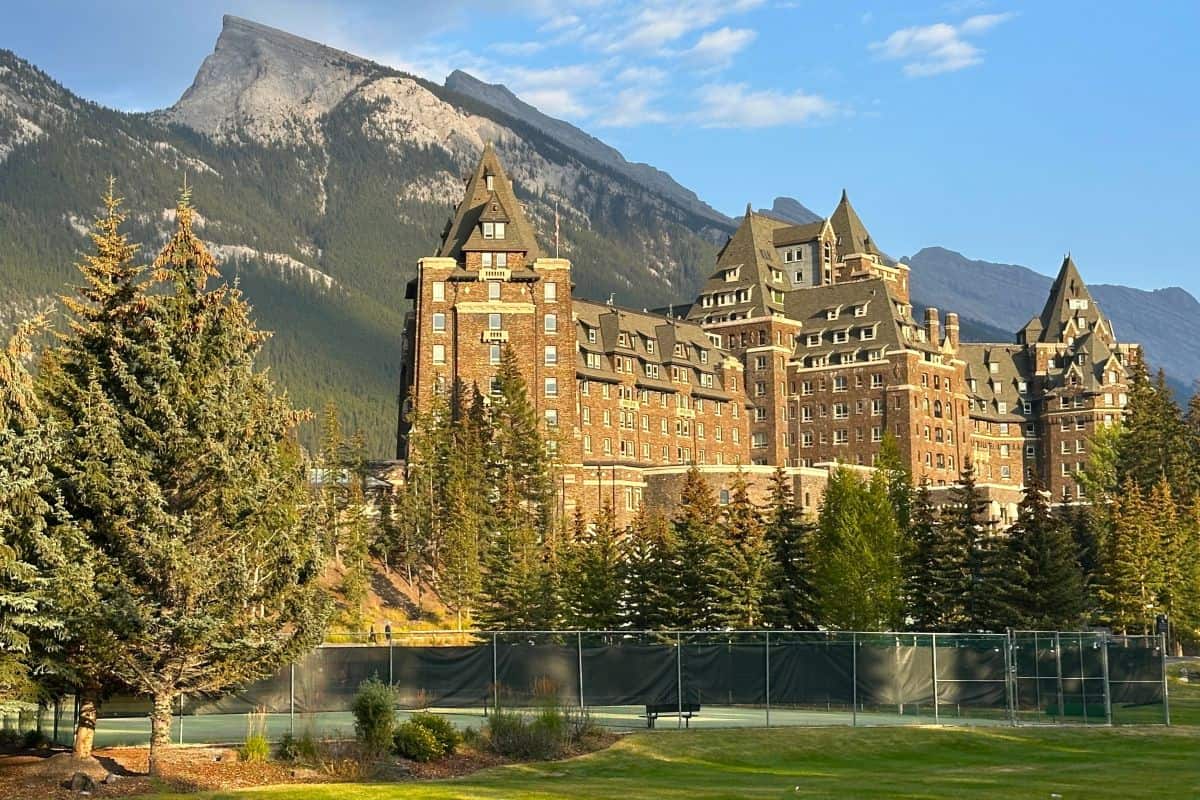
Fairmont Banff Springs
Price range: $$$$$
Location: Banff Townsite
Pool / Spa: Indoor and outdoor pools; hot tub; full-service spa
Parking: On-site parking (paid)
Pet-friendly: Yes
Best for: Luxury stays; special occasions; spa breaks; families
The Fairmont is the grand castle hotel everyone photographs from Surprise Corner. In July it is busy, expensive, and exactly what it claims to be. The grounds, the pools, and the position above the Bow River earn the price for the right traveller. It is worth knowing what you actually get for the money before you commit.
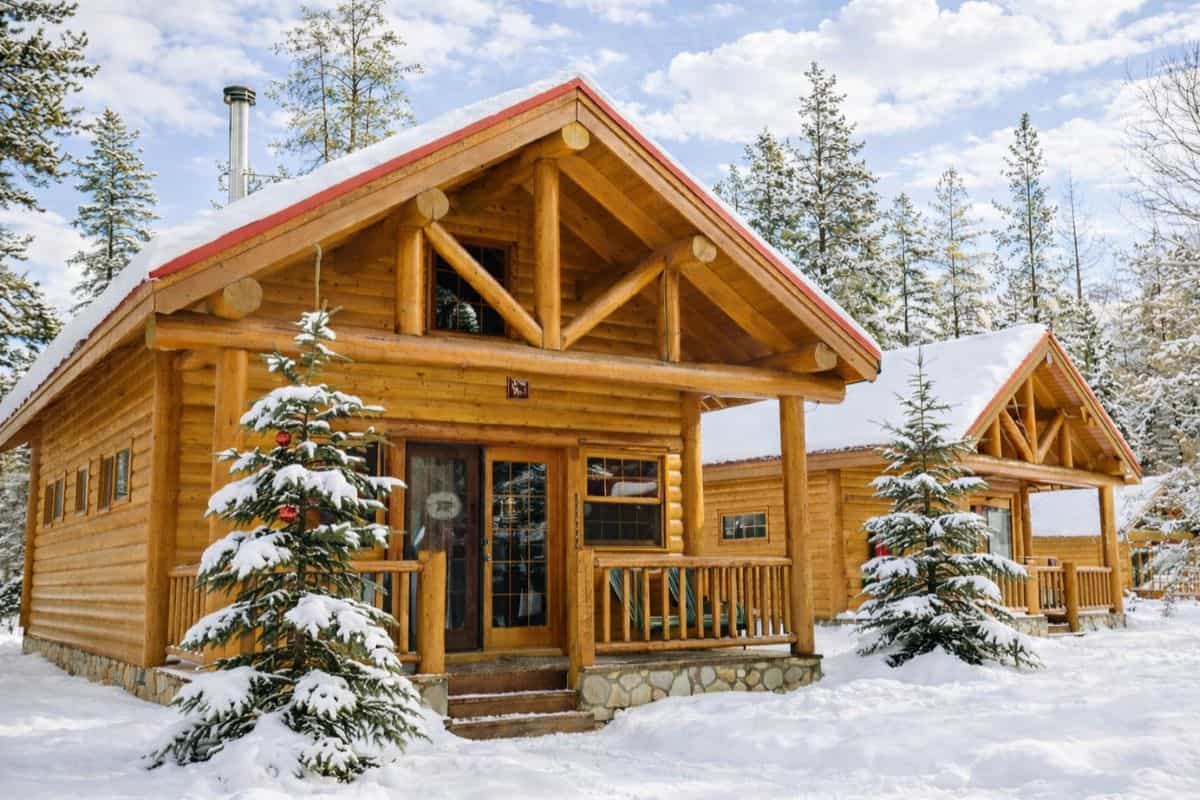
Baker Creek By Basecamp
Price range: $$$-$$$$
Location: Banff National Park
Pool / Spa: Sauna
Parking: On-site parking (free)
Pet-friendly: Yes (dogs; fee applies)
Best for: Quiet cabin-style stay; couples; relaxed getaway between Banff and Lake Louise
Baker Creek sits along the Bow Valley Parkway between Banff and Lake Louise. The cabins are quiet, woodsy, and well-suited to couples or anyone who wants the mountains without the town noise. You need a car to stay here, and that is rather the point. In July, it offers a calmer alternative to the townsite crush.
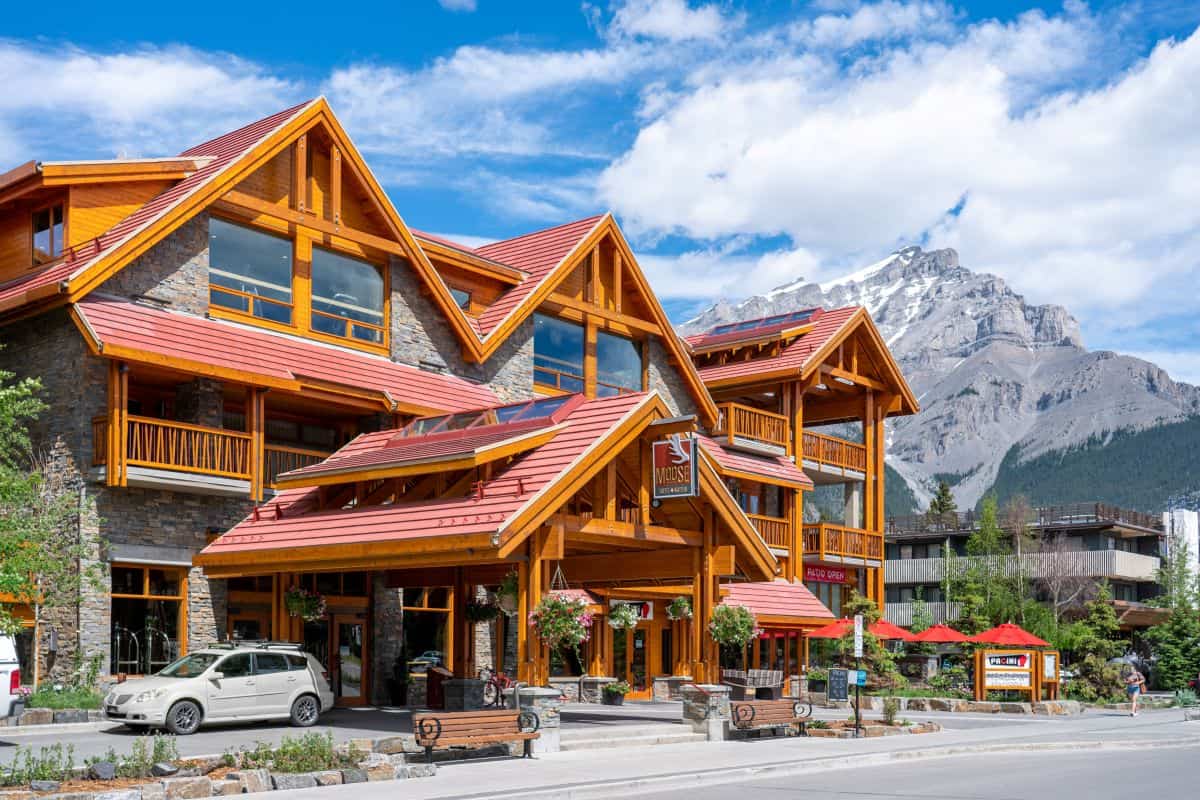
Moose Hotel & Suites
Price range: $$$$
Location: Banff Townsite
Pool / Spa: Indoor pool; rooftop hot pools; spa
Parking: On-site parking (free)
Pet-friendly: Yes
Best for: Banff Avenue location; couples; modern rooms and suites
The Moose is central, modern, and home to rooftop hot pools that come into their own after a long day on the trails. It lands below the Fairmont on price while still feeling like a treat. For travellers who want a soak and a spa without castle money, it is one of the better-value options in town. If relaxing ranks high on the list, it is also one of several strong spa choices across the area.
The Reality of Banff in July: What to Expect
How Busy Is Banff in July?
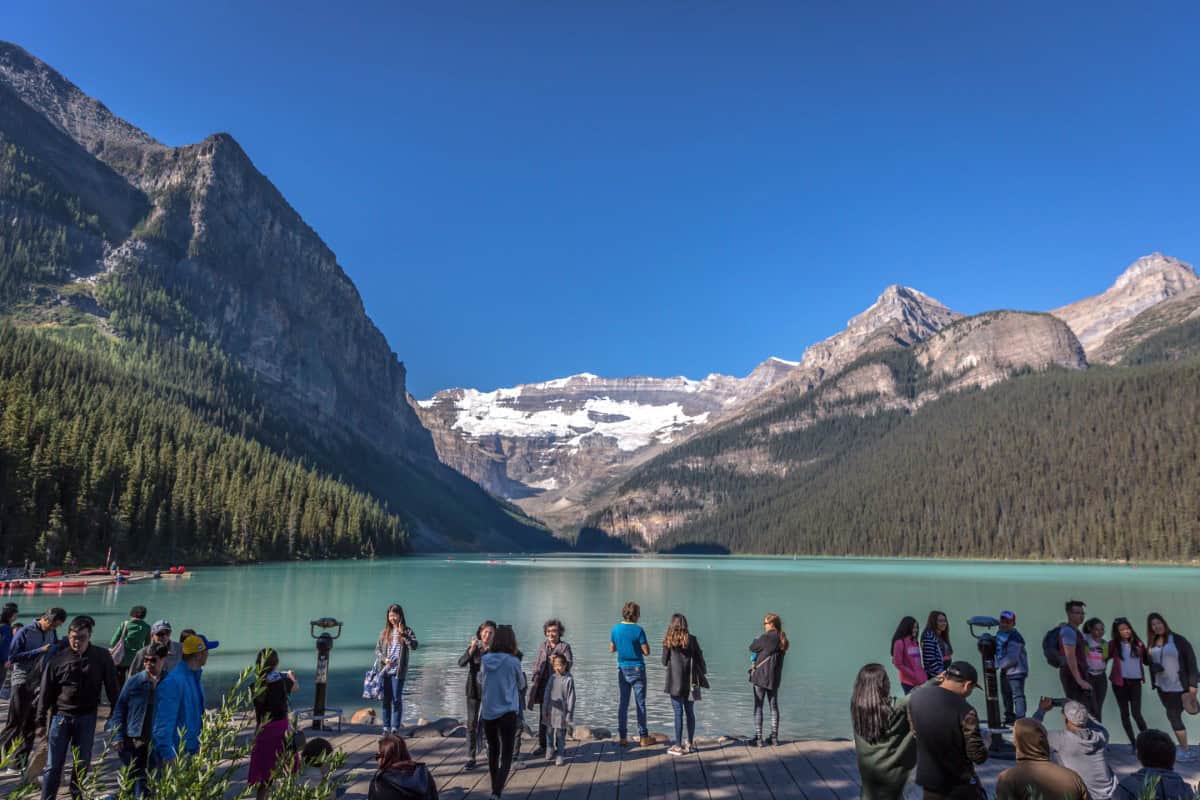
July is the busiest month of the year, tied with August. Weekends are the peak of the peak, and the popular spots fill early. Lake Louise, Moraine Lake, Johnston Canyon, and the gondola all see heavy traffic by mid-morning. The good news is that the crowds thin out fast the moment you put any distance between yourself and a car park.
Travel Considerations in July
Roads are clear, and all the seasonal routes are open, so getting around is easy by Rockies standards. The pressure point is parking, not driving. Banff townsite lots and the major trailheads fill by mid-morning on busy days, so it pays to work out where to leave the car before you arrive. For full park information and any current advisories, Parks Canada is the place to check.
The Shuttle Advantage: Let Someone Else Drive
In a month this busy, the shuttle is often the smartest way to reach the big-ticket spots. The Lake Louise Park and Ride at the ski resort connects to both lakes, and the free Lake Connector links Lake Louise and Moraine Lake once you are in the system. Using it means no circling a full car park at dawn. It also means someone else handles the parking stress while you enjoy the view.
Roam Public Transit
Roam runs frequent services around the townsite and out to Lake Minnewanka, Johnston Canyon, and Canmore through the summer. The regional routes are reliable and take a lot of pain out of the parking problem once you know which buses go where.
The Golden Rule for July: Start Early, Finish Smart
Early starts are the single best thing you can do in July. Arriving at a popular trailhead before 8 am means parking, quiet, and the best light. By mid-morning, the same spots are heaving. Starting early also gets you off exposed terrain before the afternoon thunderstorms build, which is the smart half of the rule.
Moraine Lake: What You Need to Know
Moraine Lake is open in July, and it is one of the best things you can do in the park. What you cannot do is drive there. The road has been closed to personal vehicles year-round since 2023, so access is by Parks Canada shuttle, Roam Transit, commercial bus, or tour only. Guests of Moraine Lake Lodge and visitors with an accessible parking placard are the exceptions.
Shuttle tickets go through the Parks Canada reservation service, and they are released in two waves. Forty per cent open in spring, the rest on a rolling basis two days before each departure at 8 am Mountain Time. The shuttle runs until 12 October this year. Book ahead, set an alarm for the rolling release if you missed the spring batch, and remember that the old 4 am scramble for a parking spot is mercifully a thing of the past. There are a few ways to actually get out there, but some of them are complicated.
Best Things to Do in Banff in July
Lake Louise in July
Lake Louise in July is the postcard: ice gone, water at full turquoise, mountains reflected on a still morning. Canoe rentals run from the boathouse, and the lakeshore path is an easy stroll for any fitness level. The teahouse hikes to Lake Agnes and the Plain of Six Glaciers reward the effort with quieter views and a kettle at the top. Get there early, because parking fills before sunrise. A little thought about how you will get up there saves the worst of it.
Banff Upper Hot Springs
The hot springs are open year-round, and July changes the appeal rather than removing it. Soaking in a hot pool on a warm evening is a different pleasure than doing it in the snow, but the mountain view from the water still delivers. Go in the evening, and you trade the daytime crowds for a sunset.
Lake Minnewanka in July
Minnewanka is the largest lake in the park and one of the easier big sights to reach, with frequent Roam bus service and a decent-sized car park. The scenic boat cruise runs through the summer and is a relaxed way to see the far reaches of the lake. The lakeshore trail is open and flat for the first few kilometres, then climbs into proper hiking terrain. There is more to do around the lake than most day trippers manage.
Banff Gondola (Sulphur Mountain)
The gondola carries you to the summit ridge of Sulphur Mountain for a wide view down the valley. July is its busiest stretch, and the queue at midday can swallow an hour on its own. Book a timed ticket online and aim for the first rides of the day or the last few hours before close. The boardwalk along the ridge is the part most people undersell. It also stacks up well against the other lift-served summits in the area.
Alpine Hiking at Sunshine Meadows
July is when the high meadows come into their own. Sunshine Meadows sits above the treeline and turns into a sea of wildflowers through the middle of summer, with gentle trails that suit most walkers. The gondola from the Sunshine Village base saves a steep slog and gets you straight to the good part. It is worth sorting the gondola and timing first, as access is seasonal.
Canoeing and Paddling
July is prime paddling season. Lake Louise, Moraine Lake, Two Jack Lake, and the Vermilion Lakes all offer calm water and a different angle on the peaks. Rentals are available at the major lakes, or bring your own and launch somewhere quieter. Mornings are best for flat water before the afternoon wind picks up.
Whitewater Rafting and River Floats
Snowmelt keeps the rivers running strong into July, which makes it a good month for rafting. Operators run trips on the Kicking Horse River in nearby Yoho for the bigger whitewater, and gentler float trips on the Bow River for families. Both are guided and easy to book through Banff outfitters. It is the most reliable way to get on moving water without owning any gear.
Cycling the Legacy Trail and Bow Valley Parkway
The paved Legacy Trail runs between Canmore and Banff and makes for a flat, scenic ride away from traffic. For something longer, the Bow Valley Parkway has a cycling-friendly stretch and reduced vehicle access at certain times, which makes for a calmer ride with good odds of wildlife. Check how the parkway is being managed this year before you ride. Rentals are easy to find in both towns.
Via Ferrata at Mount Norquay
For something with more of an edge, Mount Norquay runs guided via ferrata routes through the summer. You are clipped to a fixed cable line and climb across the rock face with a guide; no prior experience needed. The routes range from a couple of hours to most of a day. It is a way to get high in the mountains without the commitment of technical climbing.
Northern Lights: Possible, But Never a Promise
July is a poor month for the aurora, and it is best to set expectations accordingly. The nights are short and never fully dark, which leaves a narrow window even if the lights do appear. Sightings happen, but they are rare and faint at this time of year. If the northern lights are a priority, autumn and winter are the seasons to plan around.
Wildlife and Nature in Banff in July
Bears
Bears are active and widespread in July. Black bears turn up across the Bow Valley, and grizzlies range from the valley floor to the alpine. Late in the month, the buffaloberry crop ripens, which pulls bears down to roadsides and lower trails to feed, so encounters become more likely as July goes on. Carry bear spray, make noise on the trail, and keep your distance. It is worth knowing what to do if you meet one before you set off.
Bighorn Sheep
Bighorn sheep are one of the easier large animals to spot in summer. The herd along the Lake Minnewanka road and the slopes near Mount Norquay are reliable spots. They are used to vehicles and often graze close to the road, which tempts people to get too close. Stay in the car or keep well back, and never feed them.
Mountain Goats
Mountain goats keep to the higher, rockier ground, which makes them harder to see but worth the effort. The Icefields Parkway has a well-known mineral lick where goats come down to the roadside, usually in early summer. A pair of binoculars helps. White against grey rock is the thing to scan for on the upper slopes.
Hoary Marmots and Pikas
The alpine has its own cast of smaller residents. Hoary marmots sun themselves on boulders in the high meadows and give a sharp whistle when alarmed, which is how most people notice them first. Pikas are smaller, quicker, and busy hauling grass into rock piles all summer. Sunshine Meadows and the higher passes are good places to find both.
Loons and Waterbirds
The wetlands and quieter lakes are busy with birdlife in July. Common loons nest on several of the park lakes, and their call carries a long way over still water in the evening. The Vermilion Lakes near the townsite are a good spot for loons, ospreys, and a range of ducks, and they are an easy stop at any time of day. Early morning and dusk are the best windows.
Scenic Drives and Day Trips from Banff in July
Icefields Parkway
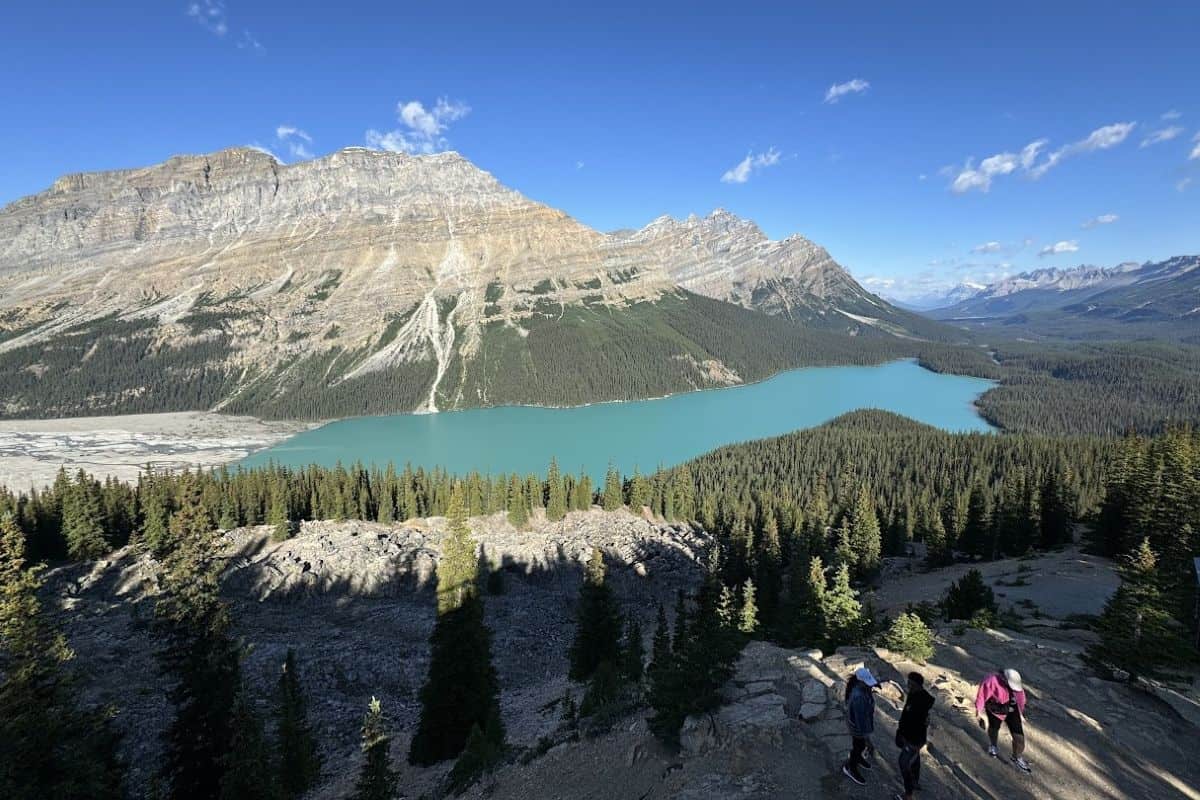
The Icefields Parkway is fully open in July, and every service along it is running. The 230-kilometre route between Lake Louise and Jasper strings together a run of the park's best scenery, and summer is the only season you can rely on all of it being accessible. Key stops include the Bow Lake viewpoint, Peyto Lake, the Columbia Icefield, and Athabasca Falls.
Important July Notes for the Icefields Parkway
Fuel up before you go, as services along the route are limited and busy. The Peyto Lake car park fills early, so arrive before mid-morning or accept a wait. The Columbia Icefield and its attractions are at full summer capacity, which means book ahead if you want the glacier walks or the skywalk. There is no mobile signal for long stretches, so download maps in advance. With more than fifteen hours of daylight, you have time for the full drive, but allow far longer than the distance suggests once you factor in stops.
Yoho and Kootenay National Parks
Both neighbouring parks make strong July day trips and sit within easy reach. In Yoho, Emerald Lake is at its best for paddling and the Takakkaw Falls thunder with snowmelt, among the highest waterfalls in Canada. Kootenay offers Marble Canyon and the Paint Pots, plus hot springs at Radium. The roads are clear and the trails open, so a full day in either is well spent.
Events and Festivals in Banff in July
Canada Day
Canada Day on 1 July is the biggest single date of the month across the region. Banff, Canmore, and Jasper all mark it with parades, live music, and family events that fill the town centres. Banff Avenue gets busy, and parking is best avoided entirely. Use Roam or walk, and expect a festive, crowded day.
Calgary Stampede
The Calgary Stampede runs in early July, about ninety minutes east of Banff, and it shapes the whole region for its run. Many visitors pair a few days in the city with a mountain trip, which tightens accommodation and traffic in both directions. It is not a Banff event, but it is impossible to ignore when planning July dates. Factor the Stampede week into your booking if your trip overlaps.
Banff Farmers Market
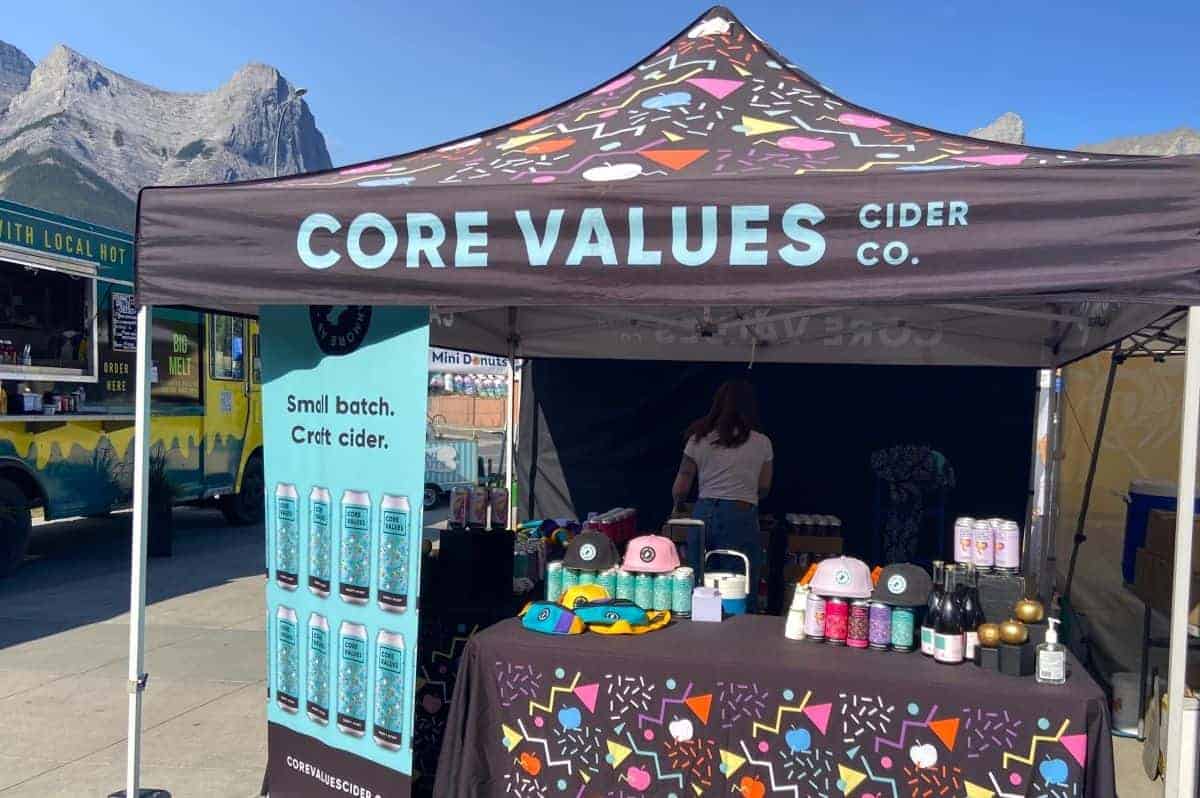
The Banff Farmers Market fills Central Park every Wednesday through the summer. Stalls cover fresh produce, local food, and crafts, and it makes an easy, low-effort morning in town. It is more a pleasant stop than a destination, which is exactly its appeal in a high-energy month. Worth timing a town day around if you are in Banff on a Wednesday.
Canmore Mountain Market
Over in Canmore, the Mountain Market runs every Thursday at Elevation Place from late spring into autumn. More than seventy vendors set up with produce, baked goods, and handmade items, and it draws a strong local crowd. It is a good reason to spend a Thursday in Canmore rather than Banff. Pair it with a riverside walk, and you have a full morning.
Banff Centre Summer Programming
The Banff Centre runs an arts programme through the summer, with performances, talks, and open studios that visitors can attend. The schedule changes week to week, so it pays to check what is on during your stay. It is a quieter, more cultural counterpoint to a day on the trails. A good option for a stormy afternoon, of which July provides a few.
Local Tips to Travel Smarter in July
Book the Right Things Early
July is the month when booking ahead matters most. Accommodation, the Moraine Lake and Lake Louise shuttles, glacier tours, and any guided activity should be locked in well before you arrive. Restaurants in the townsite take reservations and fill up on weekends. The things you can leave to chance are valley walks and town wandering, and not much else.
Make the Most of Daylight
With light from before 5.30 am to nearly 10 pm early in the month, July gives you room to spread the day out. Use the early hours for the popular spots and save town and lakeshore time for the busy middle of the day. Long evenings are perfect for a low walk or a patio. Just keep one eye on the sky if you plan to be high up.
Getting Around in July
Driving is straightforward, but parking is the recurring headache. Lean on Roam Transit wherever you can, particularly for the lakes. For current road conditions across the province, Alberta 511 is the official source. If you are based in Canmore, there are a few ways to make the run into Banff without the parking grief.
Dress for the Conditions, Not Just the Forecast
A warm valley forecast tells you very little about conditions at 2,400 metres. Wind, altitude, and the time of day all matter more than the headline temperature. Always carry a warm layer and a rain shell, even on a clear morning, because July afternoons turn quickly. Pack as though the mountain might disagree with the weather app, because it often does.
Stay Flexible With Day Trips
Afternoon storms and busy car parks both reward a flexible plan. Have a backup in mind if your first choice is full or the sky turns. Swapping a high alpine hike for a lower valley trail when the weather closes in is sensible, not a failure. Build in buffer time, and the day stays enjoyable.
Wildlife Awareness
July is a high-activity month for wildlife, and the buffaloberry season late in the month brings bears closer to trails and roads. Keep 100 metres from bears and 30 metres from other large animals such as elk and sheep. Never feed anything, and never stop in the road to crowd an animal. Give them space, and the encounter stays a good memory rather than a bad one.
Wildfire Awareness
July is dry, and fire season is real in the Rockies. Fire bans come into effect when conditions warrant, so check before lighting anything and respect the rules absolutely. Smoke from distant fires can drift in and affect air quality and visibility for days at a time. It is part of a Rockies summer, and worth keeping an eye on the forecast for.
Hydration and Sun Protection
Altitude and dry air dehydrate you faster than you expect, and the July sun is stronger up high than the temperature suggests. Carry more water than feels necessary and drink it before you are thirsty. Reapply sunscreen throughout the day, and do not skip it on overcast mornings. The thin mountain air does not filter the sun the way the lowlands do.
Know What Is and Is Not Open
July is the one month when almost everything is open, which is part of why it is so busy. The Icefields Parkway, the high trails, the lakes, and the day-trip parks are all accessible. The one firm limit is Moraine Lake, which you can only reach by shuttle or transit. Check trail conditions before any high alpine route, as a few passes hold snow into early July.
Leave No Trace
Banff handles millions of visitors a year, and July is when the strain shows most. Stay on the trails, pack out everything you bring in, and resist the urge to cut switchbacks or trample the meadows for a photo. The wildflowers people travel here to see do not survive being walked through. A little care from everyone is the difference between a park that copes and one that frays.
Why July Is a Great Time to Visit Banff
July is the Rockies at their most complete. Every trail is open, every lake is thawed, and the long days give you room to do more in a single visit than any other month allows. The wildflowers, the warm evenings, and the full run of the Icefields Parkway are all at their best.
The trade-off is honest and simple. You share it with the largest crowds of the year, you pay the highest prices, and you accept the odd thunderstorm. Plan around the early hours, lean on the shuttles, and book what matters in advance, and July rewards you for the effort. Come prepared, and it is hard to beat.
FAQs: Banff In July
Is July a good time to visit Banff?
Yes, if you want everything open and do not mind the crowds. July offers the widest range of activities of any month, with warm weather and the longest days. The cost is peak prices and peak numbers, so early starts and advance booking matter more than usual.
How warm/cold is Banff in July?
Daytime highs sit around 22C in the valley, occasionally reaching the high twenties in a heatwave. Nights cool to 7C or 9C, and higher elevations run noticeably colder and windier. It feels like proper summer in town and like a different season above the treeline.
Is July in Banff busy?
Very. July is the busiest month of the year alongside August, with weekends, Canada Day, and the Calgary Stampede period the peak. Lake Louise, Moraine Lake, and the gondola fill by mid-morning. The crowds ease quickly once you get away from the car parks.
What are the best things to do in Banff in July?
Alpine hiking is at its peak, with the high meadows in full wildflower bloom. Paddle Lake Louise or Moraine, raft the rivers while the snowmelt runs high, and drive the full Icefields Parkway. Soak at the Upper Hot Springs in the evening and ride the gondola early to beat the queue.
Is July a good month for driving in Banff National Park?
Yes. All the seasonal roads, including the full Icefields Parkway, are open and clear. The challenge is parking rather than driving, so lean on the shuttles and Roam Transit for the busiest spots. Check Alberta 511 for current conditions before driving any longer.


