
Cave and Basin Banff: A Guide to the Historic Hot Springs
Discover the Cave and Basin National Historic Site in Banff. Explore the thermal springs, historic exhibits and boardwalks, with practical information to help plan your visit.

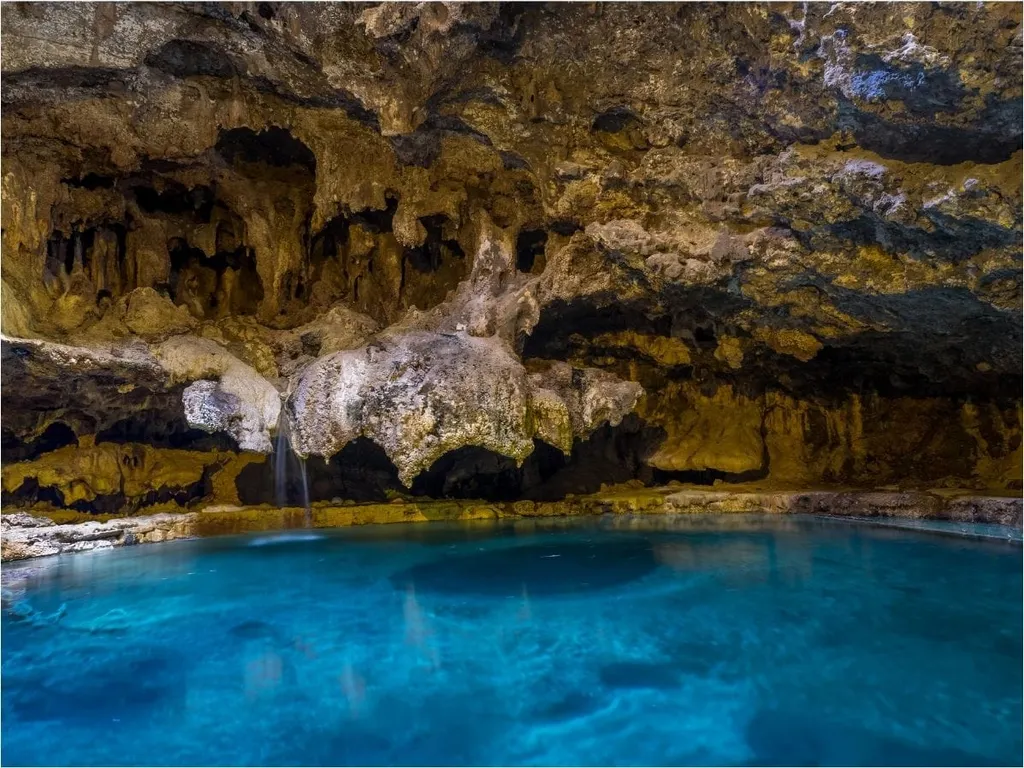
Banff is famous for its mountains, but one of its most important landmarks is tucked away at the foot of Sulphur Mountain. A visit to Cave and Basin Banff brings you to the thermal springs that helped set Canada's national park system in motion. There is a warm-water cave to explore, a historic bathing pavilion, and short boardwalks where wildlife thrives in an unusual wetland.
This is a place to explore rather than somewhere to go for a swim. The springs are protected, and the experience is about understanding the landscape and the people who have known it over thousands of years.
Is Cave and Basin worth visiting?
Cave and Basin makes an interesting half-day stop, mixing indoor history with gentle outdoor walks.
The cave is the centrepiece, but families and history enthusiasts will find plenty beyond it.
What to see at Cave and Basin Banff
Step into the thermal cave
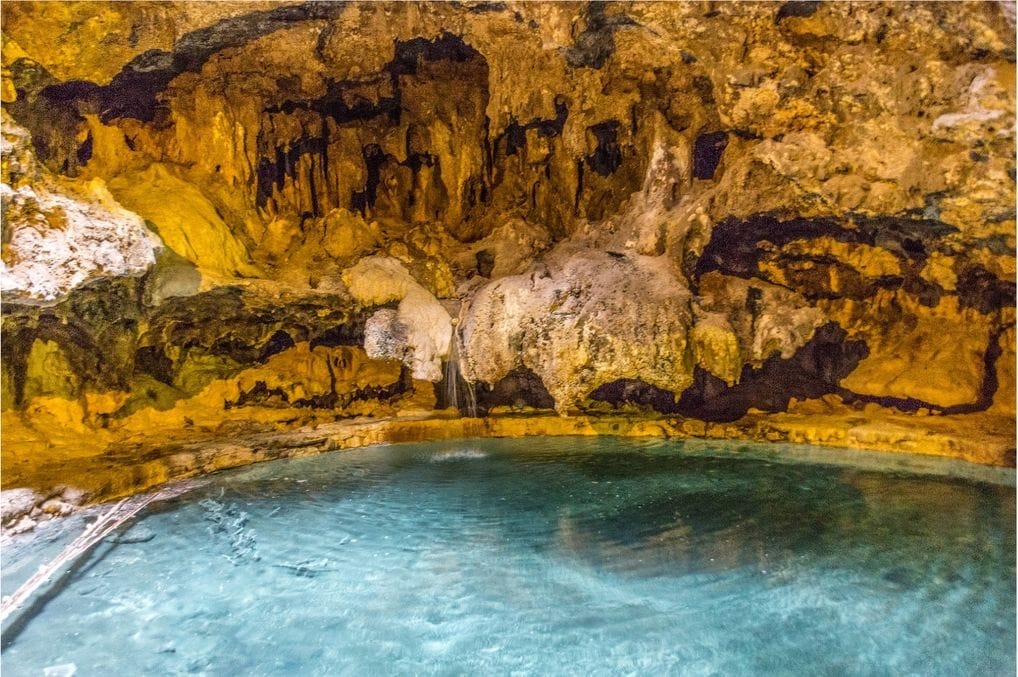
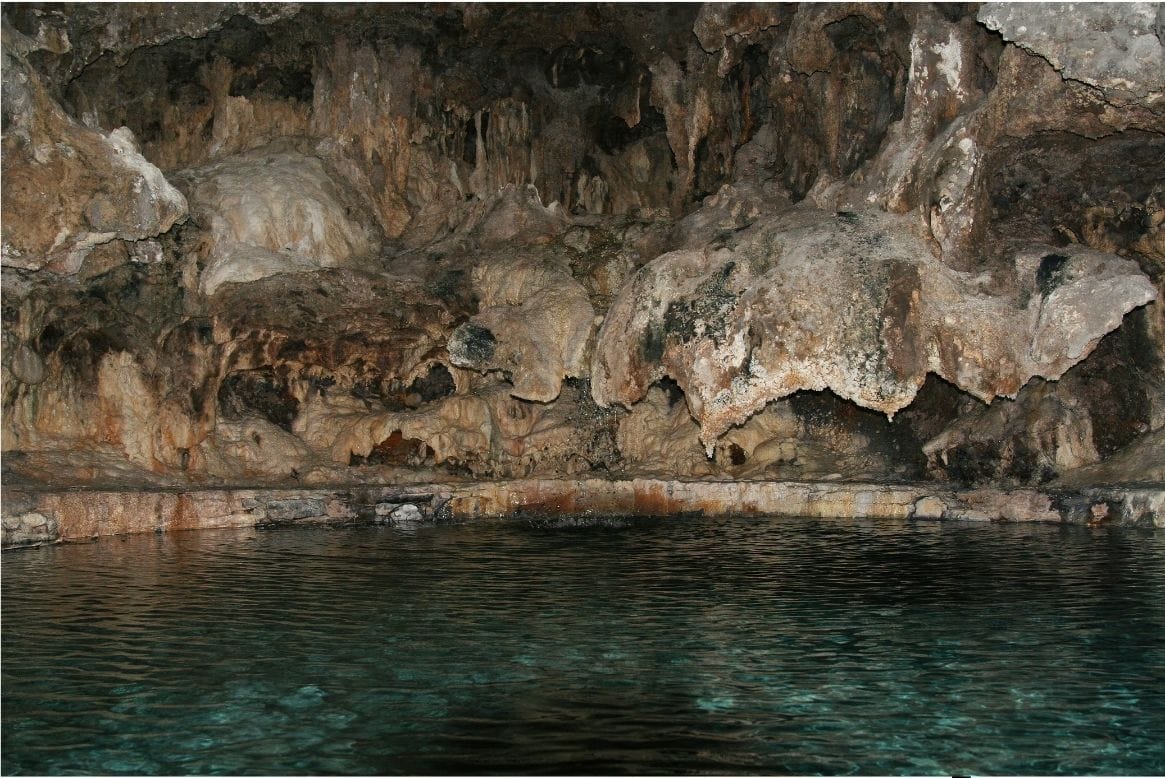
The most memorable part of the visit is entering the cave itself. A passage through the historic building leads to an enclosed chamber, where mineral water collects beneath the rock and light enters from an opening high above.
The air can be humid, and there may be a noticeable sulphur smell. Bacteria acting on dissolved minerals give the water its distinctive odour.
The cave is a viewing experience, not a bathing pool. Swimming and touching the protected waters are not permitted, so plan on observing the spring and learning why it matters instead.
Explore the old bathing pavilion
The stone building is part of the story. The bathing pavilion dates to 1914, a reminder of the period when visitors came to Banff specifically to take the waters.
Today, interpretive displays and short films explore the early park, the cultural significance of the site and the development of conservation in Canada. The former outdoor bathing area also helps explain how a natural spring became a tourist destination.
Before leaving the main complex, allow time for the viewing decks. They provide a different perspective over the grounds and towards the surrounding peaks.
Follow the Upper Boardwalk
The Upper Boardwalk takes you above the building towards the cave's natural vent. It also passes smaller springs, where warm water supports vividly coloured bacteria and algae.
Parks Canada lists this as a 0.4 km walk taking about 15 minutes, with minimal elevation gain. It is an easy addition to the indoor visit, although individual sections and approaches may involve steps.
Discover the wetland on the Lower Boardwalk
A second boardwalk explores the lower slopes and the wetlands created as thermal water travels towards the Bow River. The habitat supports fish, insects and birds, making this an appealing part of the visit if you like spotting wildlife.
The Lower Boardwalk is 0.5 km long, and Parks Canada suggests allowing about 20 minutes. It can easily be combined with the upper route.
Leave the water undisturbed: this is a protected habitat.
Why the springs matter
An Indigenous place long before the railway
The story of Cave and Basin did not begin in the 1880s. Parks Canada recognises that Indigenous Peoples have known and valued these waters for more than 10,000 years, and that the place continues to hold cultural and spiritual importance.
The site lies within the present-day territories of Treaties 6, 7 and 8 and the Métis Homeland. For generations, Indigenous communities gathered here, and ceremonies continue to form part of its living significance.
Any account that treats the railway workers as the first people to discover the springs misses this much older history. Understanding both stories gives the historic site a more complete meaning.
From a disputed claim to Canada's first national park
In 1883, Canadian Pacific Railway workers William and Tom McCardell and Frank McCabe encountered the thermal springs and sought to claim them commercially. Disagreements over control followed, with the federal government also interested in the springs' potential to attract visitors.
In 1885, the government established a 26-square-kilometre reserve around the hot springs. Two years later, the Rocky Mountains Park Act greatly expanded the protected area and created Canada's first national park, then known as Rocky Mountains National Park.
It became Banff National Park in 1930. The dates matter because 1885 marks the initial reserve, while 1887 marks the larger national park established through legislation.
A difficult chapter of Banff's history
Cave and Basin also has a connection to Canada's First World War internment operations. A camp was moved here from Castle Mountain in November 1915 and remained until July 1917.
Men held under wartime regulations were required to work on projects that helped develop western national parks. Parks Canada records poor conditions and reports of harsh treatment, a history that deserves attention alongside the better-known stories of tourism and conservation.
An interpretive exhibit adjacent to the historic site examines internment through displays and archival material. It adds an important perspective on who built parts of the park and under what circumstances.
A tiny resident of the hot springs
The Banff springs snail is one of the site's smallest and most remarkable inhabitants. This endangered species occurs only in a handful of thermal springs around Sulphur Mountain, where very particular water conditions allow it to survive.
You may learn about the snail in the exhibits or see its habitat from the boardwalks, although spotting an individual is never guaranteed. Avoid touching the water, rocks or vegetation around the springs so this fragile environment remains undisturbed.
The warm water also supports a range of other life, including algae and insects. Look closely and you begin to see why protecting the springs involves much more than preserving an old building.
If you have extra time outdoors
A longer walk is possible without moving your car. The 2.6 km Marsh Loop circles the wetland, takes roughly an hour and offers a quieter way to explore the landscape beyond the pavilion.
Parks Canada cautions that the Marsh Loop can be muddy after rain because horses use the trail. Footwear suitable for an ordinary natural trail is a better choice than shoes intended only for indoor sightseeing.
For a substantially longer outing, the Sundance Trail leads towards Sundance Canyon. The route includes a paved approach followed by a more demanding canyon loop, so it is best treated as a separate hike rather than a quick extension to the historic site.
Visiting with children
Cave and Basin can make Banff's history easier to understand because children can see the springs rather than just read about them. The mix of cave, films and short outdoor trails also helps vary the pace of the visit.
Parks Canada offers a self-guided Xplorers activity booklet for younger visitors, although availability should be checked on arrival. Children aged 17 and under receive free admission to the historic site.
Practical Information
Getting there and parking
Cave and Basin National Historic Site is at 311 Cave Avenue, south-west of downtown Banff. Parks Canada places the trailhead about 2 km from downtown, or approximately 30 minutes on foot.
Walking or cycling along Cave Avenue is an option if you are staying in town. Drivers will find on-site parking, including accessible spaces.
Roam Transit's Route 4 serves Cave and Basin in the summer, but its 2026 service ended on 4 October. Roam lists 19 May 2027 currently as the date it is due to resume, so do not assume there is a direct bus during the autumn and winter.
Opening hours and planned closures
From 15 May to 15 October, Parks Canada lists daily opening from 9.30 am to 5 pm. From 16 October to 14 May, the published schedule changes to Thursday through Monday, 11 am to 5 pm.
There are also specified closure dates, including 22-24 October and 14-17 December 2026, plus further dates in 2027. Check Parks Canada's current hours before travelling, particularly if your visit falls outside the main summer season.
Admission and how long to allow
As of October 2026, admission costs $10 for adults aged 18-64 and $8.50 for seniors aged 65 and over. Admission is free for visitors aged 17 and under, and a valid Parks Canada Discovery Pass covers entry.
Parks Canada recommends allowing two to three hours for the building, exhibits, gift shop and boardwalks. A shorter visit is possible if you focus on the cave.
Accessibility and visitor facilities
Parks Canada lists accessible facilities, toilets and parking at the site. Its 30-minute Cave and Basics introduction is described as accessible, while some outdoor walks include stairs or surfaces that may not suit every visitor.
A 1.30 pm drop-in introduction is normally included with admission and does not require booking. Confirm programme availability and specific accessibility requirements with Parks Canada before your visit.
Cave and Basin is not Banff's biggest attraction, nor does it need to be. A modest building, a warm cave and a small network of trails tell a story that stretches from Indigenous connections with the land to the beginnings of Canada's national parks, and that makes it a worthwhile stop.
FAQs: Cave and Basin Banff
Can you swim at Cave and Basin Banff?
No. The original springs are protected and are for viewing rather than swimming. If bathing in thermal water is your priority, check the separate Banff Upper Hot Springs facility instead.
How much does Cave and Basin Banff cost?
Standard admission in October 2026 is $10 for adults and $8.50 for seniors, with free entry for children and teenagers aged 17 and under. The exterior boardwalks have historically been free to access, but check for any temporary restrictions.
How long do you need at Cave and Basin Banff?
Allow around two to three hours if you want to see the cave, explore the exhibitions and walk both short boardwalks. Add more time if you plan to follow the Marsh Loop or take another trail.
Is the Cave and Basin open in winter?
Yes, but it does not normally open every day in winter. Parks Canada's published off-season schedule is Thursday to Monday, 11 am to 5 pm, with additional closures on specified dates.
Is Cave and Basin suitable for a rainy day?
It can be, because the cave, exhibitions and films give you things to do indoors. However, the boardwalks and viewing areas are outside, so bring suitable clothing and expect a shorter outdoor visit in poor weather.


