
Skoki the Grizzly Bear: From Banff Rebel to Calgary Zoo Ambassador
Bear 16 got into Laggan's Bakery, stepped on a tent, and charged vehicles, and in 1996 Parks Canada decided to euthanise him. A phone call to the Calgary Zoo changed that. He lived to 35, roughly twice a wild male's span, and taught millions of people why not to feed bears.

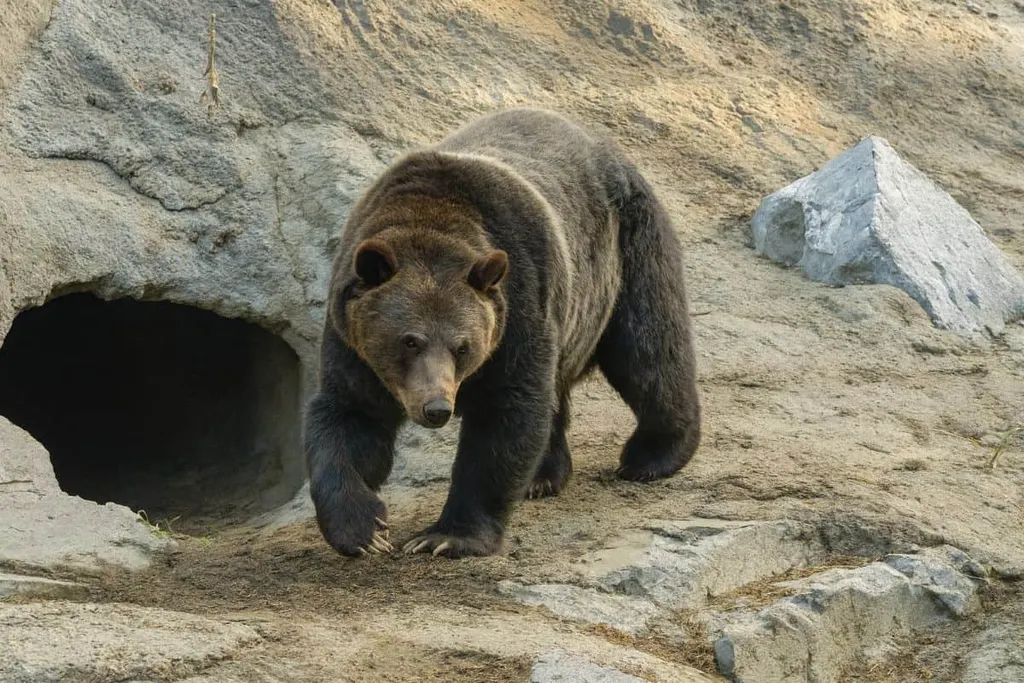
Skoki the grizzly didn’t start out as Skoki at all. He was born in Banff National Park around 1990 and was known to researchers as Bear #16. For a while, he lived the ordinary grizzly life - tagging along with his mother, learning to forage, and sticking to the wild side of the Rockies.
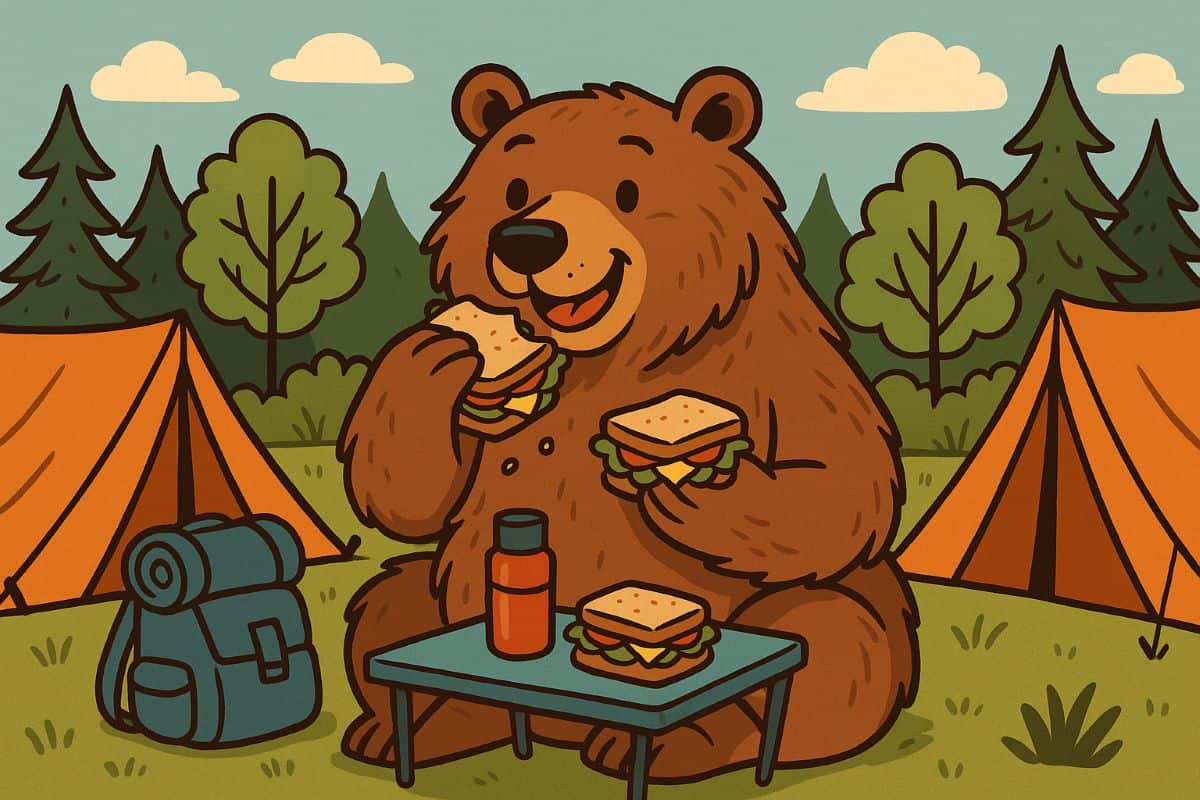
But Banff is not exactly an untouched wilderness. Visitors flock in, campers set up shop, and tourists leave behind what Skoki eventually discovered to be an irresistible perk: human food. All it took was a few carelessly stashed sandwiches and curious photographers getting too close, and Bear #16 began to connect people with snacks. For a grizzly, that’s the equivalent of learning where the cookie jar is kept, and it rarely ends well.
🐻 For Bear Lovers & Wildlife Enthusiasts – Discover Grizzly Bears from Banff – Full-Day Tour.
🐻 For Bear Spotters, Elk Watchers & Sunset Chasers – Banff Wildlife Safari & Scenic Lakes Tour.
🧡 For Wildlife & Nature Lovers – Yamnuska Wolfdog Sanctuary Walk – Guided Visit.
The Rise of a Problem Bear
By the early 1990s, Bear #16 had developed a bit of a reputation. His regular appearances in the Bow Valley created what locals call “bear jams” - traffic pile-ups of excited visitors eager to snap photos. While tourists marvelled, Bear #16 was slowly losing his natural caution around humans.
His behaviour escalated in ways both alarming and oddly comical. He stuck his head inside the back door of Laggan’s Bakery in Lake Louise. He stepped on a camper’s tent at a nearby campground. He bluffed fishermen, charged vehicles, and became a frequent presence around the townsite. At this point, Parks Canada gave him the dreaded label: a “problem bear.” Once a bear crosses that line, the options are limited and grim.
One Last Phone Call
In 1996, things reached a breaking point. After a series of incidents, officials decided Bear #16 would be euthanised. But fate - and a well-timed phone call - intervened. The Calgary Zoo was asked if they could take him, and they agreed. On July 5, Bear #16 was captured near the Bow Valley Parkway and shipped east. His wild days were over, but his story was just beginning.
It was at the zoo that Bear #16 got his new name: Skoki the Grizzly was named after the valley he once roamed. From that moment, his life shifted from rogue grizzly to conservation ambassador.
Life Behind the Fence
Zoo life brought its own ironies. On one hand, Skoki was neutered, ensuring he wouldn’t contribute to the already threatened wild population. On the other hand, he was cared for so well that he ended up defying the odds.
A wild male grizzly typically lives 20 to 25 years. Skoki lived to 35 - a “very geriatric” age in bear terms. He topped the scales at nearly 900 pounds before hibernation, developed a taste for celery and lettuce alongside his fish and meat, and grew so deaf in his later years that keepers relied on scent and sight to get his attention.
In many ways, Skoki lived two lives: the free-wheeling, food-sniffing rebel of Banff, and the surprisingly long-lived, zoo-dwelling teacher whose very existence became a cautionary tale.
The Irony of His Legacy
The great irony of Skoki’s story is that the same behaviour that nearly got him killed - his attraction to humans - turned him into a powerful conservation symbol. Visitors who came to see him at the Calgary Zoo learned what happens when humans and wildlife collide. His presence gave zookeepers a platform to explain why you should never feed bears, why “just one photo” isn’t worth it, and why proper food storage in the backcountry matters more than you think.
In the wild, Skoki might have fathered cubs and contributed to the fragile grizzly population. In captivity, he educated millions of humans, a different kind of legacy but one with lasting impact.
A Long Goodbye
On September 3, 2025, after nearly three decades at the zoo, Skoki’s story came to an end. At 35 years old, he was euthanised following a steep decline in health. The decision was described as compassionate, a recognition that he had reached an age few grizzlies ever see.
For those who knew his story, it was a bittersweet experience. He had lived almost twice as long as he might have in the wild, but it was a life that started with human mistakes and ended with human care.
Lessons From Skoki
Skoki’s life highlights a truth that every visitor to bear country should take to heart: our behaviour matters. A forgotten cooler, a curious photo stop, or an ill-advised handout can change the course of a bear’s life. What seems like a harmless moment for us can be the beginning of the end for them.
His story also reminds us that coexistence is complicated. Bears like “The Boss” and "Slit Lip" in Banff have learned to navigate highways and wildlife overpasses, thereby maintaining their independence. Skoki didn’t get that chance. Instead, he became a living reminder of what happens when wild and human worlds overlap too closely.
Remembering Skoki the Bear
Was Skoki a troublemaker? Absolutely. Was he also a victim of human carelessness? Without question. And in the end, was he a teacher? Yes - though perhaps not by choice.
Skoki’s life was a paradox: a bear who lost his freedom but gained a kind of fame, a creature whose instincts were twisted by human interference but who ultimately helped humans understand why leaving bears alone is the most compassionate act of all.
So the next time you’re in Banff, staring at a roadside bear or fumbling with snacks at a campsite, think of Skoki. His legacy isn’t just the long life he lived - it’s the lesson he left behind.
(If you’re interested in Banff’s bear stories, you might also be interested in Nakoda, the rare white grizzly that became a local legend. Learn more about this extraordinary bear and what makes a white grizzly so unusual.)


