
White Grizzly Bear Banff: The Story of Nakoda and What She Taught Us
Bear 178 was leucistic, not albino and not a spirit bear, and fewer than one grizzly in 100,000 carries that coat. She learned to climb wildlife fencing. She kept coming back to the dandelions in the ditches. In June 2024 both her cubs were struck on the Trans-Canada, and later that day so was she.

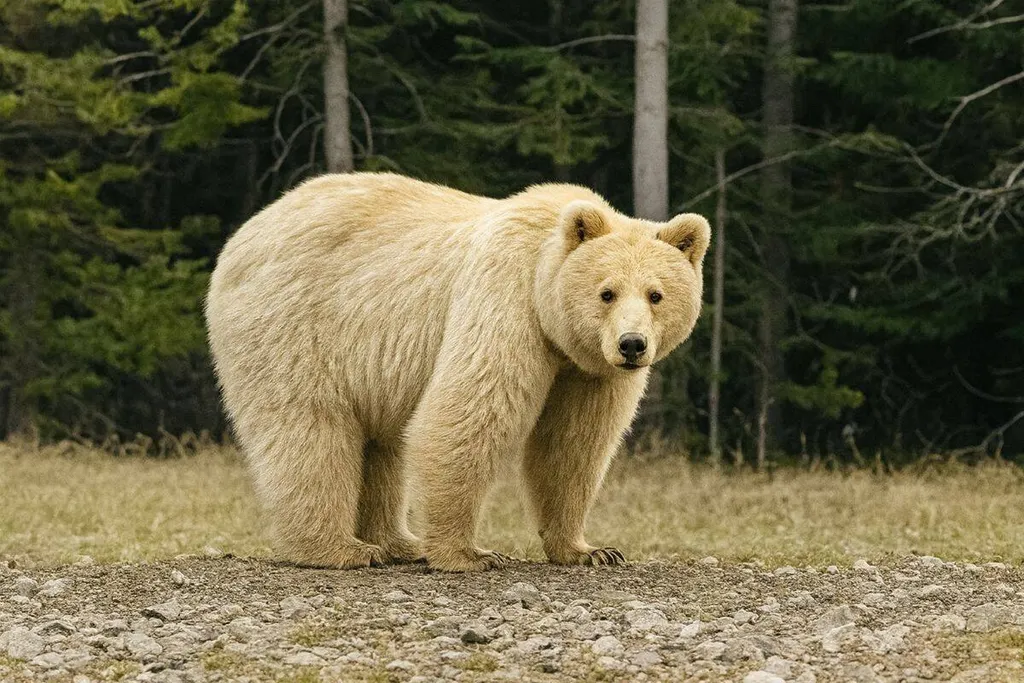
The white grizzly bear Banff visitors came to know as Nakoda was never meant to be famous. She did not seek attention, headlines, or camera lenses.
She was simply a grizzly bear born with an extremely rare white coat, navigating the same valleys, food sources, and dangers that generations of bears have used long before highways and railways arrived.
Yet her appearance, behaviour, and tragic death turned her into one of the most closely watched animals in the Canadian Rockies.
This is the story of Nakoda, the white grizzly, what made her unique, and what her life reveals about wildlife, people, and infrastructure in Banff and Yoho National Parks.
Who Was Nakoda the White Grizzly
A rare white grizzly bear Banff had never seen before
Nakoda was officially known to Parks Canada as Bear 178. To the public, she became known simply as the white grizzly bear Banff residents and visitors talked about in hushed tones and excited whispers.
Her coat ranged from pale blonde to near white, a striking contrast against the dark forests and rocky slopes of the Rockies.
She was not albino, not a polar bear, and not a spirit bear. Nakoda was a leucistic grizzly bear, meaning she had a partial loss of pigmentation in her fur while retaining dark eyes and a dark nose. This distinction matters because it explains both her appearance and the many misconceptions that followed her throughout her life.
What leucism actually means
Leucism is caused by a genetic issue that affects pigment cell development in fur, not the ability to produce pigment entirely. Unlike albinism, leucistic animals do not have pink or red eyes. Nakoda’s normal eye colour was one of the clearest indicators that she was a leucistic grizzly, not an albino.
In inland grizzly populations like those around Banff and Yoho, a white coat is estimated to occur in fewer than one in 100,000 bears. It offers no camouflage advantage in forested mountain environments, making it a biological curiosity rather than an adaptation.
Clearing Up the Biggest Myths
Not a spirit bear
One of the most common misunderstandings was the belief that Nakoda was a spirit bear. Spirit bears are a subspecies of black bear found only in the coastal rainforests of British Columbia. They are genetically, geographically, and ecologically distinct from grizzly bears.
Nakoda lived hundreds of kilometres inland, followed a terrestrial diet, and belonged to a completely different species. The white grizzly bear Banff captured on social media was not connected to the coastal spirit bear population in any biological way.
Not a polar bear, either
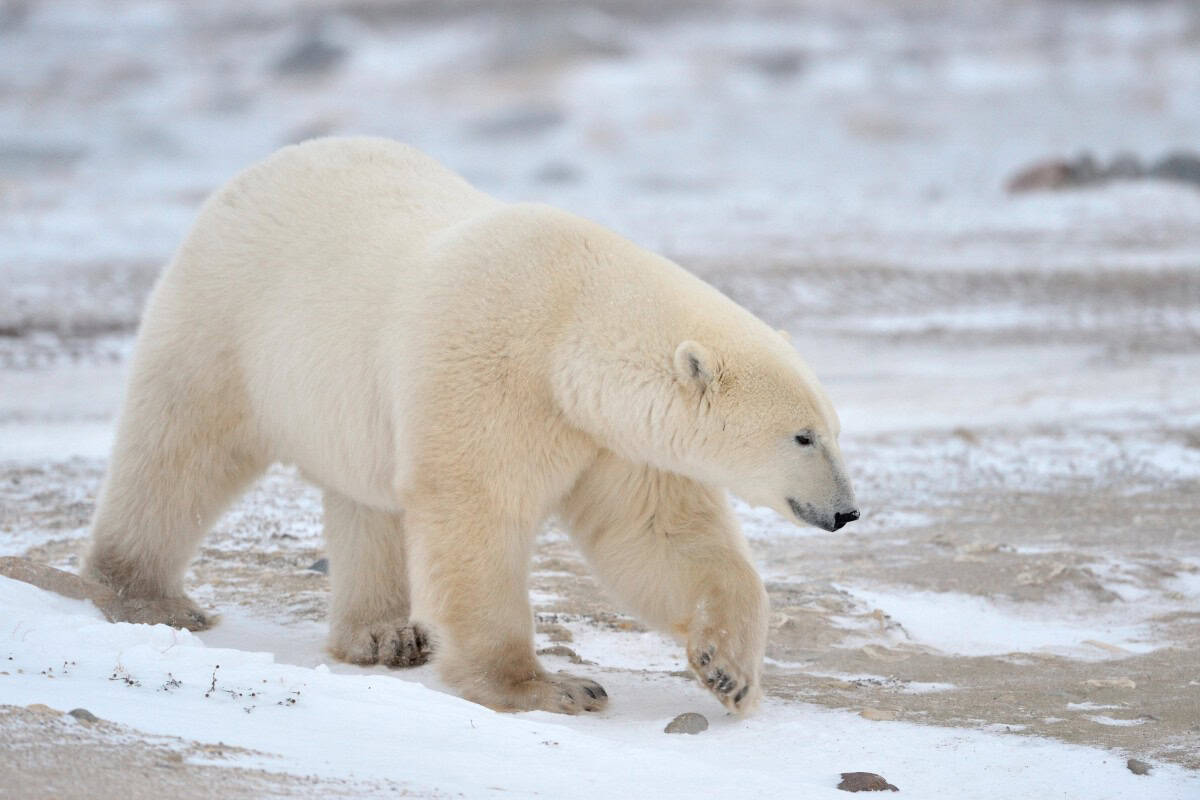
It may sound obvious, but it still needs saying. Nakoda was a grizzly bear. She had the shoulder hump, facial structure, and body shape typical of Ursus arctos horribilis. Her colour alone led to some imaginative guesses, but biologically, she was a Rocky Mountain grizzly through and through.
Nakoda’s Life Along the Highway
Learning the roadside routine
Nakoda was born into a lineage already familiar with valley bottoms and transportation corridors. Her mother and sister both foraged near roads and rail lines, and this behaviour was passed on through learning, not instinct alone.
By the time Nakoda began appearing regularly in public sightings around 2020, she had already learned that roadside ditches offered easy food, especially in spring.
The dandelion problem
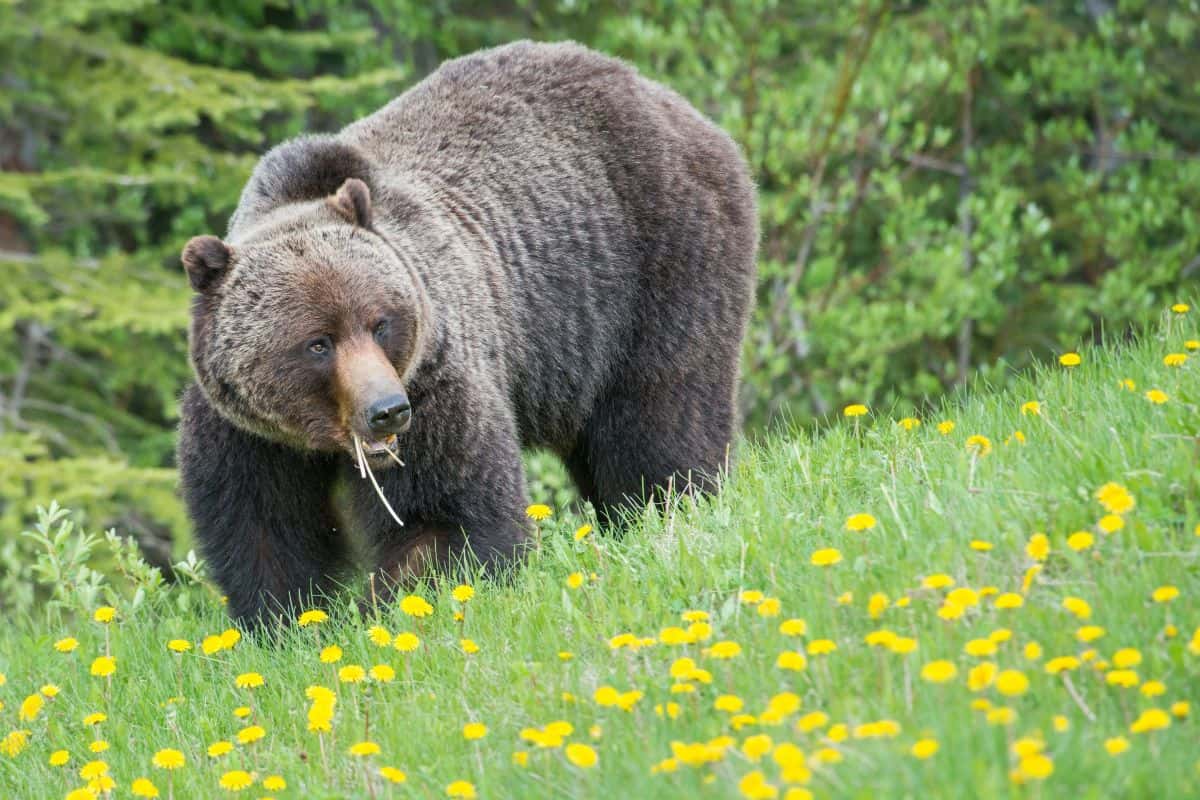
In May and June, when high-elevation food sources are still buried under snow, valley bottoms green up early. Dandelions thrive in roadside ditches, originally seeded for erosion control decades ago.
For a bear emerging from hibernation, dandelions provide reliable, high-energy food. For Nakoda, this became a powerful draw. The problem was not the food itself, but where it grew. The white grizzly bear Banff visitors admired was repeatedly foraging just metres from fast-moving traffic.
Management Efforts and Their Limits
Fences, hazing, and relocation
Parks Canada tried nearly every available management tool with Nakoda. Standard wildlife fencing was installed, but she learned to climb it, using posts and mesh as footholds. This behaviour was rare enough that it forced managers to rethink infrastructure design.
Aversive conditioning was used to push her away from the road. It worked temporarily, but the pull of predictable food kept bringing her back. In 2022, she was captured, collared, and relocated within her home range in Yoho National Park. Like many adult bears, she returned.
Electric fencing and no-stopping zones
In 2023, electrified fencing was installed along key sections of highway. It appeared to work for a season. In 2024, with cubs and higher nutritional needs, Nakoda found her way back again.
Speed reductions and no-stopping zones were introduced to limit traffic congestion and wildlife viewing behaviour. These measures reduced some risk but could not eliminate it.
The Final Days of Nakoda
The loss of her cubs
In early June 2024, Nakoda was travelling with two cubs-of-the-year along the Trans-Canada Highway in Yoho. One morning, both cubs were struck and killed by a vehicle. Nakoda was not hit in that incident.
Mother bears often remain near areas where cubs are lost, searching or lingering. This behaviour, heartbreaking as it is, also increases exposure to danger.
The collision that followed
Later that same day, Nakoda was startled by a passing train on the Canadian Pacific rail line that runs parallel to the highway. Her instinctive flight response pushed her away from the tracks and onto the road.
One vehicle avoided her. Another struck her. Despite being injured, she climbed the fence and disappeared into the forest. Two days later, her GPS collar signalled that she had stopped moving. A necropsy confirmed she died from internal injuries.
Why Nakoda’s Death Matters
The loss of a whole family line
Nakoda’s death was not an isolated incident. Her mother had previously been killed by a vehicle. Her sister was also lost to a collision. With Nakoda and her cubs gone, an entire matriline disappeared.
Grizzly bears reproduce slowly. Females may not have cubs until six or seven years old and often wait several years between litters. Nakoda had only just reached reproductive maturity. Her potential contribution to the population was significant.
Roads and rails as predators
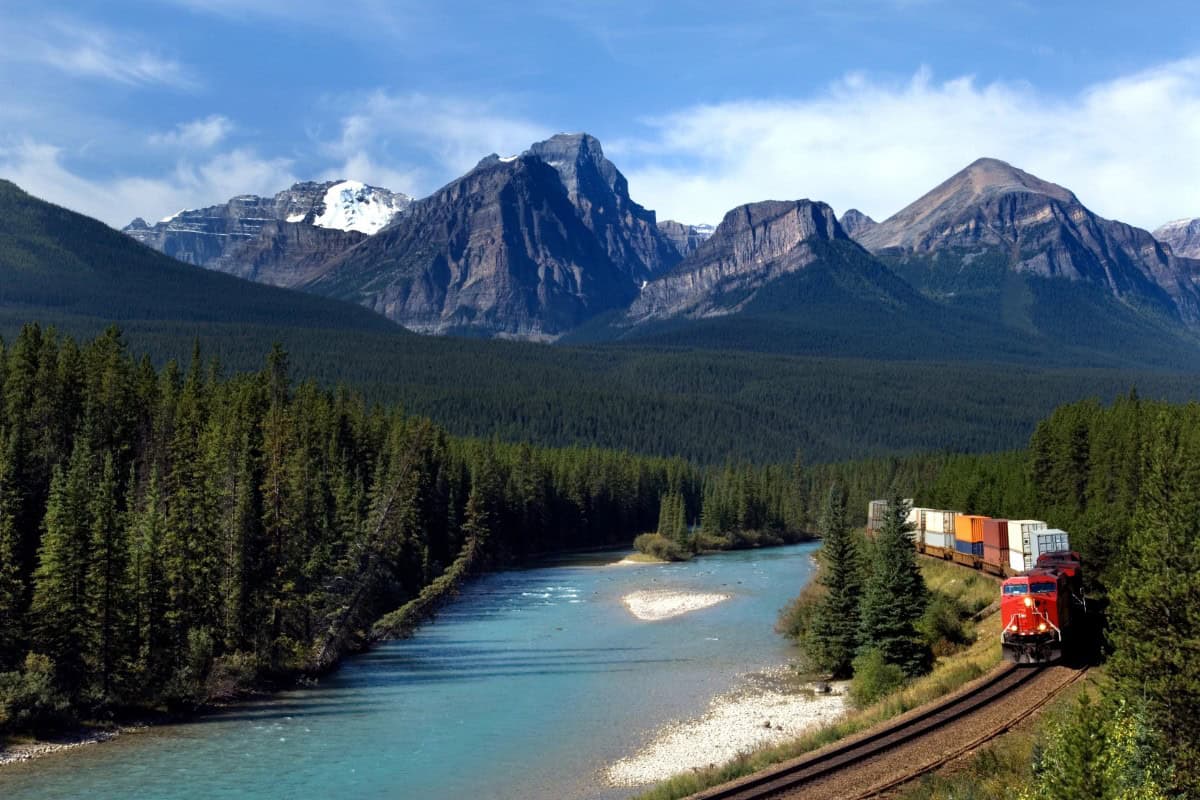
In the Yoho and Lake Louise region alone, dozens of bears have been killed by vehicles and trains in recent years. These corridors act like super-predators, removing animals regardless of strength, intelligence, or experience.
Nakoda’s story makes this impossible to ignore.
What Nakoda Taught Us
Loving wildlife from a distance
One uncomfortable lesson from the white grizzly bear Banff story is that attention itself can be harmful. Crowding, stopping vehicles, and approaching for photos all increase stress and risk for animals.
Respecting distance, obeying no-stopping zones, and keeping moving are not minor rules. They are survival measures.
Infrastructure matters
Fencing, crossings, speed limits, and habitat management all help, but none are perfect on their own. Nakoda showed how adaptable bears can be, and how quickly they exploit gaps in human systems.
Her life has already influenced how future infrastructure is planned and maintained in the Rockies.
Remembering Nakoda
Nakoda was not special because she was white. She was special because her story revealed how fragile coexistence can be in places where wild animals and modern transportation share the same narrow valleys.
The white grizzly bear Banff visitors will never see again left behind more than photographs. She left lessons, data, and a responsibility to do better. If her story changes how people drive, stop, photograph, or think about wildlife in Banff and Yoho, then her legacy still has weight.
FAQs: Nakoda The White Grizzly Bear
What was Nakoda the white grizzly bear?
Nakoda was a rare white grizzly bear, officially known as Bear 178, who lived in and around Banff and Yoho National Parks. Her pale coat was caused by leucism, a genetic condition that results in reduced pigmentation in fur while retaining normal eye and nose colour.
Was the white grizzly bear in Banff an albino or a spirit bear?
No. Nakoda was neither albino nor a spirit bear. Albino animals lack all pigmentation, including in the eyes, which was not the case with Nakoda. Spirit bears are a subspecies of black bear found only on the coast of British Columbia, while Nakoda was an inland grizzly bear.
Why was Nakoda often seen near highways?
Nakoda regularly foraged along roadside ditches because they contain abundant dandelions, especially in spring when other food sources at higher elevations are not yet available. These areas provided easy calories but also placed her close to fast-moving traffic.
What happened to Nakoda and her cubs?
In June 2024, Nakoda’s two cubs were struck and killed by a vehicle on the Trans-Canada Highway in Yoho National Park. Later the same day, Nakoda was startled by a passing train, ran onto the highway, and was hit by a vehicle. She later died from internal injuries.
Why is Nakoda’s death significant for grizzly bears in the Rockies?
Nakoda was a reproductive female in a slow-breeding species, and her death followed the earlier loss of her mother and sister to vehicle collisions. Together, these events resulted in the complete loss of a single family line, highlighting the serious impact of roads and railways on grizzly bear populations in the region.


