
The History of Banff National Park, Told Through Its Places
A hot spring, a railway hotel and a road built by internees tell different parts of Banff's story. Here's where to find that history on a visit today.

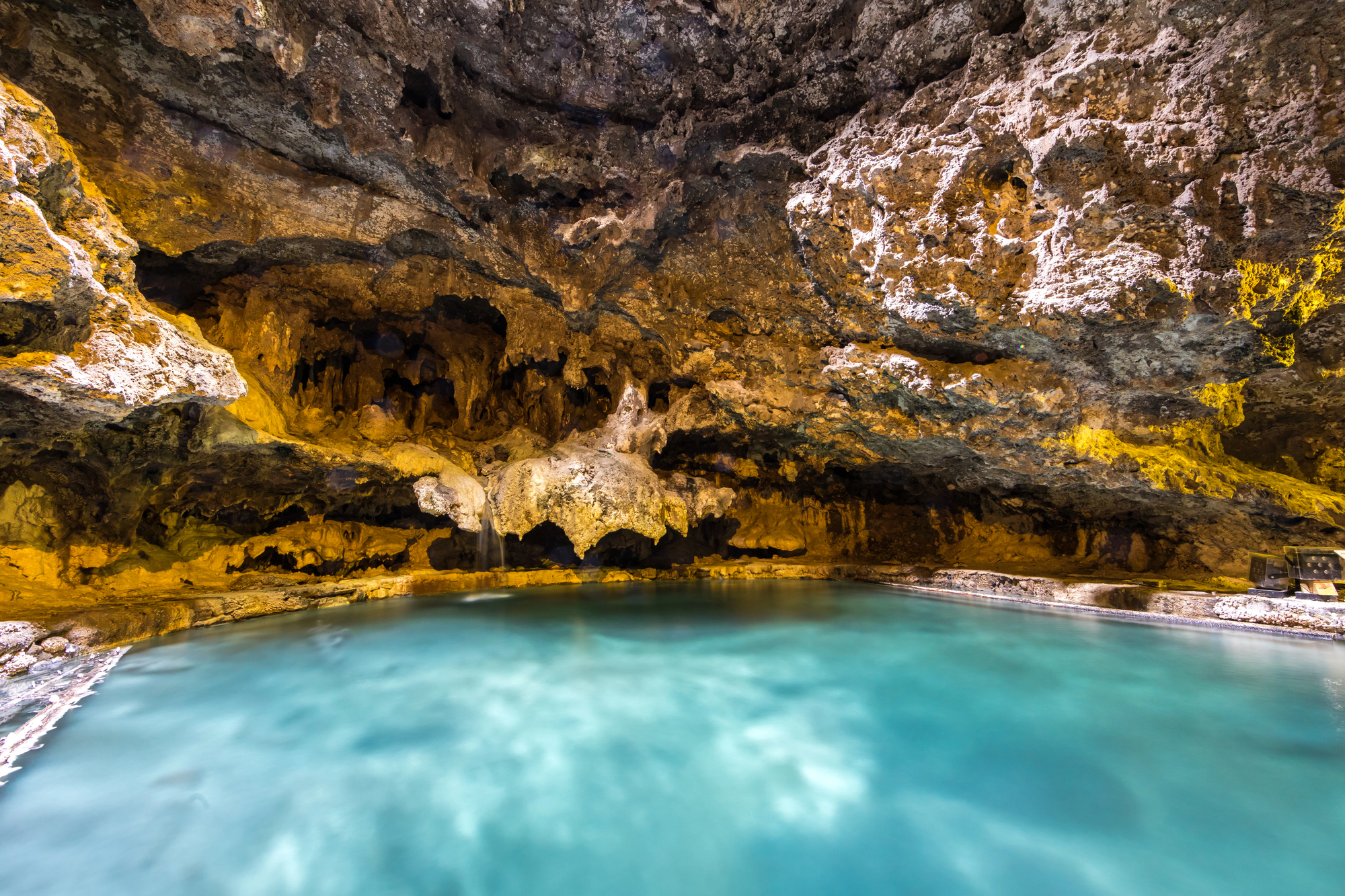
Banff once had a railway hotel with hot spring water piped straight to the baths. The history of Banff National Park makes more sense when you remember that a soak was once among the main reasons to come here. Down at Cave and Basin today, the water is home to the endangered Banff Springs snail, and the old bathing pavilion is a place to visit with your shoes on.
Cave and Basin makes a good first stop, but you can pick up other threads from a bridge in downtown Banff, a hotel overlooking the Bow River and the wildlife crossings on the drive from Canmore. Each tells you something different about who came to the Bow Valley, who was kept away and what Canadians wanted a national park to do.
The Bow Valley before there was a park
Long before anyone drew a park boundary, the Bow Valley was a route through the Rockies. People travelled between mountain valleys to trade, hunt, gather food and visit places of ceremony.
The Stoney Nakoda, Blackfoot, Ktunaxa, Secwépemc, Tsuut'ina and Cree are among the peoples with ties to this land. Métis families also have roots here.
At Lake Louise, one person's name puts that history into focus. Edwin Hunter, a Stoney Nakoda guide, led Tom Wilson to the lake in 1882. The Stoney knew it as the Lake of the Little Fishes. By the time Wilson first saw that blue water, someone already knew the way there and what lived in it.
At Cave and Basin, the hot water drew people to the foot of Sulphur Mountain long before Hunter's time. Parks Canada traces Indigenous connections there back more than 10,000 years. The waters remain sacred to many Indigenous people, and ceremonies still take place there.
Why Banff has two founding dates
In 1883, three Canadian Pacific Railway workers tried to claim the springs at Cave and Basin. Frank McCabe and brothers William and Tom McCardell wrote to Ottawa. The commercial attraction was clear enough. People would pay to bathe in hot mineral water, and a railway through the Rockies offered a way to get them there.
The federal government had its own interest in the income a resort might generate. On 25 November 1885 it set aside 26 square kilometres around the springs, taking the land off the market and settling the question of a private claim. That's the decision behind Banff's 1885 founding date.
Parliament took a second step on 23 June 1887. The Rocky Mountains Park Act expanded the reserve to 665 square kilometres and established Canada's first national park. The first decision secured the springs. The second drew a park around a much larger stretch of the Bow Valley. The name Banff National Park came later, in 1930.
A railway hotel and a hunting ban
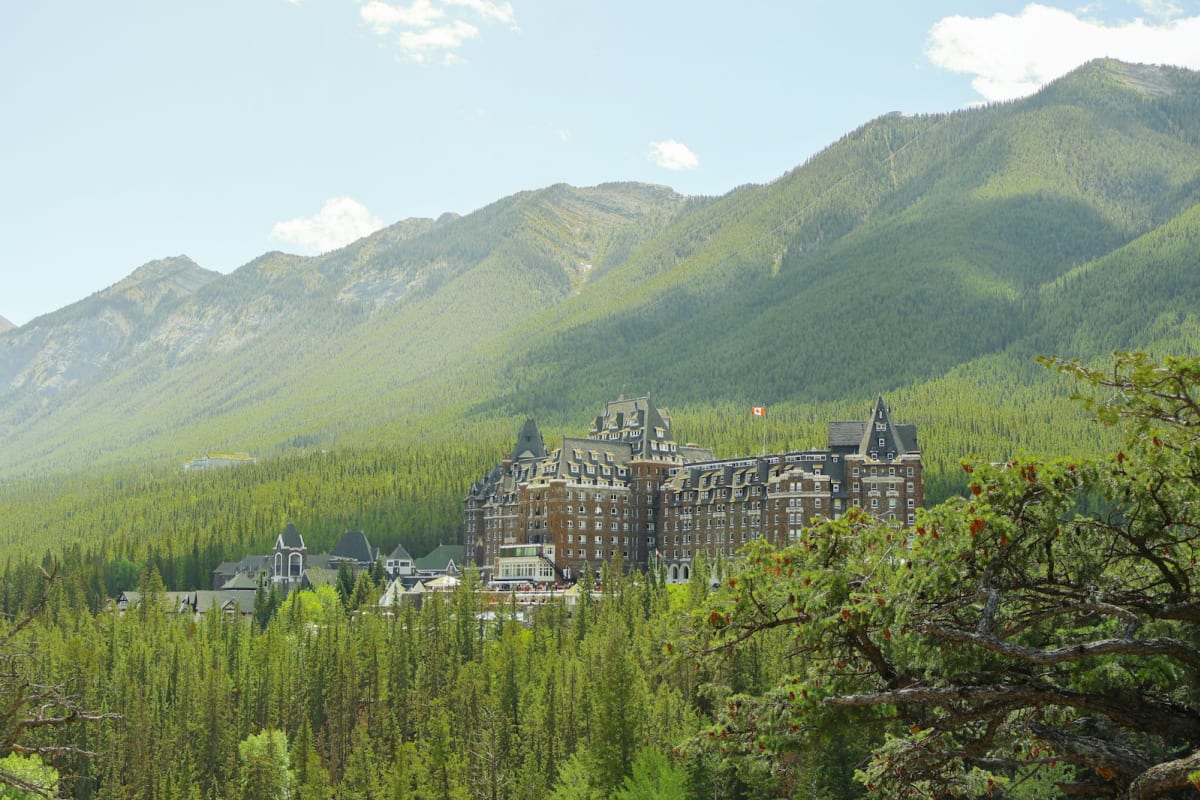
The Canadian Pacific Railway gave passengers a reason to break their journey in Banff. In 1888 it opened the Banff Springs Hotel above the meeting of the Bow and Spray rivers. The original five-storey hotel had a bathhouse supplied from the Upper Hot Springs. A guest could come west by rail, take the waters and spend the night overlooking the valley.
The hotel you see today took shape in stages between 1911 and 1928. A fire destroyed a wing in 1926, and the railway rebuilt it on a larger scale. When you look across at the stone towers, you're seeing what the railway business in Banff became over several decades. The original guests would have recognised the river view more readily than the hotel.
While railway passengers were being welcomed, federal policy was making it harder for Indigenous families to use the same valleys. In 1890 the government prohibited Indigenous hunting inside the park. Enforcing the ban, alongside restrictions on First Nations people leaving reserves, disrupted travel, harvesting and ceremonies.
By the 1890s, a passenger could buy a ticket to the Bow Valley and a room at Banff Springs. For a Stoney Nakoda family that had always hunted here, putting food on the table had become harder.
What went into the museum cases
At the Banff Avenue bridge, the log building on the north bank gives you another way into the early park. In 1895 the Geological Survey of Canada sent Banff more than 1,300 labelled specimens, including birds, wildflowers and mineral samples. The birds outnumbered the turtles 259 to one.
George MacLeod, who also recorded the weather, arranged the specimens for display. His assistant Norman Sanson became curator the following year.
Sanson went out collecting across the park, consulted specialists to identify specimens and stayed in the job until 1932. The collection soon outgrew its first quarters and moved in 1903 to the building at 91 Banff Avenue.
Inside the Banff Park Museum you can still see how a visitor in Sanson's day would have learnt about the Rockies. There are mounted bears and bighorn sheep, but the collection runs right down to insects. Give the smaller cases some time. They show how much a railway passenger with an afternoon to spare could learn about the valley without venturing beyond the bridge.
The men who built the road to Lake Louise
A photograph in Parks Canada's account of First World War internment shows men clearing a route to Lake Louise in 1915. The men in the picture were prisoners. When wartime cuts reduced the parks budget, Parks Commissioner J.B. Harkin secured permission to put internees to work building roads and clearing land.
Under wartime regulations, the federal government could detain immigrants from countries with which Canada was at war. In July 1915 it opened a camp at Castle Mountain, between Banff and Lake Louise. That November the camp moved to Cave and Basin. Men held in Banff worked in harsh conditions, and accounts from the camps describe mistreatment by guards.
The Banff camp closed in July 1917. Little of it survives on the ground, which makes the internment exhibit beside Cave and Basin especially important. Leave time for it on the same visit as the springs. The 1914 bathing pavilion was barely a year old when the first internees arrived at Cave and Basin.
Room for wildlife to move again
On the Trans-Canada Highway west of Canmore, a broad bridge with vegetation on top is part of a more recent chapter. By the late 1970s, the annual toll on the Bow Valley's two-lane highway had reached nearly 100 large animals. When work began to widen the highway in the 1980s, planners had to consider what four lanes would mean for an animal trying to reach the other side.
Fences keep large animals off the road, while underpasses and overpasses give them routes across it. Monitoring since 1996 has shown why a choice of crossings matters. Grizzlies tend to favour more open structures, while cougars often use narrower passages underneath the road. The bridges are easy to pick out from a car. You could drive the whole valley without noticing the passages beneath your wheels.
The return of plains bison
Restoring plains bison took a different kind of planning. In 2017, Parks Canada brought 16 bison from Elk Island National Park to an enclosed pasture in Banff's backcountry. After two calving seasons, 31 bison left the pasture in July 2018. The herd included all 16 from Elk Island and 15 calves born in Banff.
The Stoney Nakoda Nations' account follows a field team to Ya Ha Tinda in September 2020. The team recorded what was growing in bison habitat and how animals used it, then took those observations back to Elders for discussion. Their 2022 report called for an ongoing Stoney Nakoda role in looking after the herd. The report records what the return meant for people, too. Travelling back into bison country gave community members a chance to share knowledge on the land with a younger generation.
Practical information for a history visit
From downtown Banff, allow half an hour to walk the 2 km to Cave and Basin National Historic Site at 311 Cave Avenue. Allow two to three hours for the exhibits and boardwalks. For a shorter, accessible visit, the Cave and Basics tour takes 30 minutes and covers the bathing pavilion indoors and out. It's included with admission.
Regular site admission is CA$10 for adults and CA$8.50 for visitors aged 65 and over. Entry is free for anyone aged 17 and under, and a Parks Canada Discovery Pass covers the site. Usual hours are 9:30 am to 5 pm daily from 15 May to 15 October, and 11 am to 5 pm Thursday to Monday the rest of the year. In late 2026 the site also closes at 1 pm on 26 November, from 14 to 17 December and on Christmas Day.
The museum at the Banff Avenue bridge makes a good second stop from 15 May to 15 October, when it usually opens Thursday to Monday, 9:30 am to 5 pm. Adult admission is CA$5, seniors pay CA$4.50 and under-18s get in free. The museum closes for winter.
In winter I'd give that extra time to Cave and Basin. The spring, the bathing pavilion and the site of the internment camp are all within the same small patch of Banff, and each gives you a different reason to remember it.
FAQs: History of Banff National Park
Where does the history of Banff National Park begin?
Cave and Basin is a good place to start. Indigenous peoples have known the springs for more than 10,000 years, and the Bow Valley was already a well-travelled route when the railway arrived.
Was Banff founded in 1885 or 1887?
Both dates mark a decision. The federal government reserved the hot springs in 1885, and Parliament established a larger national park in 1887.
What was Banff National Park originally called?
The expanded park took the name Rocky Mountains Park. It became Banff National Park under the National Parks Act of 1930.
How did the railway shape the history of Banff National Park?
It brought passengers to the Rockies and gave them somewhere to stay. The railway's Banff Springs Hotel opened in 1888, with hot spring water supplied to its own bathhouse.
Can you see the reintroduced bison on a drive through Banff?
The herd was released in remote country on the park's eastern slopes. Seeing bison takes some luck even for experienced backcountry travellers in the Panther and Red Deer valleys.


