
Larch Island Trail, Canmore: A Quiet Bow River Loop
Explore a woodland loop beside Canmore's Bow River, with a bridge approach, parking near 17th Street, wildlife notes and extensions towards the Engine Bridge.


Canmore's riverside trails can be surprisingly busy, especially around the Engine Bridge. Larch Island has a different feel. A small footbridge takes you into woodland where roots, birds and glimpses of the Bow River replace the bustle of town. It's the sort of short walk you might overlook on a visitor map, which is a shame if you enjoy a little quiet.
The route sits at the northern end of residential Canmore, close enough to reach on foot but easy to miss unless you know where to look. The surface is dirt and gravel rather than a formal promenade, with roots that demand some attention. You don't need a mountain summit for a pleasant walk - occasionally a stretch of forest will do.
Quick facts
| Distance | About 1.9 km loop |
|---|---|
| Time | Allow 30-50 minutes |
| Difficulty | Easy overall, uneven roots and rocks |
| Route | Woodland loop reached by footbridge |
| Trailhead | Bow River Trail near the end of 16th/17th Street |
| Parking | Near Larch rink on 17th Street, subject to signage |
| Dogs | On leash |
| Facilities | Limited on the loop; nearby recreation facilities vary seasonally |
Where to start
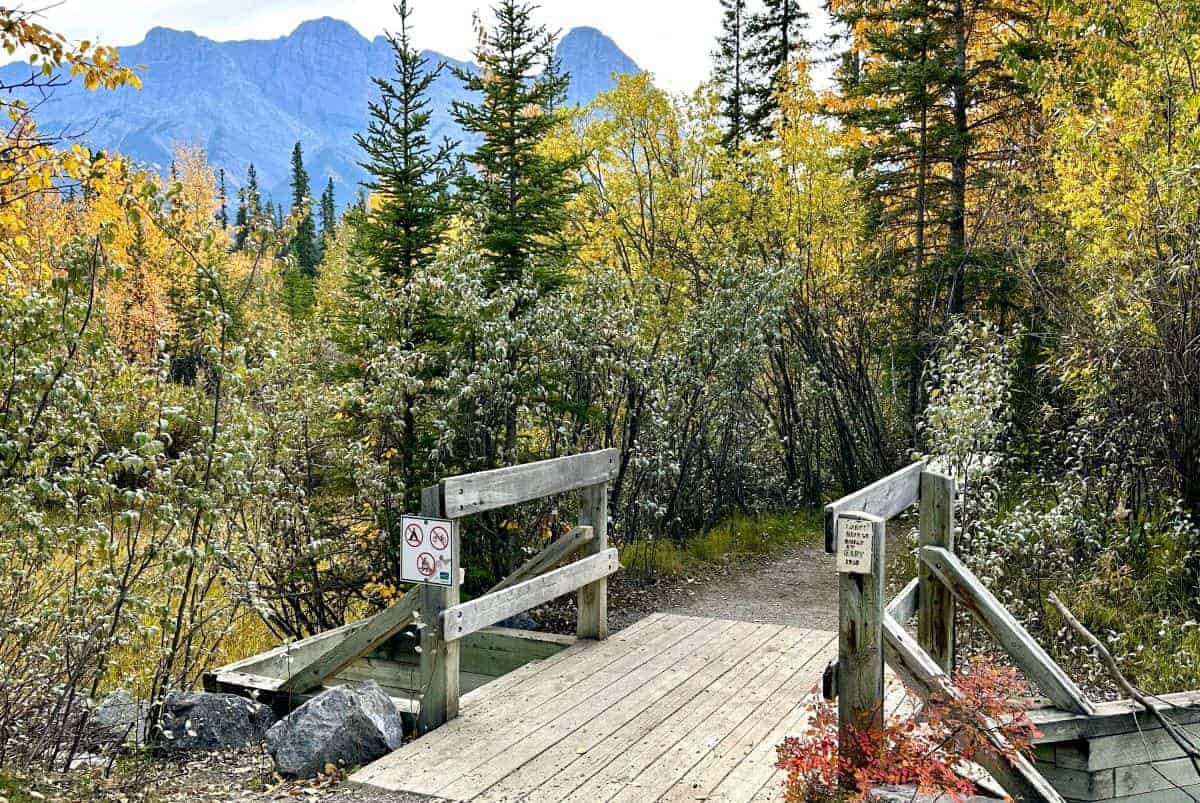
Look for the little wooden footbridge off the Bow River Trail around 16th and 17th Streets. Cross the bridge and the path starts to feel away from the town, even though houses aren't far behind.
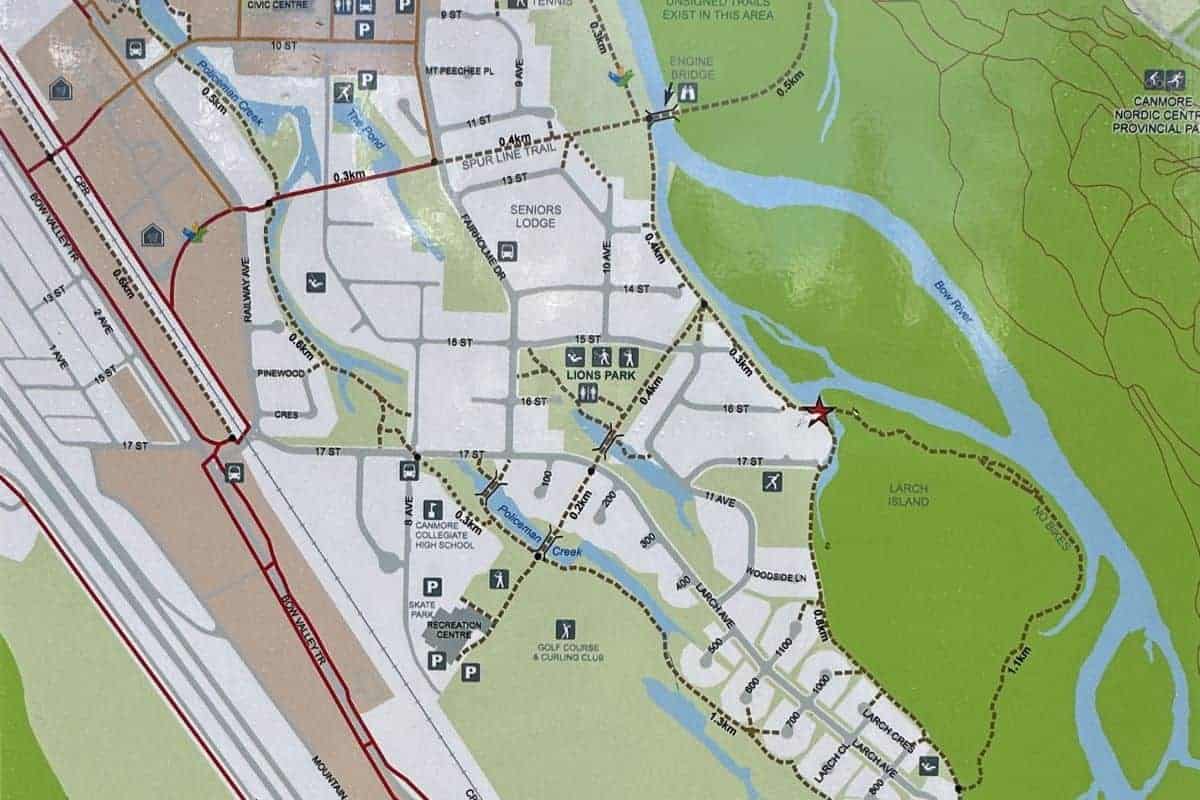
Walking in from downtown is a good way to make a longer outing of it. Follow the river path north past the Engine Bridge, then look for the short access to Larch Island. You get two very different sides of the Bow: open views along the main path and more sheltered woodland on the island loop.
If you're coming by car, the small parking area near the Larch outdoor rink on 17th Street is close to the footbridge. Parking here is shared with rink users and residents, with restrictions shown on the signs. On a fine day, walking in from town is an appealing alternative.
The Town of Canmore's trails and pathways guide explains the shared-use network and reminds visitors that dogs must be kept on leash on town trails.
What to expect on Larch Island
The river is the attraction here rather than a single destination at the end. It's a good place to take a slow lap and notice what's happening in the trees.
Once across the bridge, the loop passes through trees on dirt and crushed gravel, with roots and a few rocky patches underfoot. There's barely any sustained climb, but the uneven path doesn't suit most pushchairs or wheelchairs. It's a walk for sturdy shoes, not necessarily heavy hiking boots.
The nicest moments are the little openings where the Bow River comes back into view. Jill likes this one for a simple reason: she's been able to find a quiet spot beside the water for a morning coffee, even though the trail is so close to town. Stop for a moment and you can watch the current, birds in the branches and the mountains beyond. The interpretive signs add context without turning the walk into a classroom.
Despite its name, Larch Island is quite different from the alpine larch hike in Larch Valley. This is a riverside woodland loop in Canmore, with its own autumn colour and considerably less climbing.
Wildlife on the river
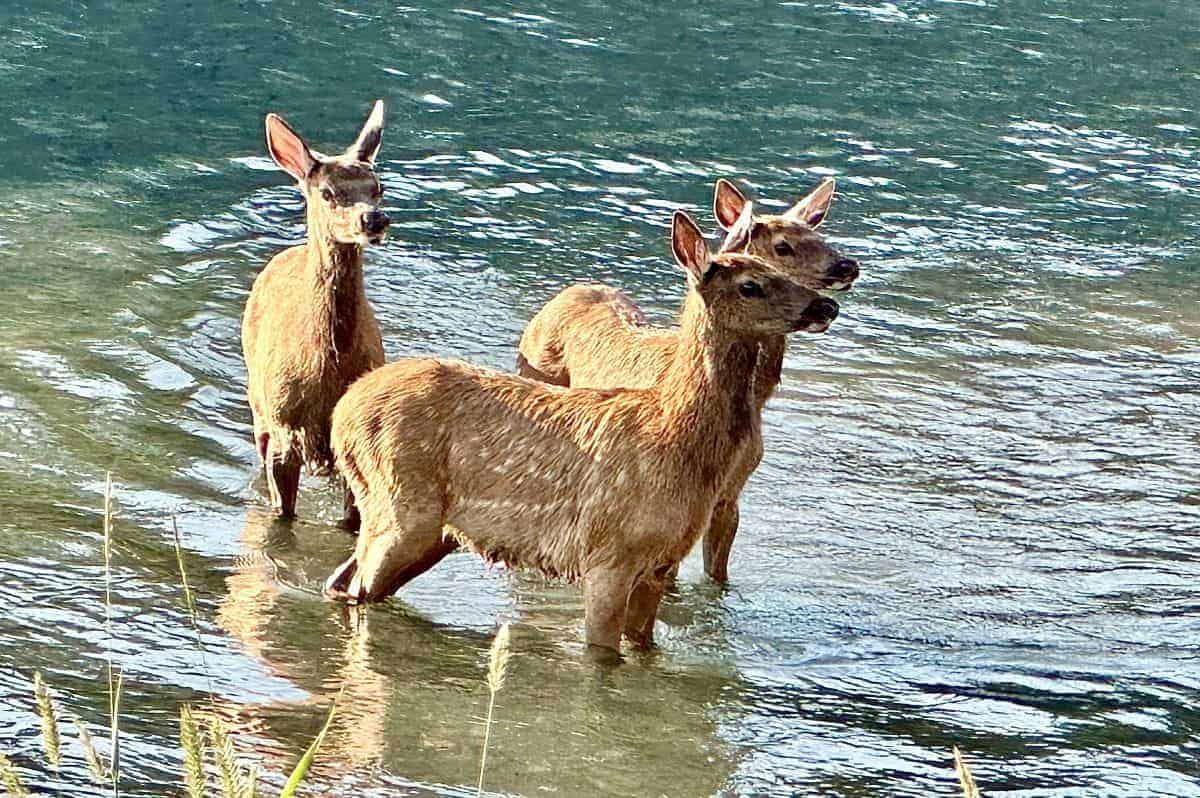
The river corridor is good habitat for wildlife, which also means people need to give animals space. Elk may use these paths, especially during spring calving and the autumn rut. If an elk is on the route, turn back or wait from a safe distance.
Bears can also move through this part of Canmore, and the more sheltered stretches of trail call for the usual awareness. Carry bear spray and know how to use it.
The Town of Canmore's pet and wildlife guidance emphasises keeping dogs controlled and away from wildlife. Pick up after dogs and carry the waste out to an appropriate bin.
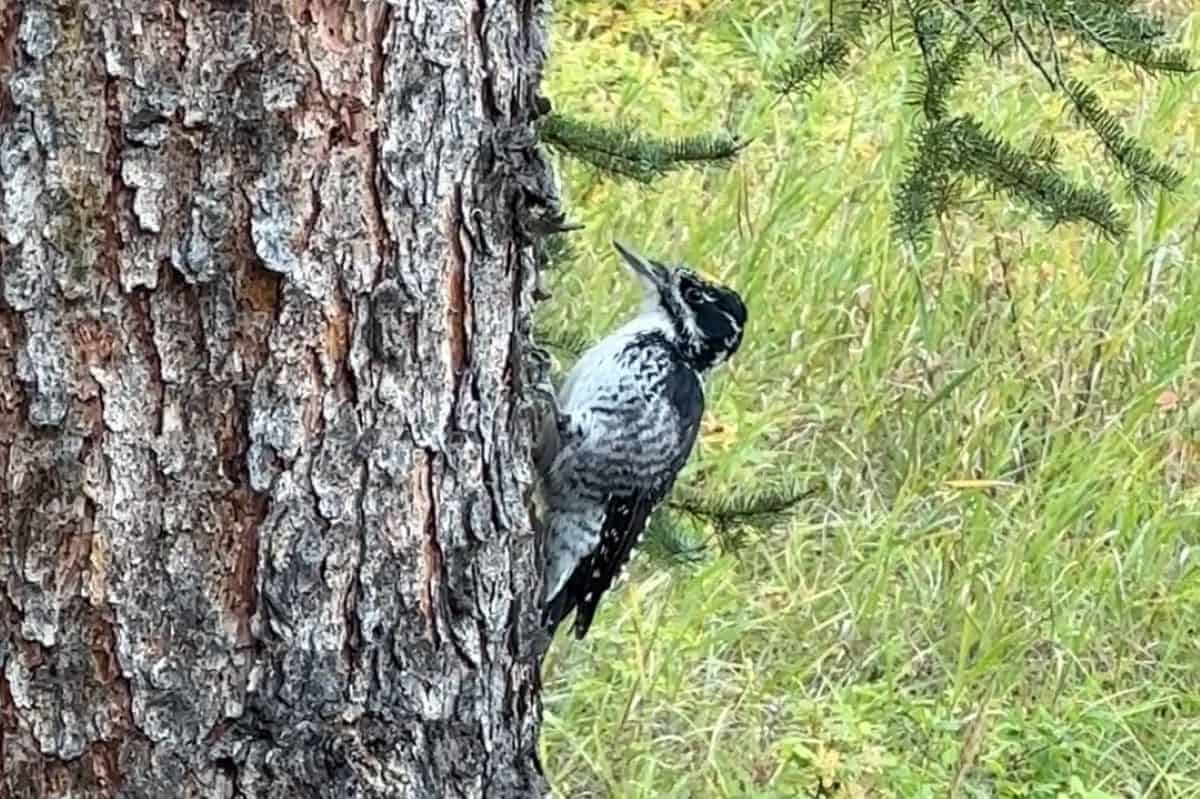
You may see woodpeckers and smaller birds moving through the trees. Their calls are part of the pleasure of a quiet circuit. Sometimes the smaller details are the reason a walk stays with you.
The route map and seasonal conditions
The map above shows how Larch Island connects to the Bow River Trail. If you're walking here from downtown, the approach via the Engine Bridge makes a pleasant extension.
Summer brings green undergrowth, river views and the occasional muddy patch after rain. In autumn the leaves brighten the woodland; in winter the little bridge and roots can become icy. The path isn't always cleared in winter.
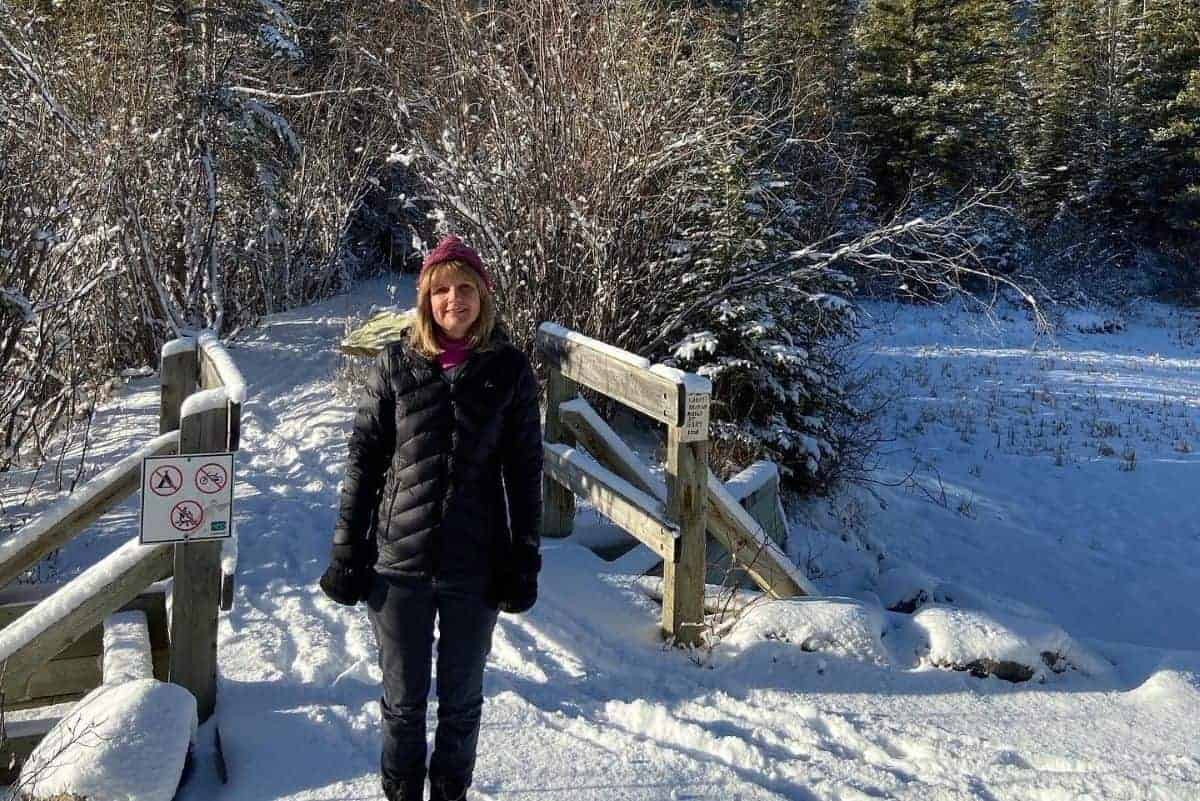
Bring shoes with grip and an extra layer. In colder weather, ice cleats are often more useful than ordinary trainers.
Extend the walk towards downtown
The easiest extension is south along the Bow River Trail and across the Canmore Engine Bridge towards Riverside Park. The full riverside network gives several options if you have more time.
Larch Island doesn't try to compete with Canmore's famous viewpoints. It's a small, quieter walk with river sounds, birds and glimpses of the mountains through the trees. For a gentle change of pace, that's plenty.
FAQs
How long is the Larch Island Interpretive Trail?
Allow roughly 30-50 minutes for the 1.9 km loop. Add time if you're walking in from downtown.
Is Larch Island Trail suitable for pushchairs?
The route has roots, rocks and uneven dirt sections. It's not a reliable pushchair or wheelchair route.
Where is the trailhead?
Look for the pedestrian footbridge off the Bow River Trail around 16th and 17th Streets, on the north side of Canmore.
Are dogs allowed?
Yes, on leash. Give elk and other wildlife plenty of room.
Can you visit in winter?
The path may be snowy or icy and is not guaranteed to be easy to follow. Assess the bridge and ground conditions before starting.


