Fishing in Banff: A morning on the Bow or a day at the lake?
Choose between a morning on the Bow River, a picnic at Two Jack and a Lake Minnewanka fishing charter. Find the permit you need and the fishing season for the water you choose.

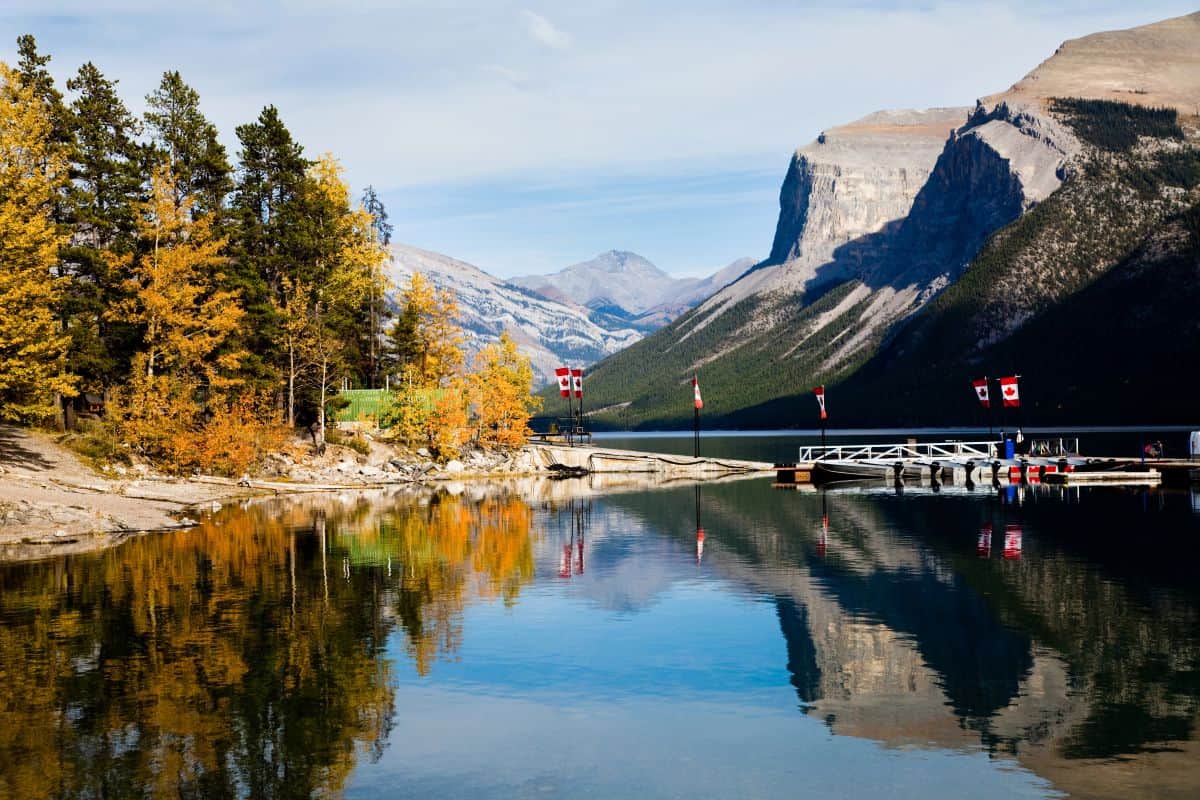
You can walk to the Bow River from a hotel in downtown Banff, spend an hour with a rod and be back in town for breakfast. Fishing in Banff can also mean taking a boat out on Lake Minnewanka with a guide who supplies everything down to the tackle. Which makes the better day depends on when you're coming, who's fishing and how much kit you're bringing with you.
For a first outing with your own rod, the Bow through town is the easiest place to start. For a summer picnic with a little fishing, try Two Jack Lake. If fishing is the reason you've set aside a morning in the Rockies, Minnewanka is where a charter earns its place in the budget.
The Bow River on foot from Banff
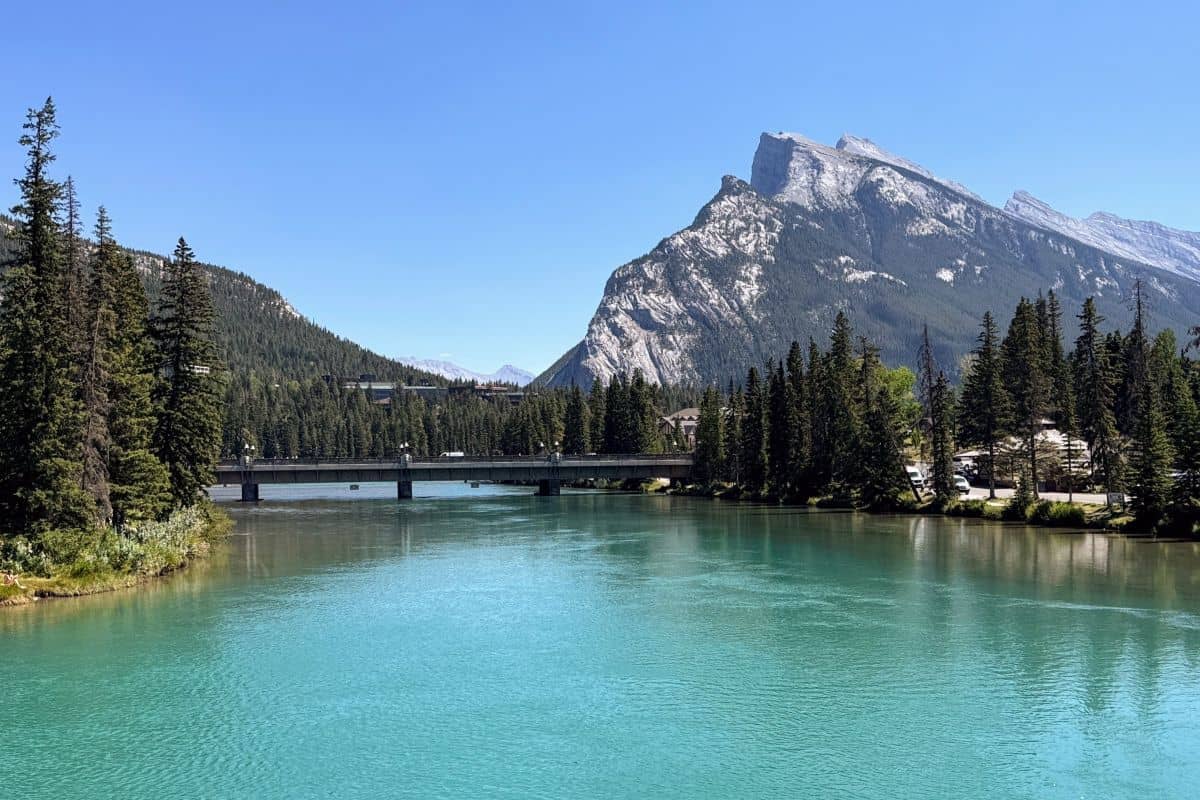
Central Park is a useful starting point, particularly if the rest of your party has other plans. There's a playground, somewhere to sit with a coffee and a riverside path that lets you look over the bank before choosing a place to cast. Give walkers and cyclists behind you room, especially if you're fly fishing.
From Central Park, the walk beside the Bow towards the Fenland Trail is about 900 metres, with no elevation gain along the path. It's an easy way for someone to join you for the first part of the morning, then wander back into town. An hour or two here fits around breakfast or an afternoon in Banff without committing everyone to the same activity.
Parks Canada lists the main Bow from Hector Lake downstream to the eastern park boundary as open year-round, including the stretch through town. The river between the outlet of Bow Lake and the inlet of Hector Lake is closed. If you're driving the Icefields Parkway, those two lakes make a useful pair of landmarks. A plan to fish the Bow needs a more precise starting point than the river's name.
The smaller streams that feed the Bow have a much shorter season. Most open for July and August, with separate rules for the Cascade River and closures on individual streams. In June, you could spend the morning on the main river and find that the little stream you pass on the walk back has yet to open.
Two Jack and Vermilion Lakes for a few hours from shore
Two Jack is a good choice when fishing is only part of the plan. Take the day-use stop on the Lake Minnewanka loop and you can bring a picnic, spend some time at the water and leave whenever the least enthusiastic angler has had enough. If your group has one rod and several opinions about lunch, this is a much easier arrangement than four hours on a boat.
Vermilion Lakes suits a different sort of afternoon. The 4.3 km Vermilion Lakes Drive follows the lakes just outside town, with places to sit and views across the water to Mount Rundle. It's an easy choice for a mixed group of anglers and photographers. Leave the shared docks clear for other visitors and choose a bank with room for your cast.
Two Jack, the three Vermilion Lakes and Lake Minnewanka generally open for fishing from mid-May to early September. If your visit falls at either end of summer, Parks Canada's fishing seasons and closures give the exact dates for each waterbody. Johnson Lake and Cascade Ponds are closed to fishing, though both appear on the same sightseeing bus route as Two Jack.
Lake Minnewanka with a fishing guide
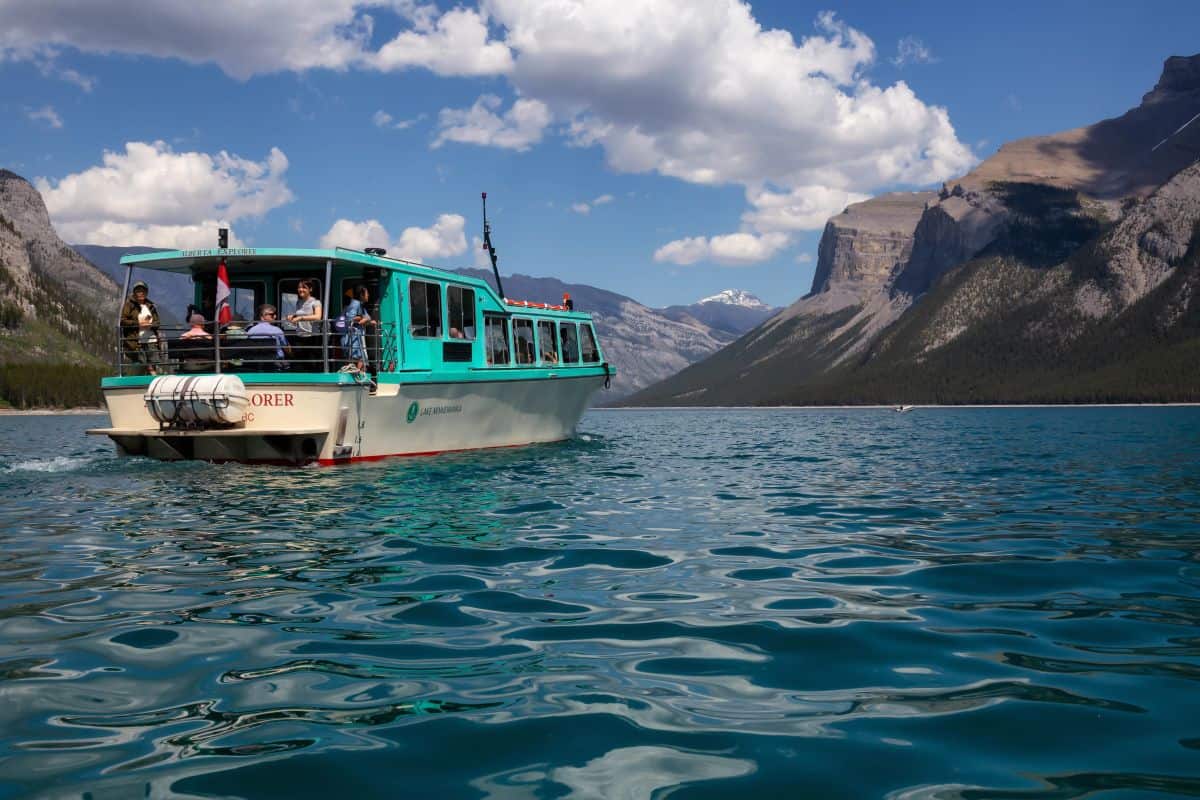
Minnewanka is the one I'd put first for visitors flying in with no gear. The private Lake Minnewanka fishing charter from Banff Adventures supplies a guide, rods, tackle and the national park fishing permit. Your group gets the boat to itself, so a beginner can spend the morning learning while someone with more experience gets on with fishing.
Allow half a day for the charter, including the journey from Banff and the walk to the meeting point at the lake. Morning and afternoon trips last about four hours, while the evening trip is usually a little shorter. Bring drinks, snacks and a warm layer for the boat.
The charter takes bookings for two or more guests. Choose your date and party size on the booking page to see the fare. If this is your only fishing day, the permit included with the trip saves you a separate visit to buy one.
Taking your own gear to Minnewanka is a different proposition. Parks Canada permits shore fishing in season with certified gear, but prohibits fishing here in waders or wading boots. You also can't bring your own canoe, kayak or paddleboard to fish the lake. If your ideal morning involves fishing in waders, Two Jack is the better of these two lakes under the current water-use rules.
Practical information
Permits, prices and fishing hours
You can buy a fishing permit at the Banff Visitor Centre, 224 Banff Avenue. Parks Canada's permit fees are CA$15 for a day and CA$51.25 for an annual permit. If you plan to fish on four or more days within its validity period, the annual permit works out cheaper. It also covers Jasper, Yoho and Kootenay, subject to each park's closures.
An Alberta fishing licence doesn't cover Banff National Park, and park admission is separate from the fishing permit. If you're planning an early start on the Bow, pick up your permit the day before and take it to the river with you.
On open waters, the fishing day can start one hour before sunrise and must end two hours after sunset. That leaves plenty of room for an evening cast at the height of summer. One person can fish one attended line at a time, so a second rod propped on the bank has to stay out of the water.
What to pack if you bring your own rod
If you're bringing your own rod, pick one lake for the day. Moving wet tackle from Two Jack to Minnewanka means another drying period and a fresh aquatic invasive species self-certification permit. Even for a morning on one bank, fill in the self-certification form online or at a station and carry it with you.
Clean and drain your gear first. Parks Canada's water-use order gives gear last used in Alberta, British Columbia or the Canadian territories at least 48 hours to dry. Gear last used anywhere else, including Ontario, the US or the UK, needs at least 30 days.
One detail if you're travelling from Nunavut: the park's visitor guidance names only Yukon and the Northwest Territories alongside Alberta and British Columbia for the shorter drying period. If your gear was last used in Nunavut, allowing 30 days meets both sets of instructions.
Pack unscented artificial flies or lures. Worms, baitfish and scented attractants are prohibited, as is lead tackle weighing less than 50 g. The possession rule extends 100 metres from park waters, so sort through your tackle box before walking to the bank. A single barbless hook makes releasing a fish easier.
Getting there and accessibility
From downtown Banff, Roam Route 6 takes about 25 minutes to Lake Minnewanka during the summer service and also calls at Two Jack's day-use area. Drivers reach Minnewanka via Lake Minnewanka Road, about 10 km north-east of downtown. The summer car park can fill, so leave time before a charter departure.
For a companion using a wheelchair, the Town of Banff identifies the Bow River Trail from Muskrat Street to its north-west end as wheelchair-friendly, with benches along the way. That describes the path. Getting down to water level to fish, or transferring aboard a charter boat, involves a separate access question. If a step-free transfer is essential, establish the boarding arrangements with the operator before paying.
For a group that wants lunch together afterwards, the Bow leaves you the most freedom. For a group that's come to Banff to spend time fishing together, four hours on Minnewanka gives everyone that time, with the rods already on board.
FAQs: Fishing in Banff
Do children need their own permit for fishing in Banff?
A child under 16 can fish with someone aged 16 or older who holds a national park fishing permit. In that case the child's catch counts towards the permit holder's limit. An under-16 fishing without an accompanying permit holder needs a permit of their own.
Can you keep a fish you catch in Banff National Park?
Lake trout caught in Lake Minnewanka are the exception to the park's catch-and-release rule. The daily catch and possession limit there is two lake trout. Elsewhere, and for other species at Minnewanka, release the fish where you caught it. If you're unsure of the species, let it go.
Can you go fishing in Banff in winter?
The main Bow through Banff town has a year-round season, and you can fish open water from the bank. Ice fishing on the Bow is prohibited. Lake Minnewanka's fishing season usually ends in early September. Open water in October is still closed to fishing.
Can I use my usual fly-fishing waders on the Bow?
The Bow downstream of Hector Lake is in a zone where certified waders and wading boots are allowed. Felt soles are prohibited throughout the park. At Minnewanka, even rubber-soled wading boots are prohibited, so the same kit won't suit both places.
Can I take a rod on the walk to the Lake Agnes Tea House?
Leave it behind if Lake Agnes is where you had in mind. Parks Canada lists Lake Agnes among the waters closed to fishing. The walk and tea house can have a day of their own, leaving the rod for a morning on the Bow.