White water rafting near Banff: which river suits your trip?
Compare the Kananaskis River, Horseshoe Canyon and Kicking Horse for a rafting day from Banff, with practical advice on travel, children and what to expect.

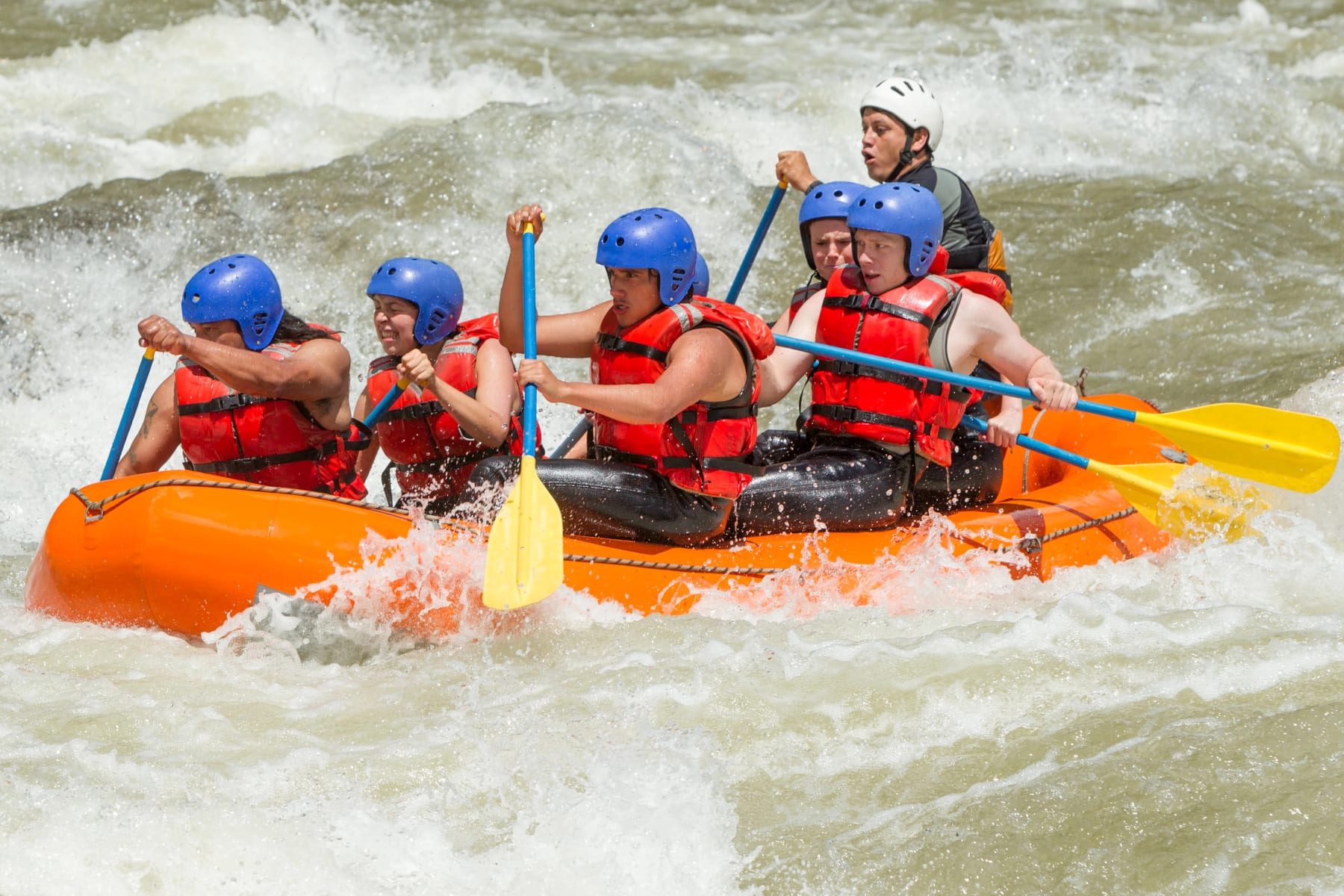
Before choosing a rafting trip from Banff, decide whether you want a few hours on the water or a day built around it. White water rafting near Banff ranges from family trips on the Kananaskis to stronger canyon rapids on the Bow and Kicking Horse rivers.
Where you're staying matters as much as the river grade. Kananaskis and Horseshoe Canyon keep the journey shorter from Canmore, while the Kicking Horse is easier to fit into a stay at Lake Louise than a return trip from farther east. This guide compares the experience, travel time and requirements so you can choose for your group.
Choosing your white water rafting near Banff trip
The trips covered here take place outside Banff National Park. Kananaskis River and Horseshoe Canyon trips are east of Canmore; Kicking Horse trips take you west towards Golden in British Columbia, making them a regional outing from Banff or Lake Louise.
River grades help explain the difference. Class 2 and 3 trips involve waves and manoeuvring, while Class 4 brings more powerful rapids and more demanding lines through them. The grade describes the water, rather than a requirement that you arrive with previous rafting experience.
For a first rafting trip: Kananaskis River
For families with younger children, the Kananaskis River is the first option to consider. Chinook accepts children from five and 40 lb, roughly 18 kg; Canadian Rockies Rafting also starts at five, but its minimum is 45 lb, roughly 20 kg. Children must meet both requirements, and those limits belong to the operator, even though the river is the same.
Its Class 2 and 3 sections give you waves to paddle through, with quieter stretches for looking around between them. That mix suits a group who want to try whitewater without making the biggest rapids the point of the day.
As one example, Chinook's Kananaskis trip takes around four hours overall, including roughly 1.5 to two hours afloat. Changing, instruction, practice paddling and the short river shuttles account for the rest; four hours on the booking page doesn't mean four hours in the raft.
The river is dam-controlled, so its flows are more consistent through the season than the snowmelt-driven alternatives. If your holiday dates are fixed, there's less reason to chase a particular week for the water levels.
For stronger rapids closer to Banff: Horseshoe Canyon
Horseshoe Canyon is a whitewater section of the Bow River east of Canmore. Chinook grades its trip Class 3 and 4, with canyon scenery and an optional cliff jump along the route.
For adults and older children wanting stronger rapids without travelling west to the Kicking Horse, this is a good fit. Chinook's trip starts at age 12, with a minimum weight of 90 lb, roughly 41 kg.
Its morning trip takes about four hours overall, with around 1.5 to two hours on the water. The cliff jump is optional, so everyone in the group doesn't have to share the same enthusiasm for that part.
Swimming confidence matters when choosing this trip. Canadian Rockies Rafting's swimming guidance recommends its Kananaskis outing for non-swimmers and advises against its Horseshoe Canyon trip for them because of the more powerful water.
For a day built around rafting: Kicking Horse River
The Kicking Horse is the option to consider when rafting is a highlight of the holiday and you're happy to travel for it. Bases near the Beaverfoot Road turn-off are east of Golden, so you don't necessarily need to drive into town.
Hydra's Kicking Horse Classic covers about 20 km, moving from easier water into the stronger rapids of the middle canyon. The route includes Class 1 to 4 water and takes about three hours overall, including about two hours on the river.
You don't need previous rafting experience for Hydra's Classic, but everyone must be at least 12 and weigh at least 90 lb, roughly 41 kg. With younger children, Hydra's Family Whitewater starts at eight and 50 lb, roughly 23 kg; Wild Water Adventures also offers a separate Gentle trip on the upper section.
The river name alone doesn't tell you how demanding your particular booking will be: the section you raft makes the difference. Hydra supplies river clothing and safety equipment for the Classic, but no food or drinks, so lunch belongs in your day's plans.
Practical information
Getting there and allowing enough time
Allow about 45 minutes from Banff to Chinook's base near Nakoda Lodge, or around 25 minutes from Canmore. Its Kananaskis and Horseshoe trips are self-drive to the base, with the river transfers included once you're there.
Hydra's base is at 2936 Kicking Horse Road, reached from the Trans-Canada Highway via Beaverfoot Road. The operator gives about 75 minutes from Banff and 40 minutes from Lake Louise; adding its three-hour Classic makes this a substantial outing once driving and changing are included.
For visitors without a car, White Wolf Rafting includes transport from its downtown Canmore office to the Kananaskis River. That is a Canmore departure, rather than a Banff hotel pickup.
Season and departure times
Rafting here is broadly a May-to-September activity, with exact operating dates varying by company and river. Horseshoe trips commonly use the morning, while Kananaskis and Kicking Horse operators offer selected morning and afternoon departures.
Canadian Rockies Rafting identifies mid-June to mid-July as the usual high-water period for Horseshoe Canyon. Kananaskis is less dependent on that seasonal rise, so there's less reason to organise the whole holiday around a particular week.
Cost and what's included
Compare the complete trip rather than the headline fare: river time, transport to the base, photos and meals can change what you're getting. The operators discussed supply the main rafting equipment, including a wetsuit, helmet and lifejacket.
Chinook includes photos on its Kananaskis and Horseshoe trips; Hydra sells its rafting photos separately. White Wolf includes photos and its Canmore transfers, which can simplify the day if you haven't hired a car.
What to wear and accessibility
Wear swimwear under your clothes and bring a towel, dry clothes and a warm layer for afterwards. Secure essential glasses with a strap; your phone can have the afternoon off.
Accessibility depends on the trip and the assistance needed. Wild Water Adventures discusses mobility requirements individually, including available assistance and facilities, so discuss your needs before booking if getting into or sitting in a raft presents difficulties.
For a mixed family group, Kananaskis is a sensible starting point. Horseshoe Canyon suits those wanting stronger rapids within easier reach of Banff and Canmore, while the Kicking Horse makes sense when you're happy to give rafting more of the day. Choose for the people in your boat, and the river grades become much more useful than the promotional photographs.
FAQs: White water rafting near Banff
Where does white water rafting near Banff take place?
The main choices in this guide are the Kananaskis River and Horseshoe Canyon east of Canmore, and the Kicking Horse River towards Golden in British Columbia. They involve travelling out of Banff.
Is white water rafting near Banff suitable for beginners?
Yes. The operators discussed welcome beginners and provide instruction. Kananaskis is a gentler introduction; being a beginner doesn't automatically rule out stronger trips, but comfort with moving water matters.
Can children go white water rafting near Banff?
Yes. Some Kananaskis trips accept children from five, subject to minimum weight. Horseshoe Canyon and Hydra's Kicking Horse Classic start at 12, while gentler Kicking Horse trips have younger age limits.
Do I need to know how to swim?
Requirements and recommendations differ by trip. Canadian Rockies Rafting accepts non-swimmers on its Kananaskis tour, with the guide informed beforehand. Falling into the water remains possible, even on a gentler trip.
Do rafting trips run in the rain?
Ordinary rain doesn't usually stop rafting: Chinook and Hydra operate in wet weather and supply protective river clothing. Operators can still change or cancel trips when conditions require it.