
Paint Pots Trail, Kootenay: Orange Earth and Muddy Boots
A short walk to orange ochre beds and cold mineral springs in Kootenay National Park, with a stop beside the Vermilion River along the way.

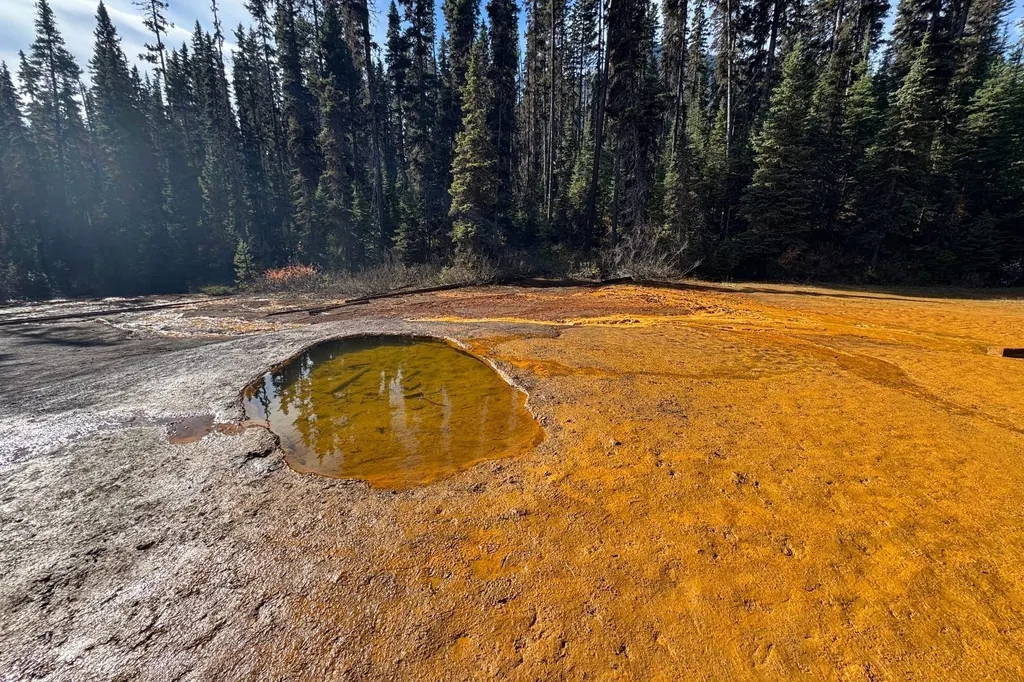
I’d make time for the Paint Pots on a drive through Kootenay. The walk is short, the river is worth a pause, and then the ground turns orange under your feet. Rusty clay, little streams and cold mineral springs make this an odd, colourful place to spend an hour.
The pools are only part of the attraction. Little streams, stained boardwalks and orange-coated mining equipment give you plenty to look at along the way. Wear shoes you’re prepared to bring home muddy.
Paint Pots at a glance
| Distance | About 2 km return |
|---|---|
| Time | 40–60 minutes; longer for photos |
| Difficulty | Easy, with muddy and uneven sections |
| Elevation | About 55 m of climbing over the return walk |
| Route | Out and back |
| Trailhead | Paint Pots parking lot, Highway 93S, Kootenay National Park |
| Dogs | On leash |
| Park admission | Parks Canada admission applies; check current fees |
Distances vary slightly between maps. Parks Canada’s trail guide lists 1 km each way and an estimated 40 minutes return.
Paint Pots trail map
Planning this hike?
Explore the route, recent trail reviews, and photos on AllTrails.
🥾 View this trail on AllTrailsThe walk, from river to springs
Forest and the Vermilion River
The footbridge over the Vermilion River makes a good first pause after the forest. Milky blue-green water runs beneath it, with mountains beyond. Give yourself a minute here before carrying on toward the springs.
The ochre beds
Beyond the river, the trees open out and the colour starts under your feet: rust-red and orange clay, narrow streams and tufts of green. Follow the marked route across the meadow and notice how far the colour spreads from those small channels of water.
Boardwalks and logs cross the wettest patches, but spring melt and rain can leave them surrounded by mud. Watch your footing and stay on the marked route. Those clean trainers may come back a different colour.
The old mining equipment has picked up the same orange coating as the ground around it. Stop at the trail signs to find out how it was used to extract the ochre.
The mineral springs
A short climb brings you to three small mineral springs, with greens and oranges set against the ochre earth. Take a few minutes to look at the water and the stained edges of the pools. There’s a lot of colour packed into this little patch of ground.
Return by the same path, crossing the meadow and river on your way back to the parking lot.
Why are the Paint Pots orange?
Iron-rich spring water leaves iron oxide in the clay and soil, giving the ground its orange-red colour. As the water flows downhill, it stains the streams and boardwalks through the meadow.
The springs are cold, so keep the swimsuit packed away.
The ochre mattered to people long before this became a visitor stop. Parks Canada describes Ochre Creek as a source of iron pigment used by Indigenous peoples for generations. The park lies within the traditional lands of the Ktunaxa and Secwépemc peoples. The interpretive signs give this history space alongside the geology and mining remnants.
Leave the ochre, pools and mining equipment undisturbed for the next person to see.
The practical bits
Getting there and parking
From Banff, take the Trans-Canada west to Castle Junction, then Highway 93S south into Kootenay National Park. Look for the signed Paint Pots parking lot. Allow roughly 40 minutes from Banff or 55 from Canmore, depending on traffic and road conditions.
On busy summer weekends, aim for early morning or later afternoon. Keep your stops flexible so you can come back if the parking lot is full.
Park admission applies. Parks Canada’s admission page has current pass requirements, options and temporary offers.
Best time to go
Summer gives you the best chance to see the colours without snow cover. July through mid-September is the park’s prime hiking season, although rain can still leave this walk muddy. Spring and early summer can bring flooding as well as wet ground.
Snow can hide the boardwalks and much of the colour in winter. Plan for snow and ice, and get current trail advice before setting out.
Before you lose phone service, look at Parks Canada’s trail information for current conditions and closures.
What to bring
- Waterproof footwear with a good grip, particularly after rain.
- Water, a snack, layers and a rain jacket.
- Bear spray that you can reach, and the knowledge to use it.
- A downloaded map and directions: there is no cell service in the park.
- Something to wipe the orange mud off your boots before getting back in the car.
A short walk is still a walk in bear country. Keep bear spray accessible, make noise and keep dogs on leash. See Parks Canada’s hiking safety advice.
Families and accessibility
With children, treat the walking time as a rough guide and leave room for questions and muddy feet. The short distance suits many families, but wet boardwalks and mud can slow everyone down.
Boardwalks, wet ground and the climb near the springs can be awkward for strollers and mobility aids. Ask Parks Canada about current access if you need a wheelchair-accessible route.
Make it a half-day with nearby stops
Pair Paint Pots with Marble Canyon for a relaxed half-day. They’re a short drive apart, and the change from orange meadow to a narrow gorge gives you two very different stops. Numa Falls is another option farther south along Highway 93S.
The Vermilion River trail also connects Paint Pots and Marble Canyon on foot. That makes a longer outing, so plan the extra distance and allow for trail conditions.
Allow a full hour, even if you could walk the route faster. That leaves time for the river, the signs and a close look at the springs. The Paint Pots make a good excuse to get out of the car and pay attention to what’s under your feet.
Paint Pots trail FAQs
How long is the Paint Pots trail?
Allow 40–60 minutes for the roughly 2 km return walk, with extra time for photos and reading the interpretive signs. It is an out-and-back route.
Is the Paint Pots trail suitable for children?
The short distance and gentle terrain make it a good family option in suitable conditions. Mud, slippery boardwalks and the climb near the springs can slow small children down, so bring sturdy footwear and allow extra time.
Why are the Paint Pots orange?
Iron-rich mineral water leaves iron oxide in the surrounding clay and soil, creating the orange-red colour. The pools are cold mineral springs.
Do I need a park pass?
Check the current Parks Canada admission information for pass requirements and admission options before you visit.
Can I visit the Paint Pots in winter?
A winter visit depends on conditions and your preparation. Snow can cover the route and hide much of the ochre landscape. Parks Canada does not maintain winter trails; ask a visitor centre about suitable options and check winter travel advice before setting out.


